
Nvidia’s Rubin Gambit: Forging the Future of AI Through Extreme Co-Design
In the high-stakes world of artificial intelligence, Nvidia Corp. has once again positioned itself at the forefront with the unveiling of its Rubin platform, a bold leap into what the company describes as the industrial phase of AI. Announced amid the glitz of the Consumer Electronics Show in Las Vegas earlier this month, the Rubin platform isn’t just another chip release—it’s a comprehensive architecture comprising six meticulously co-designed components aimed at building what Nvidia calls “one incredible AI supercomputer.” This move comes as demand for AI infrastructure skyrockets, with enterprises and research institutions clamoring for systems that can handle the voracious computational needs of large language models and beyond.
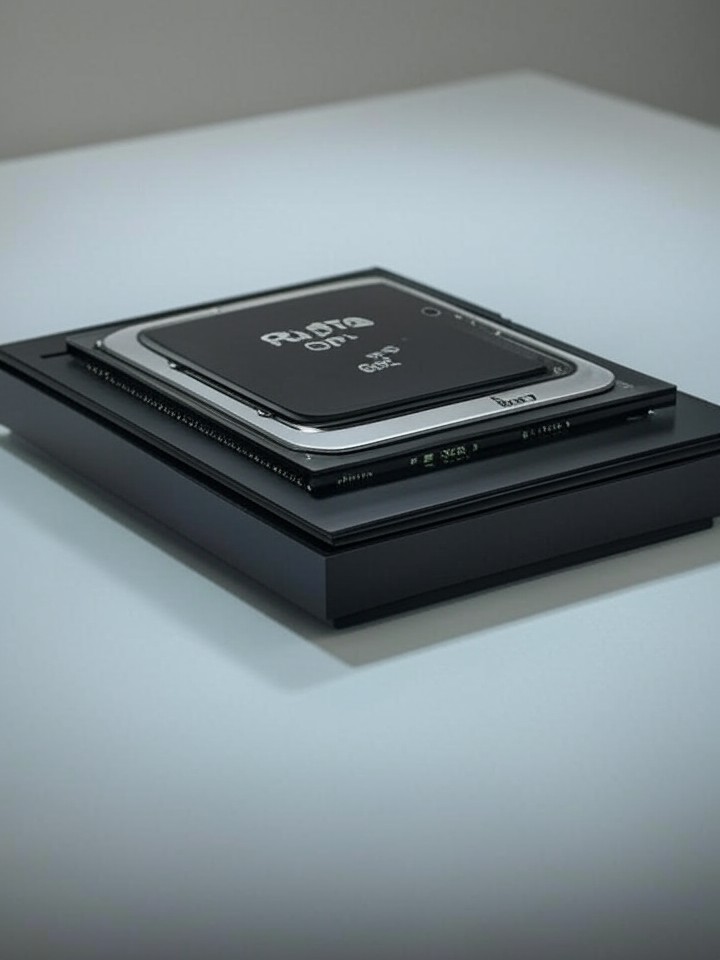
At the heart of Rubin is the integration of hardware and software optimized for scale, promising to transform data centers into “always-on AI factories.” According to details from Nvidia Newsroom, the platform includes the new Vera central processing unit (CPU), the Rubin graphics processing unit (GPU), NVLink 6 for high-speed interconnects, ConnectX-9 networking, BlueField-4 data processing units, and Spectrum-6 Ethernet switches. These elements are engineered to work in unison, minimizing bottlenecks and maximizing efficiency in AI workloads. Nvidia’s founder and CEO, Jensen Huang, emphasized during his CES keynote that this co-design approach allows for unprecedented performance, potentially reducing the cost of generating AI tokens by up to 10 times compared to previous generations.
The timing couldn’t be more strategic. With AI adoption permeating industries from healthcare to autonomous driving, the need for robust, scalable computing has never been greater. Posts on X from Nvidia highlight ongoing deployments, such as the “Doudna” supercomputer at the National Energy Research Scientific Computing Center, powered by an earlier iteration of Vera Rubin technology. This system is set to aid thousands of scientists in tackling complex simulations, blending AI with traditional high-performance computing. Such real-world applications underscore Rubin’s potential to bridge the gap between theoretical AI advancements and practical, industrial-scale implementations.
The Architectural Backbone: Six Chips in Harmony
Diving deeper into the technical specifics, the Rubin platform represents a paradigm shift in how AI systems are built. The Vera CPU, named after the renowned astronomer Vera Rubin, is designed to handle the orchestration of massive AI tasks, complementing the Rubin GPU’s prowess in parallel processing. As outlined in a technical breakdown from Nvidia Technical Blog, this duo is supported by NVLink 6, which enables blistering data transfer rates between GPUs, crucial for training models with trillions of parameters.
Networking forms another critical pillar. The ConnectX-9 and BlueField-4 components ensure seamless data flow across vast clusters, while Spectrum-6 Ethernet provides the backbone for efficient, low-latency communication. This holistic design addresses a common pain point in AI infrastructure: the inefficiency of piecing together disparate hardware. By co-designing all six chips, Nvidia claims to achieve up to four times fewer GPUs needed for training mixture-of-experts models, a type of AI architecture gaining traction for its efficiency in handling specialized tasks.
Industry observers note that this level of integration could lower barriers to entry for organizations building AI data centers. Recent news from Yahoo Finance reports that the Vera Rubin superchip, a key element, was launched specifically to accelerate the adoption of large language models (LLMs) among broader audiences, not just tech giants. This democratization effort aligns with Nvidia’s broader strategy to make AI computing accessible, potentially reshaping competitive dynamics in the semiconductor sector.
Performance Leaps and Economic Implications
The promised performance gains are staggering. Nvidia asserts that Rubin delivers massive efficiency improvements, with benchmarks showing over a million tokens per second in production environments. Drawing from posts on X, collaborations like the one with Microsoft Azure have validated these claims, achieving record throughput with systems powered by related Nvidia hardware. Such metrics translate to real economic benefits: lower operational costs and faster time-to-insight for AI-driven enterprises.
Economically, the Rubin platform arrives at a pivotal moment. The AI boom has driven Nvidia’s market value to unprecedented heights, but sustaining growth requires continuous innovation. As per insights from ZDNet, Rubin could transform AI computing by enabling more public adoption of LLMs, potentially expanding the market beyond current hyperscalers. This is evident in partnerships, such as the historic deal with OpenAI announced last year, involving millions of Vera Rubin GPUs to build gigawatt-scale AI infrastructure.
Moreover, Rubin’s impact extends to specialized fields. In healthcare, open models introduced alongside the platform promise advancements in drug discovery and personalized medicine. For robotics and autonomy, integrations like the Mercedes-Benz CLA demonstration at CES showcase AI-defined driving, where Rubin-powered systems process real-time data for safer, more intelligent vehicles. These applications highlight how Rubin isn’t merely about raw power but about enabling domain-specific breakthroughs.
Strategic Partnerships and Market Positioning
Nvidia’s ecosystem play is equally compelling. The DGX SuperPOD, a scalable supercomputing system, is being positioned as the foundation for Rubin-based deployments. Details from Nvidia Blog indicate that this setup paves the way for large-scale AI factories, capable of delivering exaFLOPS of performance. Recent X posts from Nvidia celebrate milestones like over 80 new supercomputing systems built on their technology in the past year, cumulatively providing immense AI horsepower.
Partnerships amplify this momentum. The collaboration with OpenAI, as shared on X, involves deploying 10 gigawatts of compute power, underscoring the scale at which Rubin is expected to operate. This isn’t just about hardware sales; it’s about creating an interconnected web of AI capabilities that lock in customers through superior performance and ease of integration.
Competitively, Rubin positions Nvidia against rivals like AMD and Intel, who are also ramping up AI offerings. However, Nvidia’s head start in GPU dominance and software ecosystem—think CUDA and now enhanced with Rubin-specific optimizations—gives it a formidable edge. Analysts suggest this could lead to sustained market leadership, especially as AI shifts from experimental to industrial applications.
Challenges and Forward-Looking Innovations
Yet, no technological advancement is without hurdles. Power consumption remains a critical concern; AI supercomputers like those enabled by Rubin demand enormous energy, raising questions about sustainability. Nvidia addresses this through efficiency gains, claiming Rubin reduces the GPU count needed for complex tasks, thereby lowering overall power draw. Still, as global data centers expand, regulatory scrutiny on energy use could intensify.
Innovation doesn’t stop at hardware. Nvidia’s push into open models for healthcare, robotics, and autonomy, as detailed in another Nvidia Blog entry, signals a commitment to collaborative ecosystems. These models allow developers to build upon Nvidia’s foundations, fostering rapid advancements in fields like autonomous vehicles, where AI-defined driving could redefine transportation safety and efficiency.
Looking ahead, Rubin’s full production status means deployments are imminent. Early adopters, including scientific institutions and tech giants, are already lining up. For instance, the Doudna supercomputer exemplifies how Rubin can accelerate scientific discovery, blending AI with simulation to tackle grand challenges in climate modeling and materials science.
Broader Industry Ripple Effects
The ripple effects of Rubin extend beyond Nvidia’s walls. In the automotive sector, the CES showcase with Mercedes-Benz illustrates practical integrations, where AI processes sensor data in real-time for enhanced autonomy. This could accelerate the rollout of self-driving technologies, potentially reshaping urban mobility and logistics.
In finance and enterprise, the platform’s ability to handle massive inference workloads at lower costs could democratize AI, allowing mid-sized companies to compete with behemoths. News from CNN Business highlights how Vera Rubin provides a blueprint for AI data centers, with major ramifications given the industry’s reliance on Nvidia tech.
Furthermore, educational and research implications are profound. With systems like DGX SuperPOD enabling accessible supercomputing, universities and labs can pursue ambitious projects without prohibitive costs. This fosters a new generation of AI talent, ensuring the field’s continued evolution.
Navigating the AI Horizon with Rubin
As AI permeates every facet of modern life, platforms like Rubin serve as the enablers of this transformation. Nvidia’s emphasis on extreme co-design ensures that hardware evolves in lockstep with software demands, a strategy that has propelled the company to its current dominance.
Critics might argue that such concentration of power in one vendor poses risks, but proponents counter that Nvidia’s innovations drive the entire industry forward. With Rubin now in production, the coming months will reveal its real-world impact, from token generation speeds to breakthroughs in AI-driven science.
Ultimately, Rubin embodies Nvidia’s vision of AI as an industrial force, converting raw power into actionable intelligence across domains. As deployments ramp up, it may well define the next chapter in computing history, pushing boundaries and unlocking potentials yet to be fully realized.


 WebProNews is an iEntry Publication