
Nvidia’s Strategic Gambit: Absorbing Groq’s Speed to Dominate AI’s Next Frontier
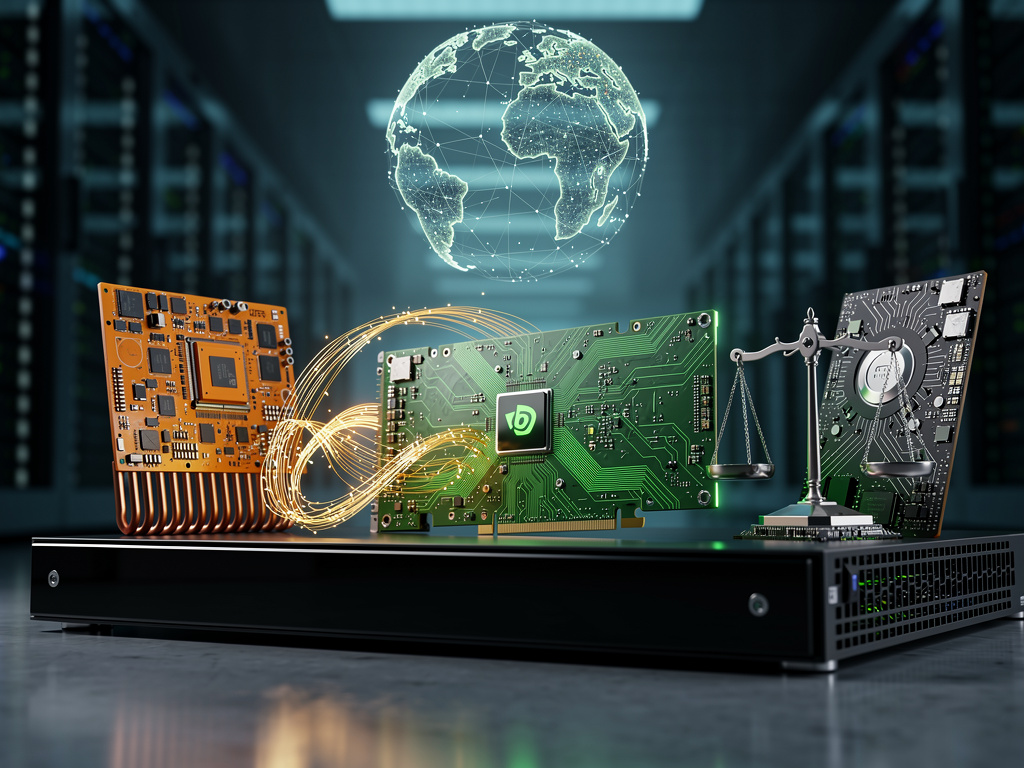
In a move that sent ripples through the semiconductor and artificial intelligence sectors, Nvidia Corp. has struck a landmark deal with startup Groq Inc., licensing its cutting-edge inference technology and acquiring key assets in a transaction valued at approximately $20 billion. This agreement, announced in late December 2025, marks Nvidia’s largest deal to date and underscores the escalating competition in AI hardware, particularly for the inference phase where trained models are deployed for real-world applications. Unlike traditional acquisitions, this non-exclusive licensing arrangement allows Groq to maintain some independence while Nvidia gains access to its specialized Language Processing Unit (LPU) technology, designed for lightning-fast AI computations.
The deal’s structure is noteworthy for its nuance. Nvidia is not outright purchasing Groq but instead licensing its intellectual property and hiring a cadre of top executives, including Groq’s founder Jonathan Ross, a veteran of Google’s Tensor Processing Unit (TPU) project. This approach mirrors recent transactions in the tech industry, where big players opt for talent and tech grabs without full mergers to navigate antitrust scrutiny. Sources indicate that Groq’s cloud service will continue operating under its remaining leadership, preserving a veneer of competition even as Nvidia integrates the LPU’s prowess into its ecosystem.
Industry observers see this as Nvidia’s calculated push to extend its dominance beyond training AI models—where its GPUs excel—to the burgeoning inference market. Inference, the process of running pre-trained models to generate outputs like chat responses or image analyses, demands efficiency and speed, areas where Groq’s chips have claimed superiority over conventional GPUs. By incorporating Groq’s innovations, Nvidia aims to offer a more comprehensive suite of AI solutions, potentially locking in customers who might otherwise seek alternatives.
Unlocking Inference Efficiency in a Power-Hungry Era
Groq’s LPU technology stands out for its deterministic architecture, which eliminates the variability in processing times that plagues traditional GPUs. This predictability is crucial for applications requiring low latency, such as real-time language translation or autonomous vehicle decision-making. According to reports, Groq’s chips can perform inference tasks up to 10 times faster than comparable Nvidia hardware while consuming less power, a boon in an era of escalating energy demands for data centers.
The financial scale of the deal—pegged at $20 billion—highlights Nvidia’s willingness to deploy its substantial cash reserves to fortify its position. Nvidia’s balance sheet, bolstered by soaring demand for its H100 and Blackwell GPUs, has enabled such aggressive maneuvers. As detailed in a Yahoo Finance article, this transaction exemplifies how Nvidia leverages its financial might to “maintain dominance” by absorbing potential rivals’ technologies and talent.
Critics, however, argue that the deal’s “non-exclusive” label is more cosmetic than substantive. An analyst quoted in a CNBC report described it as structured to “keep the fiction of competition alive,” akin to other Big Tech deals that skirt regulatory hurdles while consolidating power. This sentiment echoes broader concerns about market concentration in AI hardware, where Nvidia already commands an estimated 80% share.
Talent Migration and Technological Synergies
At the heart of the agreement is the talent acquisition, often dubbed an “acqui-hire.” Jonathan Ross, Groq’s CEO and a key architect behind Google’s TPUs, will join Nvidia along with other senior executives like Sunny Madra. This influx of expertise is expected to accelerate Nvidia’s foray into non-GPU inference solutions, diversifying its portfolio beyond its flagship graphics processing units.
The Motley Fool, in an analysis published on December 28, 2025, framed the deal as Nvidia’s entry into the “non-GPU, AI inference chip space,” eliminating a competitor while gaining innovative tech. As per the Motley Fool piece, this dual benefit positions Nvidia to offer customers a broader array of tools, from training to deployment, in a single ecosystem.
Groq’s journey to this point has been meteoric. Founded in 2016, the startup raised over $1 billion in funding and built a reputation for challenging Nvidia’s hegemony. Its LPU chips, optimized for sequential processing in language models, have attracted high-profile users, including those running large language models at unprecedented speeds. The deal ensures Groq’s innovations don’t fade into obscurity but rather amplify Nvidia’s offerings.
Regulatory Shadows and Market Reactions
The transaction has drawn attention from regulators wary of Big Tech’s growing influence. While not a full acquisition, its scale and implications could invite scrutiny from bodies like the Federal Trade Commission, especially amid ongoing antitrust probes into AI market practices. Reuters reported on December 26, 2025, that Nvidia is “stopping short of formally buying the target,” a deliberate choice to mitigate such risks, as outlined in their Reuters coverage.
Market reactions have been mixed. Nvidia’s stock saw a modest uptick following the announcement, reflecting investor confidence in its strategic acumen. However, some venture capitalists and startups in Silicon Valley expressed unease, viewing the deal as part of a pattern where innovative upstarts are effectively neutralized by incumbents. A Business Insider article from December 27 highlighted how this deal “rattled Silicon Valley,” comparing it to similar arrangements that have “split apart” other AI startups.
On social platforms like X (formerly Twitter), discussions buzzed with speculation. Posts from industry watchers praised the move as a savvy consolidation, with one noting Nvidia’s pivot toward “specialized LPU architectures for inference dominance.” Others questioned the long-term impact on innovation, suggesting that such deals could stifle emerging competition.
Broader Implications for AI Development
Delving deeper, the Nvidia-Groq pact signals a shift in AI’s evolution, where inference is becoming as critical as training. As models grow in complexity, the need for efficient deployment grows acute. Groq’s technology addresses bottlenecks in power consumption and speed, areas where Nvidia’s GPUs, while powerful for training, sometimes lag in optimized inference scenarios.
Tom’s Hardware, in a recent piece, emphasized how the $20 billion agreement includes Groq’s hardware stack and key engineers, bolstering Nvidia’s “AI market domination.” The Tom’s Hardware report details how this integration could lead to hybrid systems combining Nvidia’s GPUs with Groq-derived LPUs, offering unparalleled performance.
For Groq’s stakeholders, the deal represents a windfall. An Axios scoop revealed it’s a “big win for Groq employees and investors,” with substantial payouts despite the unconventional structure. As per the Axios article, social media chatter has focused on employee outcomes, underscoring the human element in these corporate maneuvers.
Innovation Crossroads: Challenges Ahead
Yet, challenges loom. Integrating Groq’s tech into Nvidia’s vast ecosystem won’t be seamless. Differences in architecture—Groq’s deterministic design versus Nvidia’s parallel processing—may require significant engineering efforts. Moreover, maintaining Groq’s independence could lead to internal conflicts or diluted focus.
Competitors aren’t standing still. Companies like AMD and Intel are ramping up their AI chip efforts, while cloud giants such as Amazon and Google develop proprietary solutions. Posts on X have drawn parallels to past deals, like xAI’s reported $20 billion GPU lease with Nvidia, highlighting the intertwined nature of these players.
From a global perspective, this deal amplifies U.S. dominance in AI hardware, potentially exacerbating geopolitical tensions. Countries investing in sovereign AI capabilities may view Nvidia’s strengthened position as a barrier to entry.
Strategic Horizons and Future Trajectories
Looking ahead, Nvidia’s acquisition of Groq’s assets positions it to lead in edge computing and real-time AI applications. Industries from healthcare to finance stand to benefit from faster, more efficient inference, enabling innovations like personalized medicine or fraud detection.
The transaction also reflects broader trends in tech deal-making. As noted in a Groq press release, the partnership aims to “accelerate AI inference at global scale,” per their official announcement. This collaboration could spawn new products, blending the best of both worlds.
For industry insiders, the real intrigue lies in how this reshapes competitive dynamics. Will it spur more innovation or consolidate power further? As one X post mused, Nvidia’s move secures “long-term inference capacity,” echoing sentiments from earlier discussions on AI infrastructure needs.
Ecosystem Evolution and Stakeholder Perspectives
Employees at Groq face an uncertain but potentially rewarding transition. With key leaders moving to Nvidia, the remaining team must navigate independence while benefiting from the licensing revenue. Investor returns, meanwhile, validate the startup model’s viability even in a giant-dominated field.
Broader ecosystem effects include potential shifts in venture funding. Startups might now prioritize defensible niches or seek early partnerships with incumbents to avoid being overshadowed.
In the semiconductor realm, this deal could accelerate advancements in chip design, pushing boundaries on efficiency and scalability. Nvidia’s history of successful integrations suggests optimism, but the proof will be in execution.
Visionary Plays in AI’s Expanding Arena
Ultimately, Nvidia’s $20 billion investment in Groq underscores a visionary approach to AI’s future. By securing top talent and technology, it not only neutralizes a rival but pioneers new frontiers in inference.
As the sector matures, such strategic plays will define winners. For now, Nvidia’s gambit appears poised to pay dividends, reinforcing its role as AI’s indispensable architect.
Drawing from additional insights, a TechRepublic article provides further context on the licensing specifics, noting how it enhances Nvidia’s inference capabilities without a full takeover. As explored in the TechRepublic coverage, this deal is a testament to the evolving strategies in AI tech acquisitions.
Recent news searches on the web and X confirm ongoing buzz, with analysts predicting ripple effects across supply chains and innovation pipelines. This transaction, rich in implications, sets the stage for the next chapter in AI’s rapid ascent.


 WebProNews is an iEntry Publication