
Nvidia’s Strategic Embrace: Decoding the Groq Deal Through Jensen Huang’s Lens
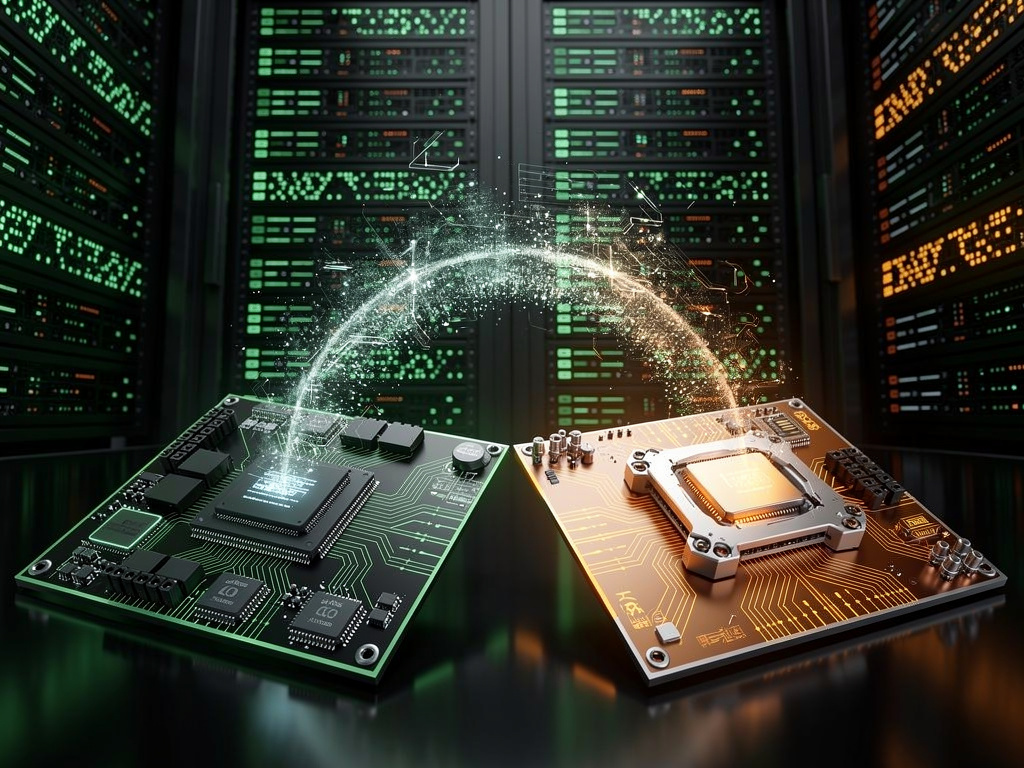
In the fast-paced world of artificial intelligence hardware, Nvidia Corp. has long dominated with its graphics processing units, or GPUs, powering everything from data center training to real-time inference. But a recent move has industry observers buzzing: Nvidia’s $20 billion agreement with AI chip startup Groq. This isn’t a straightforward acquisition but a carefully structured licensing deal that allows Nvidia to integrate Groq’s specialized inference technology while letting the startup operate independently. The arrangement, announced just weeks ago, underscores Nvidia’s aggressive push to maintain its lead in AI as competition heats up from specialized chips designed for efficient model deployment.
At the heart of this deal is Groq’s Language Processing Unit, or LPU, which excels in low-latency inference—the process of running trained AI models to generate outputs quickly and cost-effectively. Unlike Nvidia’s GPUs, which are versatile but power-hungry for certain tasks, Groq’s chips are optimized for speed in applications like chatbots and real-time analytics. Sources close to the matter reveal that Nvidia is licensing this technology non-exclusively, paying a hefty sum to bolster its own offerings without fully absorbing the company. This structure echoes a trend among tech giants to sidestep antitrust scrutiny by avoiding outright buyouts.
Nvidia CEO Jensen Huang recently shed light on the rationale behind this partnership during an interview. He described Groq as a company that didn’t fit neatly into any existing category in the AI ecosystem, likening it to lacking a “nook and cranny” to slot into. Huang’s comments, reported in The Information, highlight the challenges startups face in scaling innovative hardware against entrenched players. Huang emphasized that while Groq’s tech is groundbreaking, the startup struggled with manufacturing and distribution at the scale needed to compete globally.
The Inference Imperative: Why Speed Matters More Than Ever
Inference, the phase where AI models are put to work after training, is becoming the battleground for chipmakers. Training large language models requires immense computational power, which Nvidia’s GPUs handle superbly, but inference demands efficiency to handle billions of queries economically. Groq’s LPUs claim to deliver up to 10 times the speed of traditional GPUs at a fraction of the energy cost, making them ideal for cloud services and edge computing. Posts on X (formerly Twitter) from industry analysts echo this sentiment, noting that as AI workloads shift toward deployment, factors like latency and power consumption are paramount.
The deal’s structure is telling. Nvidia is not only licensing the technology but also hiring key Groq executives, including founder Jonathan Ross and president Sunny Madra. Ross, who previously worked at Google and founded Groq in 2016, will help integrate the LPU tech into Nvidia’s ecosystem. This talent acquisition ensures Nvidia can rapidly deploy enhancements to its inference capabilities, potentially incorporating Groq’s deterministic architecture that avoids the variability seen in GPU-based systems. As detailed in a Groq press release, the agreement accelerates AI inference at a global scale, benefiting developers with faster, lower-cost options.
Analysts suggest this move is defensive. With rivals like AMD and startups such as Cerebras pushing specialized chips, Nvidia risks losing share in the inference market. A report from CNBC notes that this is Nvidia’s largest deal on record, valued at about $20 billion for Groq’s assets. By structuring it as a licensing agreement rather than a full acquisition, Nvidia avoids regulatory hurdles that have plagued other tech mergers, such as those involving Microsoft and Activision.
Behind the Scenes: Huang’s Vision and Market Pressures
Huang’s candid remarks reveal deeper insights into Nvidia’s strategy. He pointed out that Groq’s innovative approach to chip design—focusing on streamlined data flow for language models—fills a gap in Nvidia’s portfolio. Without a natural fit in the broader market, Groq faced headwinds in securing the massive investments needed for fabrication and supply chain management. Huang’s “nook and cranny” metaphor underscores the fragmentation in AI hardware, where niche players innovate but struggle to scale against behemoths like Nvidia, which controls over 80% of the AI chip market.
This partnership comes amid a broader spree of deals in the tech sector. As reported by Reuters, Nvidia is joining other Big Tech firms in opting for asset purchases and talent hires over full acquisitions to navigate antitrust concerns. The agreement allows Groq to continue operating its cloud platform, GroqCloud, independently, maintaining a facade of competition. An analyst quoted in a CNBC follow-up described it as structured to keep the “fiction of competition alive,” mimicking deals like Microsoft’s arrangement with Inflection AI.
From X posts, sentiment among investors and tech enthusiasts is largely positive, with many viewing it as Nvidia solidifying its dominance. One post highlighted how inference doesn’t require the raw compute of training, making Groq’s efficiency a perfect complement. Another noted Bank of America’s research suggesting Nvidia is now treating inference as a first-class product line, aiming to shape the entire AI stack in its image.
Technological Synergies and Future Implications
Diving into the tech, Groq’s LPU uses a tensor streaming processor architecture that processes AI tasks in a highly predictable manner, reducing bottlenecks in data movement. This contrasts with GPUs, which excel in parallel processing but can be inefficient for sequential inference tasks. By licensing this, Nvidia can hybridize its offerings, perhaps creating new chips that combine GPU versatility with LPU speed. Insights from Mashable describe the integration as a landmark step, enhancing Nvidia’s low-latency AI capabilities.
The deal also has geopolitical undertones. Huang mentioned in the interview that global supply chain issues, including U.S.-China tensions, complicate startup growth. Recent news from The Information’s scoop on China holding off on Nvidia’s H200 chip orders illustrates these pressures. For Groq, partnering with Nvidia provides access to TSMC’s advanced manufacturing, which the startup lacked independently.
Looking ahead, this could accelerate innovation in real-time AI applications, from autonomous vehicles to personalized medicine. As per a IntuitionLabs analysis, the strategy avoids antitrust review while securing low-latency tech crucial for edge AI. X discussions speculate that this positions Nvidia to counter threats from ASIC-like chips optimized for specific workloads.
Industry Reactions and Competitive Dynamics
Reactions from Silicon Valley have been mixed. Some see it as Nvidia’s clever way to neutralize a potential rival without drawing regulatory fire, as explored in a Business Insider piece. Traditional acquisitions are rarer due to scrutiny, making this “don’t-call-it-an-acquisition” model potent. Groq’s continued independence, led by new executives, ensures ongoing innovation, potentially benefiting the ecosystem.
Critics argue it stifles true competition. An analyst in Stratechery called it a “stinkily brilliant” deal, allowing Nvidia to absorb talent and tech while keeping Groq as a nominal competitor. This could consolidate power further, raising questions about market diversity.
For investors, the deal boosts Nvidia’s stock, signaling confidence in its AI future. Posts on X from financial accounts praise it as a masterstroke, with one noting that inference will be high-volume but low-margin, where Nvidia’s scale gives it an edge over AMD.
Economic and Innovation Horizons
Economically, the $20 billion price tag reflects the premium on AI inference tech. Groq, founded nine years ago, raised over $1 billion in funding but needed a partner to scale. Huang’s comments suggest Nvidia views this as an investment in the future of AI, where efficient deployment will drive widespread adoption.
Innovation-wise, integrating Groq’s tech could lead to breakthroughs in energy-efficient AI, addressing sustainability concerns in data centers. A Fortune article posits that this signals inference as the next big arena, potentially displacing some of Nvidia’s dominance if other startups rise.
Ultimately, Huang’s perspective frames the deal as a symbiotic alliance, helping Groq find its place while fortifying Nvidia against emerging challengers. As AI evolves, such partnerships may define the contours of technological progress, blending competition with collaboration in unexpected ways.
Strategic Foresight in AI’s Evolving Arena
Peering into the future, Nvidia’s move with Groq exemplifies strategic foresight. By securing advanced inference capabilities, Nvidia ensures its ecosystem remains comprehensive, from training to deployment. Huang’s interview reveals a CEO attuned to market nuances, recognizing that not every innovation fits neatly into existing frameworks.
This deal also highlights the talent war in AI. Poaching Ross and Madra brings invaluable expertise, accelerating Nvidia’s roadmap. X chatter from tech insiders underscores how this bolsters real-time AI, empowering applications in cloud and autonomous systems.
As the industry watches, the Nvidia-Groq pact could set precedents for how giants engage with agile startups, balancing growth with regulatory realities in an era of rapid AI advancement.


 WebProNews is an iEntry Publication