
Nvidia’s Shadow Play: Tracking AI Chips in a World of Smuggling Intrigue
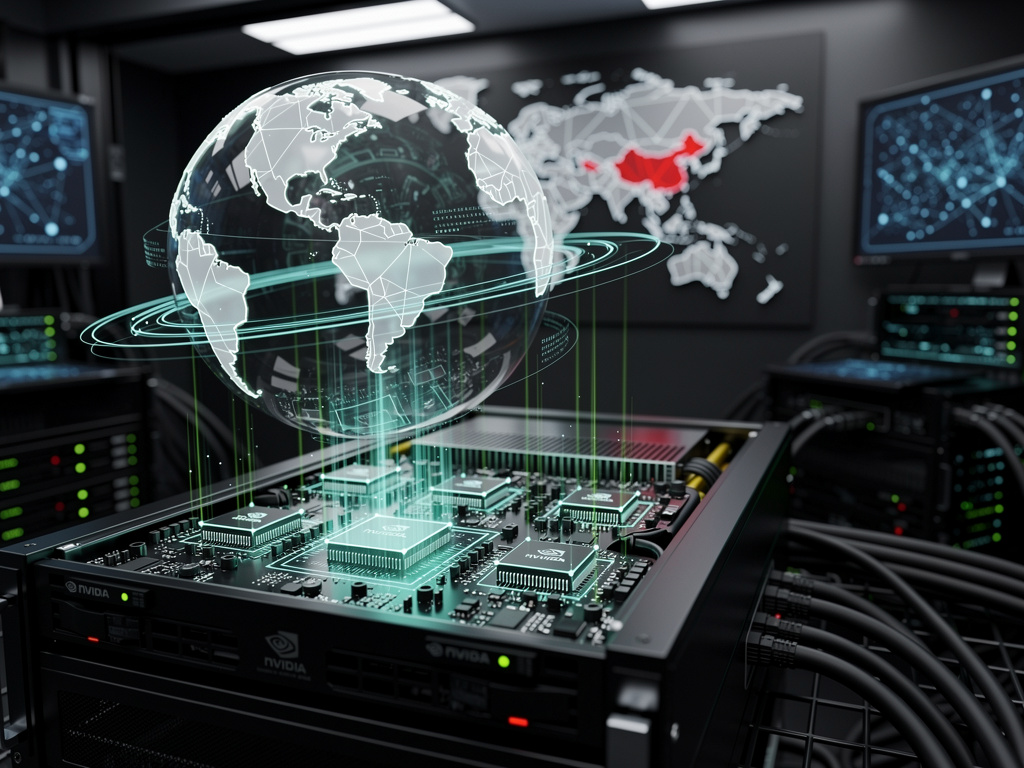
In the high-stakes arena of artificial intelligence hardware, Nvidia Corp. has quietly begun testing a new software tool designed to pinpoint the locations of its powerful AI chips, according to recent reports. This development comes amid swirling rumors of illicit smuggling operations that have allegedly funneled restricted technology into banned markets, particularly China. The move underscores the escalating tensions between technological innovation and geopolitical restrictions, as U.S. authorities intensify efforts to curb the flow of advanced semiconductors.
The software, which leverages existing telemetry data from data-center deployments, allows Nvidia to estimate the approximate whereabouts of its chips without embedding physical tracking hardware like GPS. Sources familiar with the matter indicate that this feature is initially being piloted for Nvidia’s cutting-edge Blackwell series chips, which are pivotal in training large language models and powering AI applications. By analyzing server delays and other operational metrics, the system can infer a chip’s country of operation, potentially alerting authorities to diversions into restricted regions.
This initiative arrives at a critical juncture. U.S. export controls, imposed to prevent advanced AI technology from enhancing the capabilities of adversaries, have banned the sale of Nvidia’s top-tier chips to China since 2022. Yet, enforcement has proven challenging, with black-market networks reportedly thriving. A recent bust by U.S. authorities dismantled a smuggling ring accused of trafficking over $160 million worth of GPUs to restricted markets, highlighting the porous nature of these controls.
The Roots of Restriction and Evasion
The backdrop to Nvidia’s tracking efforts is a web of international sanctions aimed at slowing China’s AI ambitions. The U.S. Commerce Department has progressively tightened restrictions on high-performance computing chips, fearing their use in military applications or supercomputing projects that could tip strategic balances. Nvidia, as the dominant player in AI accelerators, finds itself at the center of this storm, with its H100 and newer Blackwell chips becoming hot commodities on the global gray market.
Reports from various outlets paint a picture of sophisticated evasion tactics. Smugglers have allegedly used encrypted communications, falsified invoices, and intermediary hubs in places like Singapore and Malaysia to reroute shipments. One unsealed court document from the U.S. Attorney’s Office for the Southern District of Texas detailed a China-linked network that exploited these methods to move millions in restricted hardware. As noted in a report by Digitimes, this operation was uncovered alongside Nvidia’s development of location-verification tech, suggesting a coordinated response to ongoing threats.
On social media platforms like X (formerly Twitter), users have amplified rumors of massive smuggling volumes. Posts describe black-market deals where Chinese middlemen resell 8x GPU racks at premiums exceeding 50% over U.S. prices, with claims of over $1 billion in banned Nvidia chips entering China in recent months. While these anecdotes lack official verification, they reflect a sentiment of unchecked demand, with one user likening the scene to a “seafood market” where supply appears abundant despite bans.
Technological Safeguards and Industry Ripples
Nvidia’s software-based approach cleverly sidesteps hardware modifications, relying instead on the confidential computing features inherent in its AI chips. This method uses network latency and other non-invasive data points to triangulate locations, making it harder for smugglers to tamper with without disabling core functionalities. A confirmation from the company itself, as reported by Reuters, emphasizes that the tool could indicate a chip’s operating country, directly aiding compliance with export laws.
Industry insiders view this as a proactive step, but not without challenges. The technology’s accuracy depends on chips being online and connected, which might not always be the case in clandestine setups. Moreover, privacy concerns loom large—data centers housing these chips could inadvertently reveal sensitive operational details. Analysts suggest that while effective against large-scale diversions, smaller smuggling operations might still slip through by keeping chips offline or using proxies.
Broader implications extend to Nvidia’s supply chain partners. Companies like Dell Technologies Inc. and Super Micro Computer Inc. have faced scrutiny over how their servers, embedded with Nvidia chips, end up in prohibited hands. Recent posts on X allege that U.S. authorities have embedded trackers in shipments from these firms to monitor diversions, though such claims remain unconfirmed. Nvidia has reportedly queried these partners about leaked hardware, pressing for tighter controls amid Commerce Department investigations.
Geopolitical Chess and Market Dynamics
The smuggling saga is intertwined with U.S.-China tech rivalry, where AI chips represent a battleground for supremacy. China’s push for self-sufficiency has spurred domestic alternatives, but Nvidia’s dominance persists, fueling demand for its products through any means. A report from Investing.com highlights how these restrictions have inadvertently boosted black-market premiums, creating lucrative incentives for traffickers.
Enforcement actions have ramped up, with the aforementioned $160 million bust serving as a deterrent. Court documents reveal a network involving CCP operatives in California, using front companies to launder shipments via Southeast Asia. This mirrors earlier incidents, such as a Singapore firm caught rerouting Nvidia chips, as documented in various X posts and news analyses. The U.S. response includes not just busts but also technological countermeasures, like Nvidia’s tracking pilot, which could set a precedent for other semiconductor giants.
For Nvidia, the stakes are financial as well as reputational. The company has navigated restrictions by developing China-specific variants with reduced performance, but smuggling undermines these efforts and invites regulatory backlash. Stock movements reflect investor jitters; shares dipped amid initial smuggling reports but rebounded on news of the tracking software, signaling confidence in Nvidia’s adaptive strategies.
Innovation Amid Uncertainty
Looking ahead, Nvidia’s tracking tool could evolve into a standard feature, integrated across its product lineup. Sources indicate it’s already available for Blackwell chips, with potential expansion to older models like the H100. This software leverages existing infrastructure, minimizing costs while maximizing compliance. As detailed in a piece by Mezha, the system addresses concerns over chips reaching China, where AI startups have been accused of involvement in smuggling rings.
Critics argue that such measures might stifle legitimate global trade, particularly in regions not under bans. Emerging markets in Southeast Asia and the Middle East, hungry for AI infrastructure, could face hurdles if tracking becomes overly intrusive. Yet, proponents see it as essential for national security, preventing advanced tech from bolstering adversarial militaries or surveillance states.
The human element adds layers of complexity. Smuggling networks often involve insiders with deep industry knowledge, exploiting loopholes in global logistics. X discussions frequently point to “middlemen” flipping hardware at exorbitant rates, underscoring a shadow economy that thrives on scarcity. U.S. officials, through statements and actions, aim to dismantle these webs, but the cat-and-mouse game persists.
Strategic Horizons for AI Hardware
Nvidia’s initiative may inspire similar innovations from competitors like AMD and Intel, who face parallel export pressures. The industry’s shift toward verifiable supply chains could incorporate blockchain or AI-driven auditing to enhance transparency. However, this raises questions about data sovereignty—who controls the location information, and how is it shared with governments?
In the context of recent events, such as the DeepSeek AI startup controversy—where unnamed sources claimed involvement in a Blackwell smuggling operation—Nvidia has publicly decried “far-fetched” reports, insisting on a lack of evidence. Coverage from Evertiq elaborates on how the software uses telemetry to thwart diversions, positioning it as a non-invasive yet potent tool.
As geopolitical tensions simmer, the effectiveness of these measures will be tested. Smugglers may adapt by developing countermeasures, like spoofing network data or operating in isolated environments. Nonetheless, Nvidia’s foray into location verification marks a pivotal evolution, blending cutting-edge tech with regulatory imperatives.
Balancing Act in Global Tech Flows
The broader ecosystem feels the ripple effects. Cloud providers and AI developers must now contend with potential audits, ensuring their hardware complies with origin rules. This could slow deployments in gray areas but foster a more secure environment overall.
Expert voices, echoed in analyses from Technology Org, praise the system’s ingenuity in using server delays for tracking, avoiding hardware overhauls. Yet, they caution that over-reliance on software leaves vulnerabilities to sophisticated hacks.
Ultimately, Nvidia’s tracking pilot embodies the delicate dance between innovation and control. As AI reshapes industries, ensuring its building blocks don’t fuel unintended conflicts becomes paramount. With smuggling rumors persisting on platforms like X, where users share tales of billion-dollar black markets, the need for robust safeguards is clear. Nvidia’s response, while nascent, signals a commitment to steering the course amid turbulent waters.
Evolving Defenses Against Illicit Trade
Further details from Tom’s Hardware reveal that the solution targets preventing shipments to nations under export controls, specifically approximating hardware operations without direct modifications. This approach could deter large-scale operations by making resale riskier.
In parallel, reports from PC Gamer note the use of chips’ confidential computing to enable this, highlighting Nvidia’s leverage of existing capabilities.
As the story unfolds, industry watchers anticipate more disclosures, potentially reshaping how AI hardware is distributed worldwide. For now, Nvidia’s shadow play continues, illuminating paths in a murky domain of tech and intrigue.


 WebProNews is an iEntry Publication