
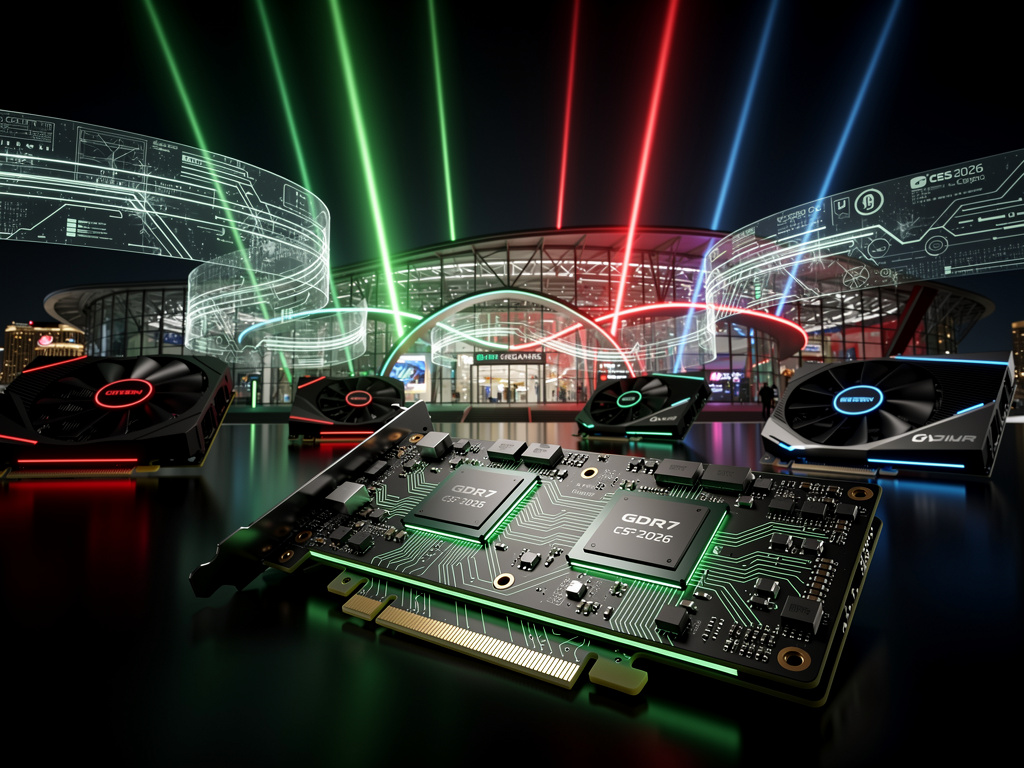
As the tech world turns its gaze toward Las Vegas for the Consumer Electronics Show in early January, anticipation is building around Nvidia Corp.’s potential revelations about its next wave of graphics processing units. Industry insiders are particularly eager for clarity on the RTX 50 Super series, a lineup that has been shrouded in rumors and conflicting leaks for months. With Nvidia’s Blackwell architecture already making waves in artificial intelligence and high-performance computing, the upcoming event could finally shed light on how the company plans to evolve its consumer-facing GPUs amid shifting market demands.
Speculation has swirled since mid-2025, with various reports suggesting delays and adjustments to the RTX 50 Super launch timeline. According to sources familiar with Nvidia’s roadmap, the Super variants—expected to offer enhanced memory configurations and performance tweaks—were initially rumored for a late-2025 debut but appear to have been pushed back. This shift aligns with broader industry challenges, including supply chain constraints and rising costs for advanced memory modules, which have forced Nvidia to recalibrate its release strategy.
At the heart of these discussions is the Consumer Electronics Show (CES) 2026, scheduled for January 6-9, where Nvidia is set to hold a major press event. Analysts predict that rather than unveiling entirely new hardware, the company will focus on refinements to its existing Blackwell lineup, providing roadmap signals that could confirm or debunk the Super series’ arrival. This approach would allow Nvidia to address lingering questions about pricing, availability, and feature sets without rushing unpolished products to market.
Unpacking the RTX 50 Super Rumors
Drawing from hardware leaks and insider reports, the RTX 50 Super GPUs are anticipated to feature significant upgrades in video random access memory (VRAM), a critical factor for gamers and creators handling demanding workloads like 8K rendering or AI-enhanced video editing. For instance, posts on X (formerly Twitter) from users like Pirat_Nation have highlighted potential specs, including an RTX 5080 Super with 24GB of GDDR7 memory and an RTX 5070 Super boasting 18GB—substantial boosts over their non-Super counterparts. These details, while unconfirmed, suggest Nvidia is responding to criticisms of earlier models’ memory limitations.
Industry publications have echoed these sentiments. A report from TechPowerUp noted that widespread speculation has now coalesced around a CES 2026 reveal, with sources indicating a delay from an earlier 2025 timeline. This postponement, as detailed in the article, stems from production hurdles tied to next-generation memory chips, which are essential for the Super series’ promised performance leaps.
Further insights come from community discussions on platforms like Reddit, where threads in the r/nvidia subreddit have amassed hundreds of comments debating the implications. Users there point to Nvidia’s history of mid-cycle refreshes, such as the RTX 40 Super series announced at CES 2024, as a blueprint for what might unfold. However, the current environment is complicated by external factors, including a reported RAM pricing crisis that could inflate costs and affect consumer adoption.
Navigating Market Pressures and Competition
Nvidia’s dominance in the GPU sector faces increasing scrutiny from rivals like AMD and Intel, both of which are gearing up for their own CES showcases. AMD, for example, is expected to unveil refreshed Ryzen processors, potentially stealing some thunder from Nvidia’s AI-focused announcements. This competitive dynamic underscores why Nvidia might use CES 2026 to emphasize software integrations, such as advancements in DLSS (Deep Learning Super Sampling) technology, rather than hardware alone.
Recent news coverage highlights these tensions. An article from Guru3D confirms that the RTX 50 Super lineup won’t hit shelves in 2025, pointing instead to early 2026 as the introduction window. The piece attributes this to Nvidia’s strategic pivot toward ensuring product maturity, especially in light of recent software updates like the restoration of 32-bit PhysX support for the base RTX 50 series, as reported in other outlets.
Moreover, leaks suggest that Nvidia is contemplating even further horizons, with whispers of an RTX 60 series potentially arriving in early 2027. A post on X from Tom’s Guide echoed this, noting skepticism around the timeline due to ongoing memory issues. Such forward-looking rumors indicate that CES 2026 could serve as a bridge, offering teasers for long-term plans while addressing immediate consumer expectations for the Super variants.
Technical Innovations on the Horizon
Delving deeper into the anticipated specs, the RTX 50 Super series is poised to leverage GDDR7 memory modules, which promise higher bandwidth and efficiency compared to previous generations. Industry leakers have speculated on configurations like a 12GB RTX 5060 Ti Super, aiming to make high-end gaming more accessible. These upgrades are not just about raw power; they’re designed to enhance AI-driven features, such as improved ray tracing and frame generation, which Nvidia has been pushing through its GeForce ecosystem.
A detailed analysis from Tom’s Guide outlines a narrowed release window, suggesting March to May 2026 as the most likely period for market availability following a CES announcement. The report emphasizes minimal increases in CUDA core counts—for example, a 4% bump for the RTX 5070 Super—focusing instead on VRAM expansions to handle emerging applications in content creation and machine learning.
Nvidia’s own communications, such as announcements at CES 2025 about FP4 support for generative AI and DLSS 4 for 3D workflows, provide context for these evolutions. Posts on X from official accounts like NVIDIA Studio have showcased how these technologies integrate with creative software, hinting that the Super series will build on this foundation to offer seamless enhancements for professionals.
Strategic Implications for Nvidia’s Ecosystem
Beyond hardware, CES 2026 is expected to highlight Nvidia’s broader software and service ecosystem, including NIM microservices and AI blueprints that could pair with the RTX 50 Super GPUs. This integration is crucial as the company seeks to maintain its edge in AI workloads, where Blackwell chips have already established a stronghold in data centers and workstations.
Coverage from NotebookCheck reinforces the likelihood of a CES 2026 launch, citing leaks that point to delays ensuring compatibility with upcoming standards. The article warns that without these Super models, Nvidia risks ceding ground to competitors in the mid-range segment, where affordability and performance balance are key.
Community sentiment on X reflects a mix of excitement and impatience, with users like 포시포시 sharing early leaks about VRAM boosts that could redefine value propositions. Such discussions underscore the high stakes: if Nvidia delivers on these rumors, it could solidify its position, but any further delays might erode consumer trust amid rising prices.
Broader Industry Ramifications
The ripple effects of Nvidia’s CES strategy extend to sectors like gaming, automotive tech, and home automation, all of which will be on display at the show. With Intel’s Panther Lake and AMD’s Gorgon Point CPUs vying for attention in the 2026 processor wars, Nvidia must articulate how its GPUs complement these advancements, particularly in AI PCs.
An overview from VideoCardz.com anticipates that Nvidia’s keynote will delve into roadmap signals, potentially confirming Super series details while teasing RTX 60 developments. This aligns with reports of a Q1 2027 launch for the next generation, as speculated in various leaks.
Furthermore, global supply chain issues, including the aforementioned RAM crisis, add layers of complexity. Analysts note that Nvidia’s ability to navigate these will determine the Super series’ success, with potential pricing premiums justified by features like enhanced PhysX support for legacy games.
Looking Ahead to CES Revelations
As CES 2026 approaches, the event’s role as a bellwether for consumer tech becomes even more pronounced. Nvidia’s press conference, led by CEO Jensen Huang, is likely to blend hardware teases with demonstrations of AI integrations, addressing the big questions surrounding the RTX 50 Super GPUs head-on.
Insights from Digital Trends suggest that while major launches may be sparse, the focus on refinements could provide the clarity insiders crave. The article posits that Nvidia will use the platform to outline how it plans to push its stack forward, emphasizing software ecosystems over immediate hardware drops.
In parallel, recent X posts from accounts like Pure Tech News amplify the buzz, linking back to expectations for answers on specs and timelines. This collective anticipation highlights Nvidia’s pivotal position: delivering on Super promises could invigorate the market, setting the stage for sustained innovation through 2027 and beyond.
Evolving Expectations and Potential Surprises
Industry observers are also watching for any surprises, such as partnerships or ecosystem expansions that could accompany Super announcements. For example, integrations with emerging AI tools in video editing and livestreaming, as previewed in prior Nvidia updates, might be expanded upon.
Referencing earlier coverage from TechPowerUp, the emphasis on ties with hardware leakers like Hongxing2020 underscores the reliability of CES as a confirmation point. Similarly, Guru3D’s reporting on delays suggests Nvidia is prioritizing quality, a move that could pay dividends in user satisfaction.
Ultimately, the convergence of these elements at CES 2026 positions Nvidia to not only resolve uncertainties but also to chart a course that influences the entire tech sector. As details emerge, the RTX 50 Super series stands to redefine performance benchmarks, provided Nvidia navigates the current hurdles effectively.


 WebProNews is an iEntry Publication