
Greg Estes spent years inside Nvidia as vice president of corporate marketing and developer programs. He stood close to CEO Jensen Huang. He helped shape the company’s outreach to the developers who would ultimately power its explosive growth in artificial intelligence. Then he retired. The transition hit harder than expected.
“It’s really hard to go from a job like that, doing amazing things, and you just stop, and you’re unemployed, looking at avocados at Safeway,” Estes told Business Insider. So he didn’t stop. Instead he joined forces with other Nvidia veterans to create something new. They call it EverGreen.
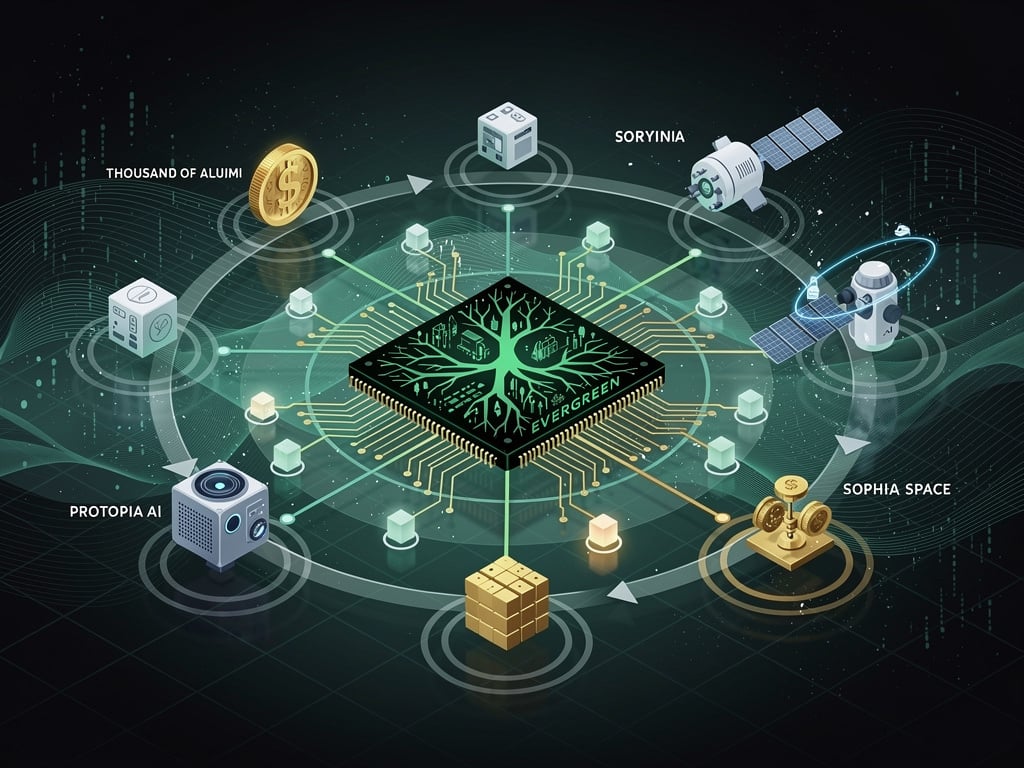
The group formally launched in March. It functions as a network of former Nvidia employees who invest in and advise AI startups. But don’t mistake it for a traditional venture fund. There is no single pool of committed capital. Members decide case by case whether to write checks. The real asset is the collective experience.
“The value of EverGreen is the network. It’s not our money,” Estes said. That network draws from a broader Nvidia alumni community that numbers roughly 30,000 people across LinkedIn groups, email lists and live events, according to founding partner Jeff Brown, a former general manager at the chipmaker. Many of those alumni still bleed Nvidia green. They stay in touch. They want to give back.
EverGreen’s founding partners include Estes, Brown, Devang Sachdev and Vishal Lulla, all ex-Nvidia product or leadership roles. Strategic advisors bring even deeper bench strength: Brian Kelleher, a former senior vice president; Dan Vivoli, ex-chief marketing officer; Drew Henry, another former general manager; Sasha Ostojic and Sheryl Huynh, both former vice presidents. The site makes one point crystal clear. EverGreen is not affiliated with Nvidia Corp.
Yet the ties run deep. The organization positions itself as complementary to the chipmaker’s own efforts. It connects promising startups to potential design partners inside Nvidia. It surfaces high-quality deal flow for the company’s venture arm. “If you’re on the venture side within Nvidia, we’re deal flow for you,” Estes explained.
Founders who work with EverGreen gain more than money. They receive technical guidance rooted in decades of experience building the modern GPU stack. They get go-to-market advice from people who helped turn Nvidia into the indispensable partner for the AI age. They access potential collaborators who understand accelerated computing at a visceral level.
The focus stays on companies operating in the GPU ecosystem but not in direct competition with Nvidia itself. Think infrastructure tools. Developer platforms. Robotics plays. Anything that expands the overall market for accelerated computing. Early portfolio companies reflect that thesis.
EverGreen participated in the Series A round of Protopia AI, a privacy-focused artificial intelligence infrastructure company cofounded by Eiman Ebrahimi, a former Nvidia researcher. The startup later won the Stained Glass Small Business Innovator award at the Texas Innovation Conference. Another bet went to Sophia Space, which builds modular, AI-optimized compute infrastructure for low Earth orbit using Nvidia Jetson technology. Jensen Huang himself gave the company a shout-out during a GTC keynote.
These aren’t isolated picks. The group’s news page lists additional names such as Keiro Labs for AI inference, Peridio for edge AIoT, Classie for observability and security, and Row64 for visual intelligence. Showcases in spring and summer 2026 highlighted several of these companies. One event took place June 16. Another ran March 12. A Nvidia alumni happy hour coincided with GTC in San Jose on March 15.
Such events matter. They keep the alumni connected. They let founders pitch directly to people who once managed billion-dollar product lines or shaped Nvidia’s developer relations. The format echoes the craft-focused culture many credit for Nvidia’s success under Huang. First-principles thinking. Deep technical expertise. A bias toward long-term bets over quick flips.
And the timing feels deliberate. Nvidia’s stock run has minted paper wealth for thousands of employees. Stock options vested. Some veterans now seek purpose beyond another high-paying role. Others simply want to stay close to the action. “EverGreen enables me to stay tethered to the startup ecosystem,” Estes said. Not everyone leaves Nvidia, of course. “There’s not that many of them,” he noted of those who depart. The company works hard to retain talent. The work remains exciting. Huang himself sets a standard many find hard to match elsewhere. “Jensen is somebody that you can learn from, no matter how many years you have.”
Yet departures happen. When they do, EverGreen offers a soft landing that doubles as a launchpad for the broader AI field. The model resembles other tech alumni networks but carries unique weight. Nvidia sits at the absolute center of the current AI boom. Its alumni understand the hardware realities, the software optimizations, the supply chain nuances that most investors never master.
Recent activity shows momentum. In May, Mandala Space Ventures reported EverGreen’s strategic investment in Sophia Space, underscoring the bet on orbital infrastructure built atop Nvidia’s edge computing platform. Mandala Space Ventures positioned the deal as aligned with frontier AI infrastructure themes. Protopia AI’s award and funding participation further signal serious operator interest.
Compare this to Nvidia’s own NVentures arm, which invests directly from the corporate balance sheet. Or to independent AI-focused funds that lack the same hardware pedigree. EverGreen occupies a distinct middle ground. Operator-led. Network-driven. Focused on early capital plus hands-on guidance from those who helped construct the very foundation these startups stand on.
The approach avoids some classic venture pitfalls. No pressure to deploy a fixed fund size on a rigid timeline. Investments happen when members see genuine fit. Advice flows from personal experience rather than theoretical frameworks. Founders gain access to a brain trust that once reported near or to Huang himself.
Challenges remain, of course. Scaling the network without diluting quality. Maintaining distance from Nvidia while preserving productive ties. Ensuring the group doesn’t simply become another deal-sourcing channel for larger funds. So far the founding team appears conscious of these tensions. They emphasize culture preservation. They talk about paying forward the lessons learned inside one of tech’s most demanding organizations.
Estes captured the spirit well. After years in Huang’s orbit, these veterans aren’t content to fade away. They are building a community of their own. One that channels Nvidia’s legendary intensity into support for the next cohort of AI companies. The avocados can wait.
Other investors have taken notice. As AI infrastructure demand surges, specialized networks like EverGreen gain appeal. They offer signal in a noisy market. They reduce the asymmetry between founders and capital providers. And they tap directly into the talent that turned Nvidia from a graphics company into a near-trillion-dollar AI powerhouse.
Whether this model produces outsized returns only time will tell. But the ingredients look promising. Deep domain expertise. Strong personal relationships. A genuine desire to contribute rather than extract. In an industry often criticized for short-termism, EverGreen feels different. More rooted. More patient. More aligned with the first-principles mindset that defined Nvidia’s own ascent.


 WebProNews is an iEntry Publication