
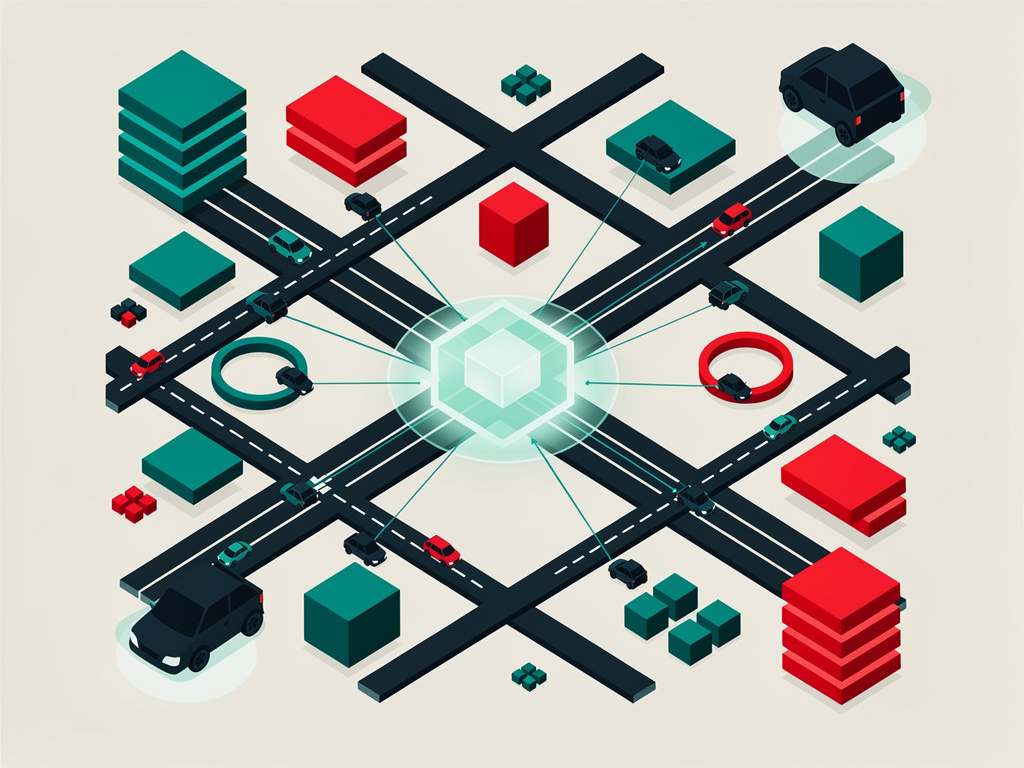
Nuro, the Mountain View–based autonomous vehicle company best known for its driverless delivery pods, is now testing its self-driving technology on the streets of Tokyo. The move marks a significant international expansion for a company that has spent years refining its approach in controlled U.S. environments. And it signals something bigger: Japan is becoming a serious proving ground for Western AV companies.
The news, first reported by TechCrunch, confirms that Nuro has begun road testing in one of the world’s most complex urban driving environments. Tokyo’s narrow streets, dense pedestrian traffic, and unique driving culture present challenges that American suburbs simply don’t.
Why Tokyo, Why Now
Japan’s government has been aggressively courting autonomous vehicle developers. The country faces a demographic crisis — an aging population, a shrinking workforce, and growing labor shortages in logistics and transportation. Autonomous delivery isn’t a novelty there. It’s a potential lifeline.
In 2023, Japan passed legislation creating a framework for Level 4 autonomous driving on public roads, making it one of the first countries to do so at a national level. That regulatory clarity has attracted companies like Nuro, which can test and iterate without the patchwork of state-by-state rules it faces in the U.S.
Nuro co-founder Dave Ferguson has previously spoken about the company’s interest in international markets where the labor economics and regulatory conditions align. Tokyo checks both boxes. So does the cultural readiness — Japanese consumers have shown high acceptance rates for robotic services, from hotel concierges to convenience store automation.
But there’s a strategic calculation here too. Nuro has pivoted. Hard.
From Pods to Platform
The Nuro that’s testing in Tokyo isn’t the same company that once focused exclusively on building its own custom delivery vehicles. After laying off around 30% of its staff in late 2022 and facing the broader AV industry’s funding drought, Nuro shifted toward licensing its autonomous driving software stack to other vehicle manufacturers and logistics operators.
This Tokyo deployment appears to follow that model. Rather than deploying its distinctive R3 delivery bot, Nuro is running its autonomy software on third-party vehicles — testing perception, planning, and control systems in real Tokyo traffic conditions. The goal isn’t just to prove the tech works in Japan. It’s to prove the tech is portable.
That distinction matters enormously for Nuro’s business model. A company that sells software to OEMs and fleet operators scales very differently than one that manufactures and operates its own robots. The Tokyo tests are as much a sales pitch as they are an engineering exercise.
Nuro isn’t alone in eyeing Japan. Waymo has explored partnerships in the region. Chinese AV firms like Pony.ai and WeRide have been expanding across Asia. The competition for international AV contracts is heating up, and early presence in a market like Tokyo confers real advantages — local driving data, regulatory relationships, and brand recognition among potential partners.
The technical challenges shouldn’t be underestimated. Tokyo’s driving patterns differ substantially from American cities. Cyclists weave through traffic without dedicated lanes. Pedestrians cross mid-block constantly. Road markings and signage follow different conventions. And then there’s the left-hand driving. Every perception model, every prediction algorithm, every planning heuristic needs adaptation.
This is precisely why the data is valuable. An autonomy stack that performs well in both Phoenix and Tokyo is far more compelling to a global automaker than one validated only in sunny Arizona suburbs.
The Bigger Picture
Nuro’s Tokyo testing fits into a broader pattern of AV companies going international as U.S. growth slows or stalls. Regulatory uncertainty in cities like San Francisco, political headwinds in states reconsidering AV permissions, and the sheer difficulty of scaling robotaxi operations profitably have pushed companies to look elsewhere.
Japan offers something rare: a wealthy market with genuine demand, supportive regulation, and a population that doesn’t reflexively distrust robots. For Nuro, which raised over $2 billion in funding before its pivot, proving viability in Tokyo could unlock partnerships with Japanese automakers and logistics giants — companies like Toyota, Honda, SoftBank-backed ventures, and Yamato Transport.
There are risks. Cultural missteps. Technical failures in an unforgiving environment. The possibility that a local competitor emerges with better-adapted technology. But the upside is substantial.
Nuro’s bet is clear: the future of autonomous driving isn’t just American. The companies that figure out how to export their technology — adapting it to different cities, different regulations, different driving cultures — will be the ones that survive the industry’s brutal consolidation phase.
Tokyo is the test. In more ways than one.


 WebProNews is an iEntry Publication