
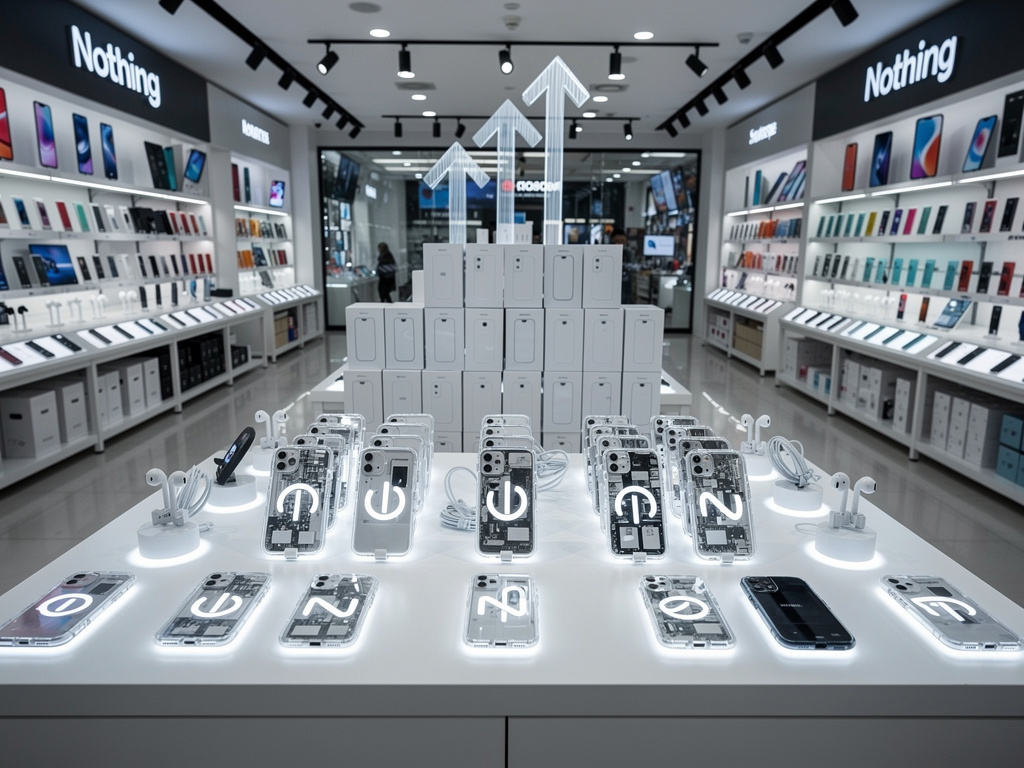
Best Buy stores across the United States now stock distinctive transparent smartphones from London-based Nothing. The move, which began June 12, marks the company’s biggest push yet into American physical retail. Shoppers can pick up the Phone (3), the Phone (4a) Pro, Headphone (a) and Ear (3) in more than 500 locations. The full catalog sits online at BestBuy.com too.
This isn’t Nothing’s first attempt at U.S. distribution. Earlier models arrived mainly through a restrictive developer program or online channels. General availability remained limited. Carrier partnerships stayed absent. Yet sales told a different story. Data from research firm Canalys showed a 120 percent jump in unit sales and 175 percent revenue growth for Nothing in the U.S. market during 2025. The figures caught attention. They also paved the way for this retail expansion.
Nothing CEO Carl Pei put the thinking plainly. “Nothing exists to challenge the status quo in consumer technology,” he said in a statement reported by Mashable. “We’re here to remind people that tech can still be fun, rebellious, and different. As more U.S. consumers are drawn to this ethos, we are excited to make our products more accessible to show them first-hand what makes Nothing special.”
The products themselves lean into that promise. Transparent backs reveal internal components. Glyph lights pulse with notifications in patterns users can customize. The Phone (4a) Pro pairs a 50-megapixel Sony sensor with AI imaging tricks. Its triple-camera setup aims for versatility without flagship pricing that starts around $500. The Phone (3) pushes further with stronger specs and a larger silicon-carbon battery that promises all-day life plus fast wired charging. Audio adds variety. Over-ear Headphone (a) delivers comfortable fit and strong sound. Ear (3) buds emphasize clarity and battery stamina.
But availability tells only part of the tale. Nothing products appeared unofficially in some Best Buy locations weeks earlier. They filled shelf space once occupied by OnePlus devices. That shift carried irony. OnePlus, once hailed for affordable flagship-killers, had scaled back its U.S. retail footprint. Nothing stepped into the gap. 9to5Google first flagged the quiet arrival in May. The official partnership simply made it permanent and widespread.
Success in Canada provided the blueprint. Nothing launched there through Best Buy last year. Positive traction encouraged executives to replicate the model stateside. In-store displays now let customers hold the hardware, test the Glyph interface and judge build quality firsthand. That tactile experience matters. Many buyers hesitate to order premium unlocked phones sight unseen. Best Buy offers immediate comparison against Samsung Galaxy models or Google Pixels on nearby shelves.
Still, obstacles remain. Nothing phones arrive unlocked. They work on major carriers yet lack subsidized deals or carrier-specific financing that drive volume for bigger brands. The U.S. market stays dominated by Apple and Samsung. Together they claim the lion’s share of sales. Midrange alternatives from Motorola, Sony or older OnePlus models compete for the same buyers who value something different. Nothing must prove its unique look translates into loyalty and repeat purchases.
Analysts point to broader industry stagnation. Phone designs have grown similar. Glass slabs with minimal differentiation dominate store displays. Nothing’s transparent panels and LED patterns stand apart. The company has doubled down on software features too. Nothing OS delivers a clean Android experience with useful widgets and quick toggles. Recent updates added AI productivity tools that summarize calls or organize notes. Those additions could sway users tired of bloatware.
Reviews highlight strengths. The Phone (4a) Pro earns praise for balancing price and performance, according to testing at Android Central. Headphone (a) delivers unexpected comfort and audio punch for the cost. Yet gaps exist. The CMF sub-brand, now operating somewhat independently from India, offers even more affordable colorful devices. Those models remain absent from Best Buy shelves for now. Their inclusion could broaden appeal to budget-conscious shoppers.
Nothing’s trajectory reflects calculated risks. Founder Carl Pei left OnePlus to start the company in 2020 with a focus on transparency, both literal and figurative. Early earbuds gained cult followings. Phones followed. Each generation refined the formula while avoiding direct flagship wars. The Phone (3) represents a step up in ambition. It carries higher pricing that puts it near Galaxy S25 territory. Whether enough Americans will pay full price without carrier discounts will decide the next chapter.
Retail partnerships like this one rarely guarantee success. Sony once maintained modest U.S. presence with distinctive Xperia phones. Sales stayed niche. Essential, the modular smartphone startup, flamed out after initial hype. Nothing draws partial lineage from that world yet has scaled further with global shipments and consistent releases. The Best Buy deal tests whether physical visibility can accelerate growth beyond online enthusiasts.
Early signs look promising. Foot traffic in electronics stores still matters for discovery. Younger buyers especially respond to novel design. Glyph lights turn a silent phone into a conversation starter. Customization options encourage longer engagement. If Nothing sustains momentum from its 2025 gains, expect more models and perhaps eventual carrier cooperation.
Competitors watch closely. Google pushes Pixel features and AI. Samsung floods the market with foldables and midrange options. Apple commands premium loyalty. None offers the playful transparency Nothing sells. That difference could carve a loyal segment. Or it could remain a curiosity that appeals mainly to gadget fans.
Either way, the shelves look more interesting already. Walk into a Best Buy now and you might spot glowing LED patterns amid the usual black rectangles. The phones invite touch. They invite questions. In an industry that sometimes feels predictable, that spark counts. Nothing bet that American shoppers would respond to fun hardware again. This retail expansion puts that wager to the test across hundreds of stores from coast to coast.
Recent coverage reinforces the optimism. Android Police called the arrival a return of excitement to retail displays and noted potential for Nothing to influence design trends through its AI experiments. How the company follows through on software support, camera improvements and future pricing will determine if this launch becomes a footnote or foundation for larger ambitions.


 WebProNews is an iEntry Publication