
Unlocking Alzheimer’s Enigma: How Northwestern’s NU-9 Could Tame Dementia Like Everyday Cholesterol
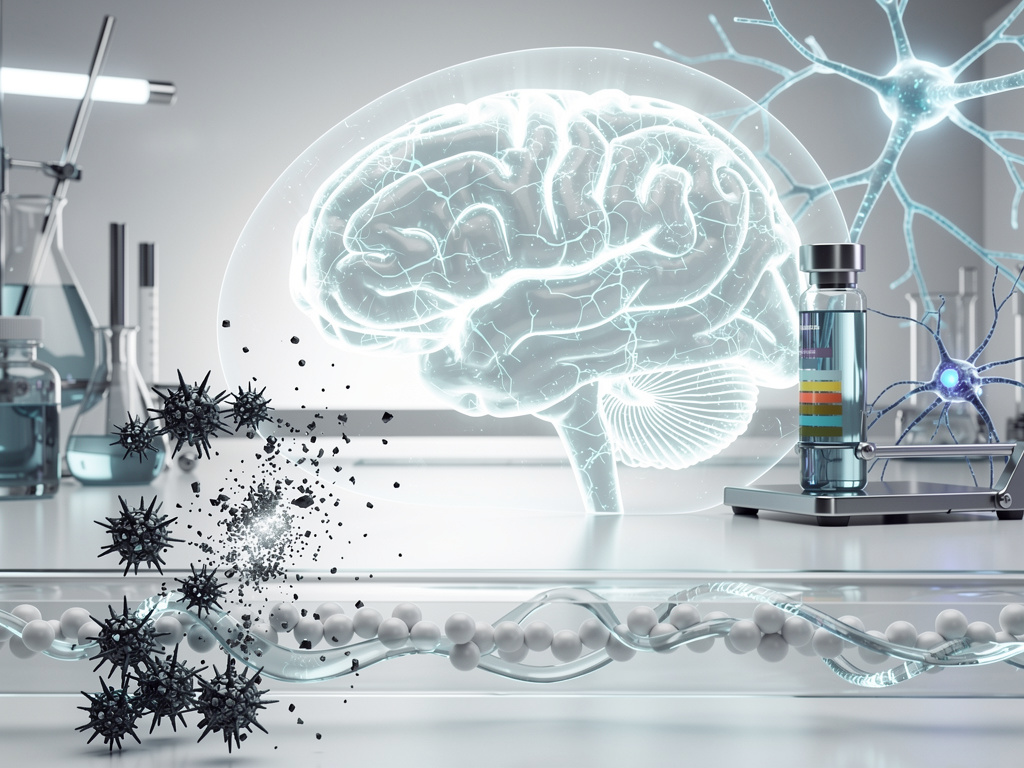
In the relentless pursuit of conquering Alzheimer’s disease, a groundbreaking development from Northwestern University is sparking renewed optimism among neuroscientists and pharmaceutical experts. Researchers at the institution have unveiled an experimental drug called NU-9, which demonstrates remarkable potential to intervene in the disease’s progression before symptoms even manifest. This innovation targets a newly identified toxic form of amyloid beta oligomers, proteins long implicated in Alzheimer’s pathology, offering a preventive approach that could transform how we manage this debilitating condition.
The study, detailed in a recent publication, showcases NU-9’s ability to dramatically reduce brain changes in pre-symptomatic animal models. By addressing reactive astrogliosis—a inflammatory response in glial cells—the drug appears to halt the cascade of neural damage that leads to memory loss and cognitive decline. This isn’t just another incremental step; it’s a paradigm shift, suggesting that Alzheimer’s might one day be controlled through routine interventions, much like high cholesterol is managed with statins today.
Drawing from extensive trials in mice, the Northwestern team observed that NU-9 not only mitigates toxic protein buildup but also preserves neuronal health over extended periods. As the global burden of Alzheimer’s continues to escalate, with millions affected and billions in economic costs, such advancements underscore the urgency for early detection and intervention strategies that could preempt the disease’s devastating effects.
Targeting the Invisible Culprit
At the heart of this breakthrough lies a deeper understanding of Alzheimer’s earliest mechanisms. Traditional treatments have focused on clearing amyloid plaques after they’ve formed, but Northwestern’s approach zeroes in on a “glia-associated” subtype of amyloid beta oligomers, which trigger harmful inflammation in the brain’s support cells. By inhibiting this process, NU-9 prevents the downstream effects that erode cognitive function.
The research, supported by grants from the National Institutes of Health, builds on years of investigation into neurodegenerative diseases. Scientists like P. Hande Ozdinler and William L. Klein have pioneered this work, identifying how these oligomers interact with astrocytes, leading to a toxic environment that accelerates neuronal death. In animal models, administering NU-9 before symptom onset resulted in brains that resembled those of healthy controls, with reduced inflammation and preserved synaptic integrity.
This preventive strategy aligns with emerging evidence that Alzheimer’s pathology begins decades before clinical signs appear. Imaging studies and biomarker research have shown that subtle brain changes can be detected in individuals as young as their 40s, prompting calls for widespread screening programs akin to those for cardiovascular risks.
From Lab Mice to Human Hope
Translating these findings to humans represents the next critical frontier. Northwestern’s Mesulam Institute for Cognitive Neurology and Alzheimer’s Disease, a hub for cutting-edge research, is already planning longitudinal studies to assess NU-9’s efficacy in early-stage patients. Preliminary data from the institute’s ongoing trials suggest that the drug could extend its protective effects, potentially delaying or even preventing the onset of dementia in at-risk populations.
Industry insiders note that this development comes at a pivotal time, as the field grapples with mixed results from antibody-based therapies like lecanemab and donanemab. While those drugs slow progression in mild cases, they often come with side effects such as brain swelling. NU-9, by contrast, targets upstream processes, potentially offering a safer profile for long-term use.
Collaborations with pharmaceutical partners are in the works to accelerate clinical trials. Experts predict that if human studies mirror the animal results, NU-9 could enter phase I testing within the next two years, fast-tracking a path to regulatory approval under frameworks designed for breakthrough therapies.
Echoes from the Scientific Community
Recent discussions on social platforms highlight the excitement surrounding this research. Posts from researchers and science communicators emphasize how NU-9’s mechanism could represent a “game-changer,” with some drawing parallels to cholesterol management drugs that have revolutionized heart disease prevention. One prominent voice described it as a step toward making Alzheimer’s a manageable chronic condition rather than an inevitable decline.
Building on this, reports from various outlets amplify the potential. For instance, a piece in Futurism details how scientists believe NU-9 could arrest early stages of the disease in mice, setting the stage for a possible cure. This aligns with findings from Northwestern’s own announcements, where the drug is shown to rescue neurons from reactive astrogliosis.
Moreover, broader research trends support this optimism. A study published in the journal Alzheimer’s & Dementia, as reported by ScienceDaily, explains that NU-9 blocks a hidden toxic protein, reducing inflammation linked to disease progression. Such insights are fueling investment in similar compounds, with biotech firms eyeing partnerships to develop companion diagnostics for early detection.
Challenges in the Path Ahead
Despite the promise, hurdles remain in scaling this treatment. Drug development for neurological disorders is notoriously complex, with high failure rates in late-stage trials due to the blood-brain barrier’s impermeability. NU-9’s design, however, incorporates features that enhance brain penetration, drawing from lessons learned in prior neurodegenerative research.
Regulatory bodies like the FDA are increasingly supportive of innovative Alzheimer’s therapies, but they demand robust evidence of safety and efficacy. Northwestern researchers are addressing this by extending animal studies to monitor long-term outcomes, including memory retention and behavioral changes over months.
Economic considerations also loom large. With Alzheimer’s care costs projected to soar, preventive drugs like NU-9 could yield massive savings, but pricing and accessibility will be key debates. Industry analysts anticipate that successful trials could attract significant funding from venture capital and government grants, accelerating the timeline to market.
Innovative Mechanisms Unveiled
Delving deeper into NU-9’s biochemistry, the compound inhibits specific pathways that amplify amyloid toxicity. In detailed cellular assays, it disrupts the formation of harmful oligomers without affecting benign protein functions, a selectivity that minimizes off-target effects. This precision is a hallmark of modern drug design, informed by advanced proteomics and AI-driven modeling.
Comparisons to cholesterol-lowering statins are apt, as both target modifiable risk factors early. Just as statins reduce LDL levels to prevent heart attacks, NU-9 could normalize brain protein dynamics to avert cognitive decline. Researchers at Northwestern emphasize that this approach might integrate with lifestyle interventions, such as diet and exercise, for synergistic effects.
Ongoing collaborations with institutions like the University of Oslo, which have explored related RNA repair mechanisms, could further enhance NU-9’s profile. By combining insights from multiple studies, the field is moving toward multifaceted therapies that address Alzheimer’s multifactorial nature.
Global Implications and Future Visions
The international research community is watching closely. Breakthroughs in related areas, such as nanoparticle-based plaque clearance reported in ScienceAlert, complement NU-9’s strategy, suggesting a convergence of technologies that could overwhelm the disease.
In terms of public health, widespread adoption of such treatments could reshape aging societies. Countries with high elderly populations, like Japan and parts of Europe, stand to benefit immensely, potentially reducing the strain on healthcare systems.
Looking ahead, Northwestern plans to explore NU-9’s applications in other neurodegenerative conditions, such as Parkinson’s, where similar glial inflammation plays a role. This broader utility could amplify the drug’s impact, positioning it as a cornerstone in brain health management.
Pioneering a New Era in Neurology
As trials progress, ethical considerations around early intervention come into focus. Who should receive preventive treatment? Genetic markers like APOE4 could guide selection, but equitable access remains a concern. Bioethicists argue for frameworks that balance innovation with inclusivity.
Patient advocacy groups are rallying behind this research, with organizations like the Alzheimer’s Association funding related studies. Their involvement ensures that developments prioritize real-world needs, from symptom management to quality of life improvements.
Ultimately, Northwestern’s work with NU-9 embodies the hope that science can outpace Alzheimer’s relentless march. By intervening at the disease’s roots, this drug could redefine aging, allowing more individuals to retain their memories and independence well into their later years.
Bridging Discovery and Delivery
To bring NU-9 to clinics, researchers are refining dosing regimens and delivery methods. Oral formulations are under exploration to enhance patient compliance, drawing from successes in other chronic disease managements.
Partnerships with big pharma could provide the resources needed for large-scale trials. Insiders speculate that companies like Eli Lilly, already invested in Alzheimer’s, might pursue acquisitions or licensing deals.
In the meantime, the Northwestern team continues to publish findings, fostering transparency and collaboration. Their latest paper in Northwestern Now highlights the drug’s pre-symptomatic efficacy, inviting peer review and further innovation.
Sustaining Momentum in Research
The ripple effects of this breakthrough extend to education and training. Universities are incorporating these findings into curricula, preparing the next generation of neuroscientists for a field on the cusp of transformation.
Funding streams are diversifying, with philanthropic contributions supplementing federal grants. High-profile donors, inspired by personal connections to Alzheimer’s, are accelerating progress.
As we stand on this threshold, the convergence of biology, technology, and medicine promises a future where Alzheimer’s is no longer a sentence but a condition we can control. Northwestern’s NU-9 lights the way, embodying the tenacity of scientific inquiry in the face of one of humanity’s greatest challenges.


 WebProNews is an iEntry Publication