
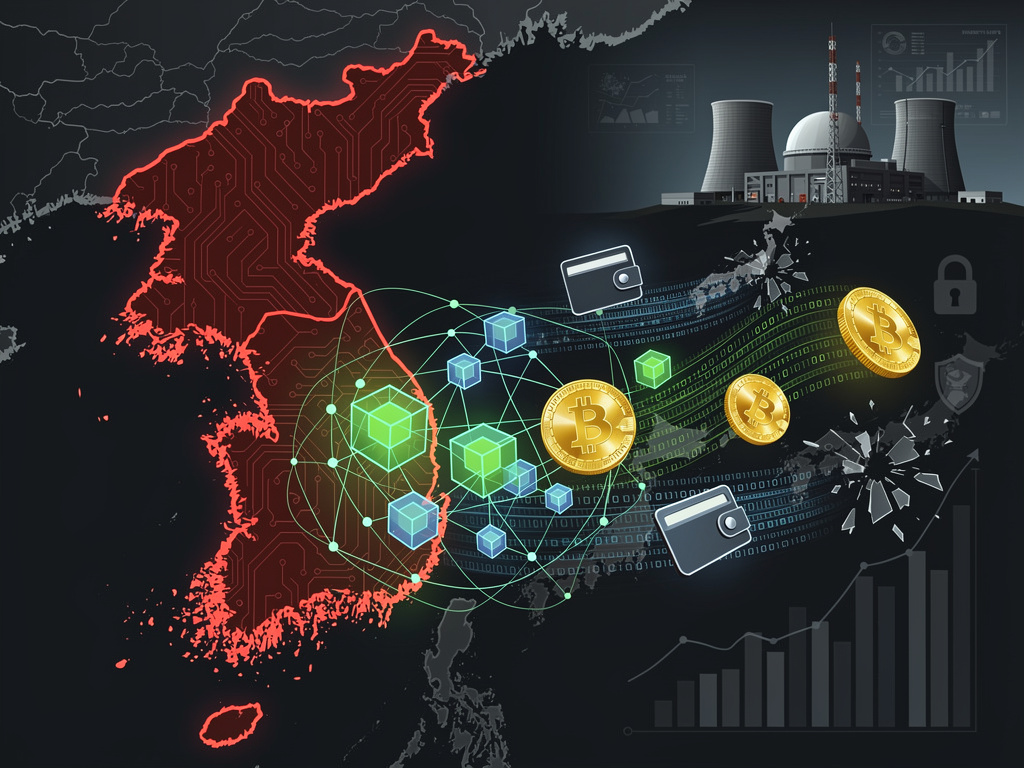
North Korea’s foreign ministry just broke its silence. A spokesperson dismissed years of accusations tying the regime to massive cryptocurrency thefts as “non-existent.” The statement, carried by state outlet KCNA, insists the country maintains a “consistent policy stand to protect cyber space.” Accusers? Branded “U.S. government organs, reptile media organs and plot-breeding organizations.”
This marks Pyongyang’s first direct public rejection through official channels. Timing couldn’t be sharper. Blockchain firm Gizmodo reported the denial amid fresh links to 2026’s biggest hacks. North Korean agents allegedly grabbed 76% of all stolen crypto funds this year through April—$577 million from just two strikes. Total haul since 2017? Over $6 billion.
And those attacks. Precision jobs. The Drift Protocol breach unfolded over six months. Posing as traders at a fall 2025 conference, hackers built trust via meetings abroad, Telegram chats, even a $1 million vault deposit. Then: exploit a code tool flaw, fake a wallet app. Gone in 12 minutes. $285 million.
Kelp DAO followed last month. $292 million vanished. Arbitrum’s council froze $75 million in ether using emergency powers—a move that sparked backlash over centralized control in decentralized finance. April alone saw 29 major incidents. Record high.
But North Korea says no. The cyber threat doesn’t exist. Bold claim when firms like TRM Labs track wallet flows straight to regime-linked addresses. U.S. Treasury ties proceeds to nuclear funding. FBI pins TraderTraitor ops on state actors. Lazarus Group—APT38, BlueNoroff, Stardust Chollima—leads the pack.
Recent hits pile up. South China Morning Post fingered Lazarus in the Kelp DAO job, calling it 2026’s largest known heist and a nuclear cash cow per UN panels: SCMP. Bybit lost $1.5 billion in February 2025. FBI confirmed North Korea: IC3. Chainalysis pegged DPRK thefts at $2.02 billion in 2025 alone—76% of service compromises.
Techniques evolve. Social engineering dominates. Fake IT workers infiltrate firms. Contagious Interview lures devs with bogus jobs. Laundering? Novice trader mimicry on Uniswap—intentional losses to bots they control. Or mining power buys to obscure trails.
Crypto’s appeal is clear. Bypasses U.S. sanctions, banking chokepoints. Iran mirrors this: $507 million in Tether to prop the rial after a 43% dollar plunge. Bitcoin mining from excess energy. Even Strait of Hormuz tolls in BTC after Tether freezes.
U.S. flips the script. Trump’s March 2025 order birthed a strategic bitcoin reserve from seizures. States like New Hampshire, Texas followed. Bitcoin for enemies—and allies?
Pyongyang’s retort warns of countermeasures. On-chain truth unmoved. Blockchain forensics don’t lie. Wallets cluster. Patterns repeat. Denials echo; funds flow to missiles.
Lazarus persists. CISA lists advisories: TraderTraitor targets blockchain firms. AppleJeus malware steals keys. Copperhedge beacons exchanges. No end in sight.
Industry fights back. Ripple shares DPRK intel via Crypto ISAC. Aave battles court freezes on recovered Kelp funds—”a thief does not own what he steals.” LayerZero pinned Kelp on Lazarus fast.
Regime revenue machine hums. $6 billion plus. Denials ring hollow against ledgers. Cyber frontier redraws power lines. North Korea punches heavy. World watches wallets.


 WebProNews is an iEntry Publication