
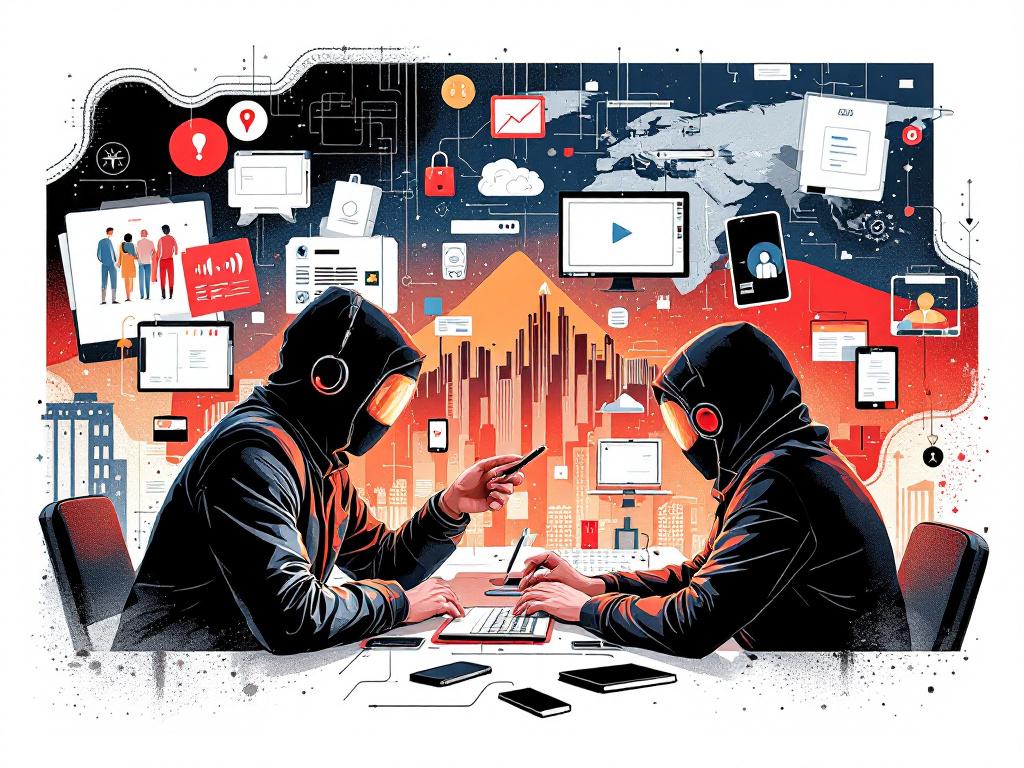
Exposing the Shadows: North Korean Hackers’ Elaborate Remote Work Deception
In the shadowy realm of cyber espionage, few groups cast as long a shadow as the Lazarus Group, a North Korean state-sponsored hacking collective notorious for its audacious operations. Recent revelations have pulled back the curtain on one of their most insidious tactics: infiltrating Western companies through fake remote job offers. Cybersecurity researchers have now captured this scheme in action, providing unprecedented insight into how these operatives blend social engineering with advanced technical prowess to breach corporate defenses.
The operation begins with seemingly legitimate job postings on platforms like LinkedIn, targeting IT professionals and developers. Once a candidate bites, the hackers pose as recruiters from reputable firms, often using stolen identities to build credibility. This isn’t just about phishing emails; it’s a full-fledged impersonation game, complete with video calls and fabricated company backgrounds. The goal? To plant insiders within target organizations, granting access to sensitive systems under the guise of legitimate employment.
What sets this apart is the real-time capture of the attack. Analysts at ANY.RUN, a malware analysis platform, set up honeypots—decoy systems designed to lure and observe attackers. In a stroke of investigative fortune, they recorded Lazarus operatives in the act, documenting every step from initial contact to attempted data exfiltration. This live footage, as detailed in reports, shows hackers using tools like remote desktop protocols to maintain persistent access, all while masquerading as remote workers.
The Mechanics of Deception: From Fake Interviews to Malware Deployment
Delving deeper, the scheme relies on a multi-layered approach. After luring victims with job offers, the attackers conduct interviews via platforms like Zoom, but with a twist: they insist on using specific screen-sharing tools that are actually laced with malware. According to The Hacker News, these tools enable remote code execution, allowing the hackers to take control of the victim’s machine during the “interview.” It’s a clever pivot from traditional spear-phishing, exploiting the trust inherent in hiring processes.
Once inside, the Lazarus team deploys custom remote access trojans (RATs), such as the newly identified ScoringMathTea RAT, which facilitates data theft and lateral movement within networks. Posts on X from cybersecurity experts highlight how these RATs exploit vulnerabilities in remote desktop protocols (RDP), surging in use by 768% in recent years, as noted in historical analyses. This isn’t isolated; it’s part of a pattern where Lazarus adapts open-source tools for malicious ends, blending them with zero-day exploits.
The financial stakes are immense. Lazarus has been linked to cryptocurrency heists totaling billions, funding North Korea’s regime. In 2025 alone, they’ve drained exchanges like Bybit and Upbit, amassing over $1.5 billion in one instance, per discussions on social platforms. These funds reportedly support missile programs, turning cybercrime into a geopolitical tool. The remote worker ploy extends this reach, targeting fintech and defense sectors for insider intelligence.
Global Reach and Evolving Tactics: Lazarus’ 2025 Campaigns
Lazarus’ activities in 2025 paint a picture of relentless innovation. Reports from NSFOCUS indicate 19 APT attacks in March, with Lazarus among the most active, focusing on East Asia and Eastern Europe. Their arsenal now includes PondRAT and ThemeForestRAT, deployed in DeFi attacks possibly via Chrome zero-days, as covered in cybersecurity briefings. This evolution shows a shift from blunt-force hacks to sophisticated social engineering, like the fake Deriv trading platform installer detailed in X posts.
Industrial organizations haven’t been spared. Kaspersky’s Q2 2025 report on APT attacks describes hijacked emails and ClickFix methods spreading malware across peers. Lazarus exploits these vectors, targeting critical infrastructure in healthcare and transportation, though they steer clear of outright disruption in favor of espionage. The group’s use of Dacls RAT for Linux and Windows platforms, dating back but refined, underscores their cross-platform agility.
European drone manufacturers have felt the sting too. ESET’s research reveals intensified attacks under Operation DreamJob, where Lazarus poses as recruiters to compromise aerospace firms. This ties into broader patterns, with fake job schemes serving as entry points for supply chain infiltrations, echoing their GitHub repository tricks from prior years.
Defensive Strategies and Industry Responses: Fortifying Against Insider Threats
Countering such threats demands a rethinking of hiring protocols. Companies are advised to verify recruiter identities through multiple channels and scrutinize any required software installations during interviews. Multi-factor authentication on RDP sessions, coupled with network segmentation, can limit lateral movement once breached. Tools like Darktrace’s AI-driven detection have proven effective in spotting anomalous RDP activity, as seen in case studies of rapid attacks evolving to full compromise in hours.
On the investigative front, platforms like ANY.RUN are pivotal. Their honeypot deployments not only captured Lazarus’ moves but also exposed identity theft tools, providing blueprints for threat hunters. Picus Security’s simulations of Lazarus TTPs help SOC teams prepare, replicating attacks to test defenses. This proactive stance is crucial, given the group’s exploitation of flaws like CVE-2024-21338 in Windows kernels to disable security tools.
International collaboration is ramping up. The FBI and cybersecurity agencies have issued alerts on Lazarus’ tactics, urging vigilance in remote hiring. Yet, the challenge lies in the human element—employees eager for opportunities are prime targets. Training programs emphasizing red flags, such as unusual interview demands, are becoming standard in corporate security playbooks.
The Broader Implications: Geopolitics and Cyber Warfare
The Lazarus Group’s operations transcend mere criminality; they’re instruments of state policy. North Korea’s isolation drives this cyber aggression, with hackers operating from hidden bases, often in Southeast Asia. Recent leaks, like those from APT35 files, reveal similar rapid exploitations, but Lazarus stands out for its scale and audacity. Their 2025 campaigns, including the Upbit heist netting $32 million, demonstrate a focus on high-value targets, funding regime priorities amid sanctions.
This raises questions about attribution and response. While researchers link attacks to Pyongyang through code signatures and infrastructure, definitive proof remains elusive. Diplomatic efforts, like U.N. resolutions, aim to curb these activities, but enforcement is spotty. Meanwhile, private sector innovations, from ESET’s exposures to NSFOCUS’s monthly briefings, fill gaps in public intelligence.
Looking ahead, the fusion of AI in attacks—Lazarus is experimenting with automated scanning tools like SQLMap—portends even stealthier operations. Defenders must match this pace, integrating threat intelligence feeds and behavioral analytics to detect anomalies before they escalate.
Case Studies in Resilience: Lessons from Recent Breaches
Examining specific incidents offers valuable lessons. The Bybit drain, attributed to malicious JavaScript in wallet software, shows how Lazarus infiltrates development pipelines. Victims unwittingly executed tainted code, leading to massive losses. Similarly, the Adobe Acrobat exploit via TTF fonts highlights their prowess in zero-day hunting, forcing software vendors to accelerate patching cycles.
In the remote worker domain, the captured scheme involved ANY.RUN traps that mimicked corporate environments, drawing hackers into revealing their playbook. This intelligence has informed updates to security frameworks, emphasizing endpoint detection and response (EDR) solutions that flag unusual remote access patterns.
Ultimately, the fight against Lazarus requires a blend of technology and awareness. As one X post from a cybersecurity analyst noted, these hackers don’t brute-force anymore; they engineer trust. Building resilient systems means anticipating not just the code, but the con.
Navigating Future Threats: Innovation and Vigilance in Cybersecurity
As 2025 unfolds, Lazarus continues to expand its malware arsenal, incorporating polyglot payloads that chain NSIS installers with Electron and Python scripts. This sophistication demands equally advanced countermeasures, like zero-trust architectures that verify every access request, regardless of origin.
Industry insiders stress the importance of sharing threat data through alliances like the Cyber Threat Alliance. Such collaborations have led to quicker identifications, as seen in the rapid response to the ConnectWise vulnerability exploitation.
In this ongoing cat-and-mouse game, the remote worker scheme exemplifies Lazarus’ adaptability. By capturing it live, researchers have armed defenders with knowledge, potentially disrupting future operations. Yet, the group’s persistence suggests that while individual tactics may be thwarted, the broader campaign endures, fueled by state imperatives and evolving techniques.


 WebProNews is an iEntry Publication