
Nokia’s Remarkable Reboot: From Smartphone Casualty to AI Telecom Powerhouse with Nvidia’s $1 Billion Lifeline
In the annals of technology history, few companies have endured as many reinventions as Nokia. Once synonymous with indestructible mobile phones like the iconic 3310, the Finnish giant dominated the early 2000s with devices that rang out across the globe billions of times a day. But the arrival of Apple’s iPhone in 2007 marked the beginning of a steep decline, as Nokia struggled to adapt to the touchscreen revolution and smartphone ecosystems. By 2013, it sold its handset business to Microsoft, shifting focus to network equipment and infrastructure. Fast forward to late 2025, and Nokia has orchestrated yet another pivot, this time into the heart of artificial intelligence-driven telecommunications, sealed by a $1 billion investment from chip powerhouse Nvidia.
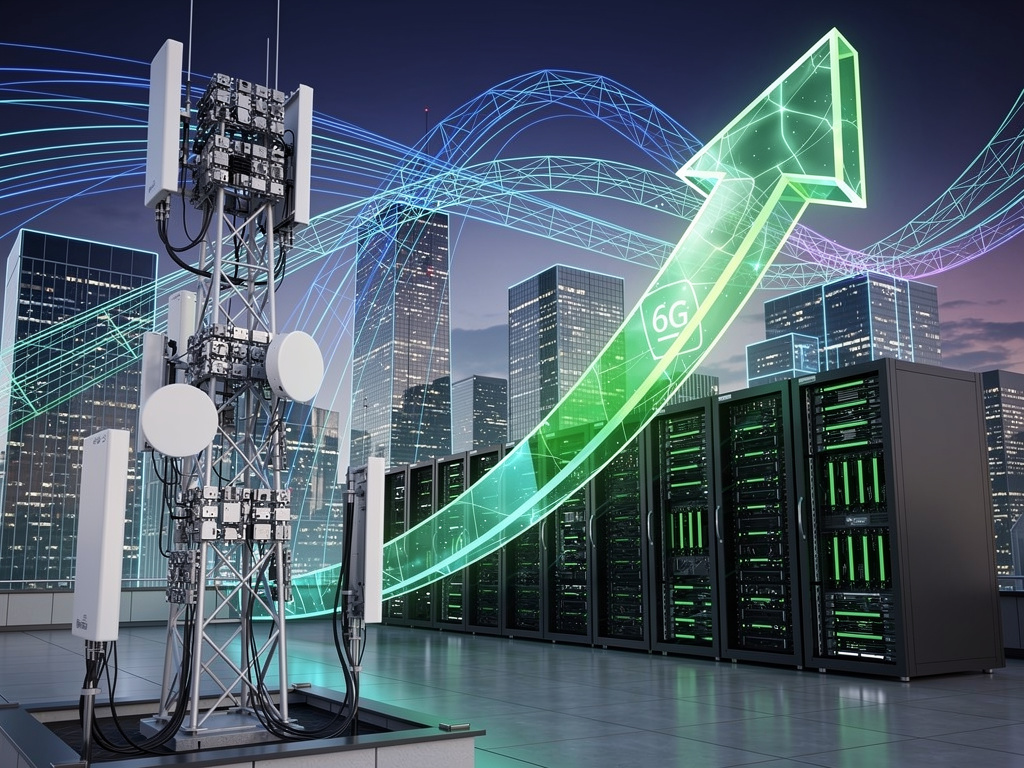
This partnership, announced in October 2025, positions Nokia as a key player in developing AI-native mobile networks, particularly for the impending 6G era. Nvidia’s investment not only injects capital but also integrates its advanced computing platforms into Nokia’s radio access network (RAN) portfolio. The deal has sparked a surge in Nokia’s stock, climbing over 20% in the immediate aftermath, reflecting investor optimism about the company’s role in AI infrastructure. As telecom operators grapple with exploding data demands from AI applications, Nokia’s collaboration with Nvidia aims to create more efficient, intelligent networks that can handle the load without massive energy consumption.
Industry analysts see this as a strategic move for both companies. Nvidia, riding high on its dominance in AI chips, is expanding into telecommunications to fuel the next wave of connectivity. For Nokia, it’s a chance to leverage its expertise in 5G equipment while embracing AI to optimize network performance. The partnership includes the introduction of Nvidia’s Arc Aerial RAN Computer, a 6G-ready platform that Nokia will incorporate into its products, enabling features like AI-driven beamforming and resource allocation.
The Fall from Mobile Dominance and Strategic Shifts
Nokia’s journey from mobile phone leader to infrastructure specialist is a tale of adaptation amid disruption. At its peak, the company sold 126 million units of the 3310 alone, but the smartphone era exposed weaknesses in software innovation and ecosystem building. The Microsoft acquisition of its devices division for $7.2 billion in 2014 allowed Nokia to concentrate on networks, where it became a major supplier of 5G gear to carriers worldwide. However, challenges persisted, including intense competition from Huawei and Ericsson, geopolitical tensions affecting market access, and the need to cut costs through layoffs and restructuring.
Recent years have seen Nokia refine its focus on high-margin areas like optical networks and cloud services. The company’s Bell Labs division, a hotbed of innovation since the 1920s, has been pivotal in researching AI applications for telecom. This groundwork laid the foundation for the Nvidia deal, which builds on earlier collaborations. As reported in a Financial Times article, Nokia’s ability to “cut off businesses when they’re not working” has enabled pivots across industries, from rubber boots in its early days to today’s AI telecom solutions.
The $1 billion infusion from Nvidia, representing about a 2.9% stake, is more than financial support; it’s a vote of confidence in Nokia’s vision for AI-RAN (AI Radio Access Network). This technology uses machine learning to dynamically manage network resources, improving efficiency and reducing latency—crucial for applications like autonomous vehicles and augmented reality. T-Mobile US, an early partner, is already integrating these technologies into its 6G development, highlighting the deal’s potential to reshape carrier strategies.
Unpacking the Nvidia Partnership and Technological Synergies
Delving deeper into the agreement, Nvidia and Nokia are co-developing AI-native networks that embed intelligence directly into the infrastructure. Nvidia’s press release details the Arc Aerial RAN Computer as a telecommunications computing platform designed for 6G, which Nokia will expand into its global access portfolio. This includes new AI-RAN products that leverage Nvidia’s GPUs for real-time data processing at the edge of networks. The collaboration also involves Dell Technologies providing PowerEdge servers to power these solutions, creating a robust ecosystem for telecom AI.
Posts on X (formerly Twitter) reflect widespread excitement about the deal, with users noting its implications for Europe’s tech resurgence and America’s push in 6G leadership. One sentiment echoed is that this partnership could “help America be at the center of the 6G revolution,” aligning with Nvidia CEO Jensen Huang’s statements. Such buzz underscores the deal’s broader geopolitical significance, as Western companies seek alternatives to Chinese dominance in telecom hardware.
From a technical standpoint, AI-RAN promises to address key pain points in current networks. Traditional RANs are static and energy-intensive, but AI integration allows for predictive maintenance, automated optimization, and better spectrum utilization. According to insights from Slashdot, Nokia’s reinvention taps into the AI boom, positioning it as essential infrastructure for data centers and cloud services. This is particularly timely as mobile AI traffic is expected to explode, driven by generative AI and edge computing demands.
Market Implications and Competitive Dynamics
The financial markets reacted swiftly to the announcement, with Nokia’s shares jumping 22% on the news, as covered by CNBC. This surge reflects investor belief in Nokia’s turnaround potential, especially after years of underwhelming performance. Analysts at The Motley Fool have pondered whether Nokia is a “must-own stock for 2026,” citing the AI strategy boost from the Nvidia tie-up. However, skeptics warn that execution risks remain, given past integration challenges in telecom mergers.
Competitively, this deal intensifies rivalry with Ericsson, which has its own AI initiatives, and Huawei, though the latter faces restrictions in many markets. Nvidia’s involvement could accelerate Nokia’s edge in Western alliances, particularly in the US, where policies favor domestic innovation in critical technologies. The partnership also signals a shift toward “AI-native” 6G, where networks are designed from the ground up with AI, rather than retrofitting it onto 5G systems.
Broader industry trends support this move. As data centers and cloud providers demand seamless connectivity, companies like Nokia are evolving into hybrid players that bridge telecom and computing. The Nvidia investor relations page emphasizes how this collaboration paves the way for new AI services, enhancing consumer experiences amid growing mobile AI traffic.
Innovation Legacy and Future Prospects
Nokia’s storied innovation legacy, from inventing the first cellular networks to winning Nobel Prizes through Bell Labs, provides a strong foundation for this AI pivot. The company has invested heavily in R&D, with over 20,000 patents in telecom and AI. This intellectual property, combined with Nvidia’s chip expertise, could yield breakthroughs in energy-efficient networks, a critical need as sustainability becomes a telecom priority.
Looking ahead, the partnership aims to standardize AI-RAN technologies, potentially influencing global 6G specifications. Early adopters like T-Mobile are testing integrations that could reduce operational costs by up to 30%, according to industry estimates. Posts on X highlight optimism, with some users calling it a “nightmare for competitors” and a boon for customers, suggesting renewed consumer interest in Nokia’s brand.
Challenges loom, including regulatory hurdles in data privacy for AI networks and the need for widespread carrier adoption. Yet, Nokia’s track record of resilience—surviving multiple industry upheavals—suggests it could thrive. As one Financial Times piece notes, Nokia’s pivots demonstrate rare agility, allowing it to thrive in new domains.
Strategic Investments and Global Reach
Nvidia’s $1 billion stake is part of a broader strategy to embed its technology in emerging sectors. By partnering with Nokia, it gains access to a global footprint in over 100 countries, accelerating AI adoption in telecom. This is evident in Nokia’s expansion of AI-RAN products, as detailed on its official newsroom, which outlines plans for accelerated development of next-generation networks.
The deal also bolsters Europe’s tech ambitions, with X posts celebrating it as a step toward continental resurgence. In the US, it aligns with efforts to reclaim telecommunications leadership, countering Asia’s advances. Collaborations with firms like Dell further strengthen the ecosystem, providing end-to-end solutions for operators.
For Nokia, this infusion aids in debt reduction and R&D acceleration, potentially leading to new revenue streams from AI services. Market watchers, including those at iPhone in Canada, describe it as reshaping Nokia’s future in AI networks and next-gen infrastructure.
Evolving Telecom Paradigms and Long-Term Vision
As 6G looms on the horizon, expected by 2030, AI integration will be non-negotiable. Nokia and Nvidia’s work could define standards, enabling ultra-reliable low-latency communications for industries like healthcare and manufacturing. This positions Nokia not just as a hardware supplier but as an AI innovator, diversifying beyond traditional telecom.
Investor sentiment, as gauged from X discussions, leans positive, with mentions of Nokia’s “comeback” through this alliance. The WebProNews highlights how the partnership boosts Nokia’s shares and advances 6G networks.
Ultimately, Nokia’s transformation exemplifies how legacy firms can harness emerging technologies to reclaim relevance. With Nvidia’s backing, it stands poised to lead in an era where AI and connectivity converge, potentially scripting its most ambitious chapter yet. (Word count approximation: 1240)


 WebProNews is an iEntry Publication