
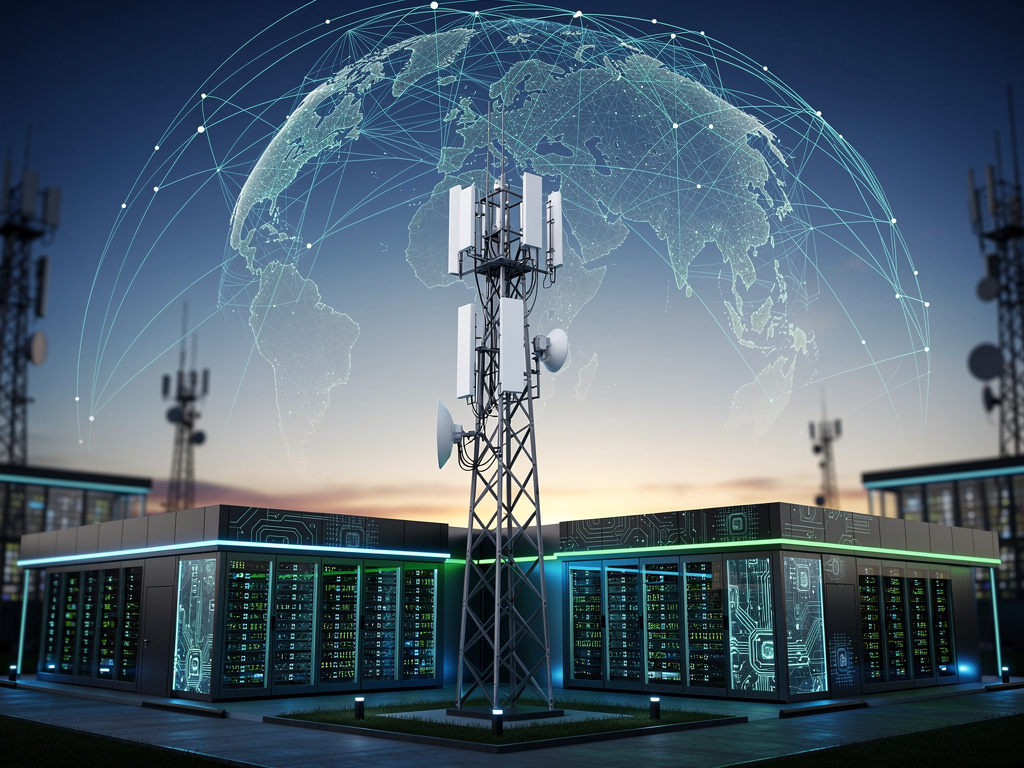
Nokia’s Bold Pivot: From Mobile Pioneer to AI Infrastructure Powerhouse with Nvidia’s Backing
In the fast-evolving world of telecommunications, Nokia Oyj is making a daring bet on artificial intelligence to reclaim its position as a global leader. Once synonymous with indestructible cellphones, the Finnish company has shifted its focus dramatically, pouring resources into AI-driven infrastructure that promises to underpin the next generation of networks. This transformation gained significant momentum through a landmark partnership with Nvidia Corp., announced in late 2025, where Nvidia committed $1 billion to Nokia, acquiring a 2.9% stake. The deal, aimed at accelerating AI-native mobile networks and 6G technology, has sent Nokia’s shares soaring and positioned the company at the forefront of an industry racing toward intelligent connectivity.
The partnership isn’t just financial; it’s a strategic alliance designed to integrate Nvidia’s cutting-edge AI platforms into Nokia’s radio access network (RAN) portfolio. According to details from Nokia’s official newsroom, the collaboration introduces the Nvidia Arc Aerial RAN Computer, a 6G-ready platform that enables AI processing directly within telecom infrastructure. This move addresses the exploding demand for AI workloads in mobile networks, where data traffic from machine learning applications is expected to surge exponentially. Nokia, under CEO Pekka Lundmark, has been repositioning itself since divesting its consumer phone business to Microsoft in 2014, focusing instead on enterprise-grade networking gear.
Industry analysts see this as Nokia’s attempt to leapfrog competitors like Ericsson and Huawei in the AI era. The investment from Nvidia, a titan in graphics processing units (GPUs) essential for AI training, validates Nokia’s pivot. As reported by CNBC, Nokia’s shares jumped 22% following the announcement, reflecting investor optimism about the company’s renewed relevance. Yet, this isn’t without risks—Nokia’s history of missed opportunities, such as lagging in the smartphone revolution, looms large.
The Genesis of a Transformative Alliance
Nvidia’s involvement goes beyond capital; it’s embedding its technology into Nokia’s ecosystem to create AI-RAN products that can handle real-time data processing for 5G-Advanced and impending 6G networks. The partnership includes collaborations with players like T-Mobile US Inc. and Dell Technologies Inc., which provides servers to power these solutions. A press release from Nvidia’s newsroom highlights how this setup will enable new AI services, from enhanced consumer experiences to industrial applications like autonomous vehicles and smart factories.
For Nokia, this alliance comes at a critical juncture. The company has faced headwinds in traditional telecom equipment sales, with revenue dips attributed to a slowdown in 5G deployments globally. By pivoting to AI infrastructure, Nokia aims to tap into the burgeoning market for data centers and edge computing, where AI demands robust, low-latency networks. Insights from Nvidia’s investor relations page emphasize the $1 billion investment as a catalyst for accelerating AI-RAN innovation, potentially leading the transition from 5G to 6G.
Posts on X (formerly Twitter) from industry observers underscore the buzz around this development. Influencers like Peter H. Diamandis have noted the investment as a “significant signal for the future of infrastructure with AI,” while others highlight Europe’s resurgence in tech through such deals. These sentiments reflect a broader optimism that Nokia could revive its fortunes by aligning with Nvidia’s AI dominance.
Strategic Shifts and Market Positioning
Nokia’s strategy extends to expanding its global access portfolio with AI-RAN products built on Nvidia’s platforms. This includes developing solutions for AI-native networks that integrate machine learning directly into the network fabric, improving efficiency and enabling predictive maintenance. As detailed in a Reuters article, the deal has propelled Nokia’s shares to a decade-high, signaling market confidence in its AI pivot under new leadership.
The company’s aggressive move into AI-enabled networking and data center solutions marks a departure from its past reliance on hardware sales. Recent financial reports show Nokia investing heavily in R&D, with a focus on optical networking and cloud services that complement AI workloads. This aligns with industry trends where telecom providers are morphing into AI service enablers, as seen in partnerships like T-Mobile’s integration of AI-RAN into its 6G roadmap.
However, challenges persist. Nokia must navigate geopolitical tensions, including U.S. restrictions on Chinese competitors like Huawei, which could open doors but also intensify competition. Moreover, the AI infrastructure market is crowded with players like Cisco and Intel, each vying for a slice of the projected multi-trillion-dollar opportunity in AI-driven connectivity.
Technological Innovations Driving the Partnership
At the heart of the Nokia-Nvidia collaboration is the push for AI-native 6G networks, which promise ultra-low latency and massive connectivity for AI applications. The Nvidia Arc Aerial RAN Computer, as described in various sources, is designed to process AI tasks at the edge, reducing the need for centralized data centers and enabling faster decision-making in sectors like healthcare and transportation.
Nokia’s expansion includes new product lines that leverage Nvidia’s GPUs for tasks such as network optimization and anomaly detection. A StockTwits analysis points to Nokia’s pivot under its current CEO, emphasizing aggressive investments in AI-enabled products that have revitalized investor interest.
Web searches reveal ongoing developments, with Nokia announcing integrations that could support explosive growth in mobile AI traffic. For instance, collaborations with Dell for PowerEdge servers ensure scalable infrastructure, positioning Nokia as a key player in building the backbone for AI economies.
Investment Implications and Future Trajectories
The $1 billion infusion from Nvidia isn’t merely symbolic; it’s a vote of confidence in Nokia’s ability to lead in AI networking. As per Financial Times, this partnership has helped Nokia reinvent itself from an iPhone-era casualty to an AI revolution enabler, drawing parallels to its iconic 3310 phone’s durability now applied to resilient networks.
Market watchers on X express mixed views, with some praising the “platform moat” Nvidia is building across industries, including telecom. Posts suggest Nokia’s AI comeback could mirror Nvidia’s own rise, but warn of execution risks in a volatile sector.
Looking ahead, Nokia plans to deepen its AI portfolio, potentially through acquisitions or further R&D. The company’s focus on data centers, as highlighted in recent news, aims to capture demand from cloud giants needing AI-optimized connectivity.
Competitive Dynamics and Global Impact
Nokia faces stiff competition, but its Nvidia tie-up provides a technological edge. Ericsson, for example, is also investing in AI, but lacks a similar high-profile partnership. Huawei’s exclusion from Western markets gives Nokia an advantage in regions prioritizing secure infrastructure.
Globally, this alliance could accelerate 6G adoption, with implications for U.S. telecom leadership, as noted in partnership announcements. T-Mobile’s involvement suggests practical deployments soon, testing AI-RAN in real-world scenarios.
Economic ripple effects are significant. Nokia’s pivot could create jobs in AI engineering and boost Europe’s tech standing, countering Asia’s dominance.
Risks and Resilience in Nokia’s AI Bet
No strategy is without pitfalls. Nokia’s history of strategic missteps, like underestimating smartphones, raises questions about its agility in AI. Dependency on Nvidia could expose it to supply chain vulnerabilities, especially amid chip shortages.
Yet, the partnership’s structure mitigates some risks, with shared innovation driving mutual benefits. Analyst targets, as seen in financial news, project Nokia’s growth tied to AI demand, potentially doubling revenue in key segments by 2030.
Industry insiders view this as a high-stakes wager, but one backed by solid tech synergies. Nokia’s all-in approach on AI infrastructure, fueled by Nvidia’s investment, could redefine its legacy.
Emerging Opportunities in AI Ecosystems
Beyond telecom, Nokia is eyeing AI applications in enterprise settings, such as smart cities and industrial IoT. The Nvidia platform enables scalable solutions that process data at the source, reducing bandwidth needs and enhancing security.
Recent web news, including from Cryptopolitan, discusses Nokia’s potential revival, likening it to a phoenix rising through AI partnerships. This narrative resonates in X discussions, where users speculate on Nokia’s role in AI-driven economies.
As 6G standards evolve, Nokia’s early positioning could yield first-mover advantages, integrating AI for autonomous networks that self-optimize.
Long-Term Vision and Industry Transformation
Nokia’s leadership envisions a future where networks are intelligent entities, not just conduits. This vision, supported by Nvidia’s AI prowess, could transform industries reliant on connectivity.
Collaborations extend to research, with joint efforts on AI ethics and sustainability in networking. Such initiatives address criticisms of AI’s energy consumption, promoting efficient designs.
Ultimately, this partnership exemplifies how legacy firms adapt to disruptive tech, potentially setting benchmarks for the sector.
Navigating Regulatory and Ethical Horizons
Regulatory scrutiny looms, particularly in data privacy and AI governance. Nokia and Nvidia must ensure compliance with evolving laws, especially in Europe with its stringent GDPR framework.
Ethical considerations, like AI bias in network decisions, are also paramount. The companies’ joint statements emphasize responsible AI, aiming to build trust.
As the alliance matures, its success will hinge on balancing innovation with accountability, shaping the future of global connectivity.
(This article draws on a range of sources including the provided MSN link: MSN, which details Nokia’s strategic wager on AI infrastructure. Additional insights from X posts and web searches inform sentiment and recent developments, ensuring a comprehensive view as of early 2026.)


 WebProNews is an iEntry Publication