
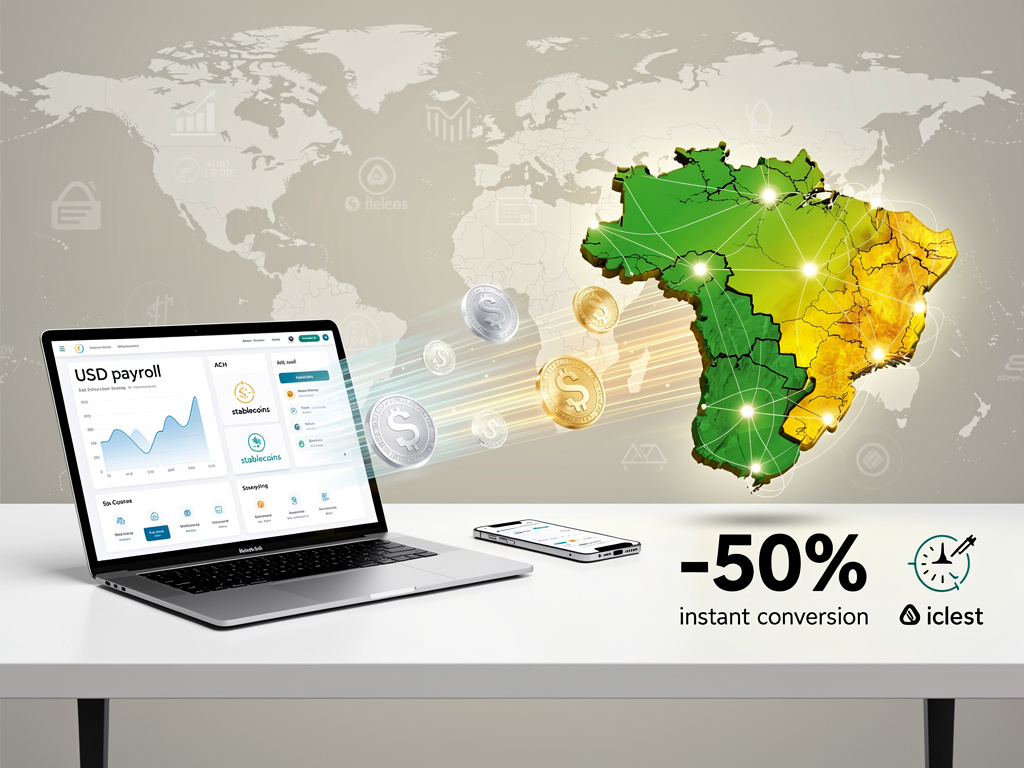
Brazil’s remote workers, increasingly tapping global job markets, now have a seamless path to USD payroll through a new partnership between stablecoin infrastructure firm Noah and digital wallet Picnic. Announced on January 22, 2026, the collaboration embeds Noah’s virtual USD accounts directly into the Picnic app, allowing Brazilian professionals to receive ACH payments from U.S. employers, convert instantly to stablecoins, and spend via debit cards—all without U.S. bank access or costly FX conversions.
The service slashes costs by up to 50% by eliminating multi-day delays, hidden fees, and forced currency swaps, according to details from the announcement. Users onboard via Picnic’s app, generate a unique Noah-powered USD virtual account, share details with employers for standard ACH transfers, and see funds settle as stablecoins in seconds. “Brazilian professionals are increasingly global, but the infrastructure they rely on to get paid is still local and outdated,” said Shah Ramezani, CEO of Noah, in a statement to Finextra. “At Noah, we’re building dollar-native financial infrastructure for global workforces and this partnership continues to remove cross-border payroll friction.”
This move taps into Brazil’s surging stablecoin demand, where 90% of crypto volume ties to USD-pegged assets and 2025 volumes hit R$74 billion (about $14 billion), as noted by João Ferreira, Picnic’s CEO. “These numbers show that stablecoins in Brazil are not about trading, they are about utility,” Ferreira told Crypto-Reporter. “People are already using digital dollars to solve real financial problems, and this partnership gives them a compliant, simple way to receive international income without losing value along the way.”
Brazil’s Remote Boom Meets Payment Barriers
Brazil boasts one of Latin America’s fastest-growing remote workforces, fueled by platforms like Upwork and U.S. tech hiring. Yet traditional cross-border payroll relies on slow wires or local banks prone to volatility amid Brazil’s real fluctuations. Noah’s tech bridges this by handling compliance, verification, and conversion in-app, powering payouts across 70+ countries via partnerships like Gnosis and Ledger.
Picnic, a Brazil-based wallet offering crypto investments, international Visa cards, and Pix integration, positions itself as a one-stop for global finance. Its app supports contactless payments, cashback up to 5%, and stablecoin holding, making it ideal for Noah’s rails. The duo’s integration lets users hold stablecoins or spend via Picnic cards, dodging Brazil’s high FX spreads.
Stablecoins have exploded in Brazil for utility, not speculation, mirroring global trends where 2025 volumes topped $35 trillion—surpassing Visa and Mastercard combined—as Noah highlighted in its funding news on its blog.
Noah’s Aggressive Global Push
Founded in 2020 by ex-Visa and Adyen execs Shah Ramezani and Thijn Lamers, Noah raised $22 million in seed funding in June 2025 from backers including Felix Capital to build stablecoin infrastructure. Its API supports real-time settlements in 50+ currencies, powering neobanks, payroll platforms, and exchanges. Recent deals include NALA for $850 billion emerging-markets flows, Ledger for cash-to-stablecoin in wallets, and Gnosis for DeFi payroll—where Picnic was an early integrator, per Noah’s blog.
“Our goal has always been to make stablecoins practical, secure, and easy to use,” Ramezani said about the Gnosis tie-up in FF News. “Partnering with Gnosis helps bridge the gap between traditional finance and open, programmable payments, without compromising user control.” Gnosis ecosystem apps like Picnic gained U.S. virtual accounts and on/off-ramps first.
With Ledger, Noah enabled EUR/USD accounts in the self-custody app, targeting remittances and payroll. “By enabling EUR and USD virtual accounts inside Ledger Wallet, we’re setting money free for millions,” Ramezani stated in IBS Intelligence. The partnership scales to hundreds of thousands of accounts monthly, saving billions in fees if applied to remittances.
Picnic’s Wallet Edge in Brazil
Picnic differentiates with smart wallets using Safe contracts—custodying $70 billion in assets—and features like virtual cards, Apple/Google Pay, and DeFi yields. Users praise its low-dollar rates and transparency, per app reviews on Google Play. It ties into Pix, Brazil’s instant payments system launched in 2020, which revolutionized local transfers.
Prior to Noah, Picnic partnered with Gnosis Pay for USDc cards topped via Pix, converting BRL to USD on-chain, as shown at Web Summit Rio. This Noah upgrade adds inbound payroll, completing the loop for Brazil’s digital natives who shun cash for wallets like Picnic.
The app’s focus on non-custodial crypto and investments aligns with Noah’s regulated rails, ensuring compliance amid Brazil’s evolving crypto rules.
Cost Savings and Speed Revolution
Traditional U.S.-Brazil payroll takes days with 5-10% fees from wires, conversions, and intermediaries. Noah-Picnic delivers seconds-long settlement at half the cost, auto-converting ACH to stablecoins like USDC/USDT via Circle/Tether ties. Users avoid FX leakage, preserving earnings amid real’s 20%+ annual volatility.
For employers, it’s plug-and-play ACH; for workers, instant access to hold, spend, or invest. This mirrors Noah’s NALA partnership, enabling global firms to pay African/Asian freelancers in local currency minutes after USD collection, per The Paypers.
Brazil’s stablecoin surge—90% of crypto volume—signals readiness, positioning the partnership to capture remote work growth projected at 30% yearly.
Regulatory Foundations and Future Flows
Noah holds licenses for compliant operations, managing KYC/AML at entry. Picnic leverages Brazil’s fintech-friendly regs, including Pix and payment institutions. No specific hurdles noted for the launch, building on Noah’s 10+ global nods.
Future expansions could include B2B settlements or more LatAm wallets, given Noah’s Portal integration for 70-country payouts. As stablecoins hit $4 trillion settlements in H1 2025, per Fintech Intel, Noah-Picnic exemplifies rails turning crypto into everyday finance.
For Brazil’s global talent, this means full dollar economy participation—earning, saving, spending without borders or banks dictating terms.


 WebProNews is an iEntry Publication