
Revolutionizing Skies: NOAA’s AI Leap in Global Weather Forecasting
The National Oceanic and Atmospheric Administration (NOAA) has ushered in a new era for meteorology with the deployment of its latest artificial intelligence-driven global weather models. Announced in a recent press release, this initiative represents a pivotal shift toward integrating advanced AI technologies into operational forecasting, promising enhancements in speed, accuracy, and resource efficiency. These models, developed in collaboration with leading tech firms and research institutions, are set to transform how forecasters predict everything from daily weather patterns to severe storms.
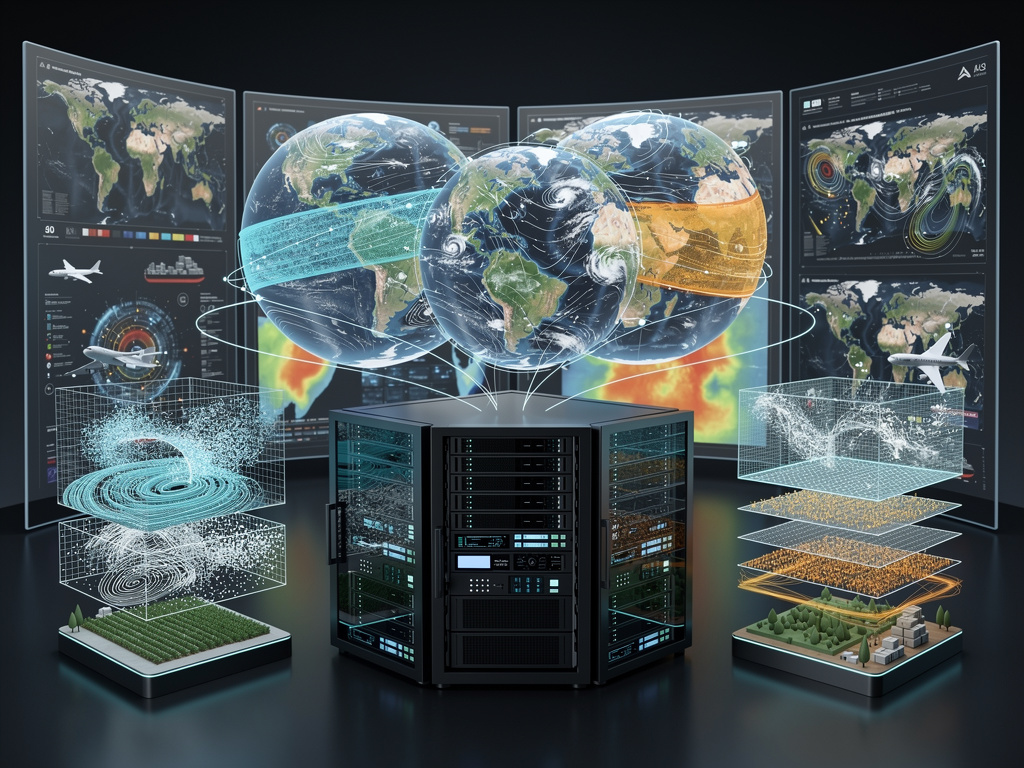
At the core of this rollout are three distinct AI applications: the AI Global Forecast System (AIGFS), the AI Global Ensemble Forecast System (AIGEFS), and the Hybrid Global Ensemble Forecast System (Hybrid-GEFS). Each is designed to complement NOAA’s existing physics-based models, such as the traditional Global Forecast System (GFS). The AIGFS, for instance, leverages machine learning algorithms trained on vast datasets to generate deterministic forecasts that rival the GFS in reliability but require significantly less computational power.
This development comes at a time when climate variability demands more agile prediction tools. Industry experts note that traditional numerical weather prediction (NWP) systems, while robust, often consume enormous supercomputing resources and time. NOAA’s AI models address these pain points by delivering forecasts up to 16 days out in mere minutes, using a fraction of the energy and hardware.
The Technological Backbone Powering AI Forecasts
The AIGFS is built upon foundational work from NOAA’s own announcement, incorporating elements from Google DeepMind’s GraphCast technology. Trained on a blend of NOAA’s GFS data, European Centre for Medium-Range Weather Forecasts’ ERA5 reanalysis, and high-resolution datasets, it produces four daily forecasts at a 0.25-degree resolution. This granularity allows for detailed predictions of atmospheric variables like temperature, wind, and precipitation.
Complementing it, the AIGEFS provides ensemble forecasts, offering a range of possible outcomes to quantify uncertainty. It generates 31-member ensembles, crucial for assessing risks in high-stakes scenarios such as hurricane tracking. The Hybrid-GEFS merges AI outputs with traditional methods, creating a blended approach that enhances overall forecast skill, particularly for tropical cyclone paths.
Computational savings are staggering: NOAA reports that these models use 91% to 99.7% fewer resources than their physics-based counterparts. A full 16-day AIGFS forecast runs in about 40 minutes on modest hardware, compared to hours on supercomputers for the GFS. This efficiency stems from AI’s ability to learn patterns from historical data rather than simulating physical processes from scratch.
Integration and Operational Impacts
Deployment of these models marks NOAA’s strategic pivot toward AI, as highlighted by NOAA Administrator Neil Jacobs, who described it as a “significant leap forward in American weather model innovation.” Forecasters at the National Weather Service now have access to these tools for real-time guidance, enabling quicker dissemination of warnings to the public and emergency responders.
Industry insiders point to the models’ performance in recent tests. For large-scale weather patterns and tropical tracks, the AI systems have shown superior accuracy in medium-range forecasts. However, challenges remain in predicting precipitation intensity and severe convective events, areas where physics-based models still hold an edge. NOAA plans iterative improvements, incorporating feedback from operational use.
Beyond NOAA, this move aligns with global trends. The European Centre for Medium-Range Weather Forecasts has experimented with similar AI tools, and private entities like Google DeepMind have released models such as WeatherNext 2, which boasts even faster generation times. Posts on X from meteorologists like those discussing GraphCast integrations underscore enthusiasm for these advancements, noting potential for hybrid systems to dominate future forecasting.
Collaborations and Development Journey
The path to these models involved partnerships with tech giants. Google DeepMind’s contributions, as detailed in their own announcements, provided the neural network architectures that underpin AIGFS. Training datasets drew from decades of reanalysis data, ensuring the AI could generalize across diverse climatic conditions.
NOAA’s Environmental Modeling Center led the effort, coordinating with the National Weather Service to validate outputs. Early prototypes were tested during the 2025 hurricane season, where AI forecasts for storm tracks showed promising alignment with observed paths, though refinements are needed for intensity predictions.
Cost reductions are a key selling point. By slashing computational demands, NOAA can redirect resources toward high-resolution regional models or expanded data assimilation. This is particularly vital as supercomputing costs rise and energy efficiency becomes a priority in an era of increasing environmental awareness.
Performance Metrics and Real-World Testing
Rigorous evaluations have been conducted, with metrics showing the AI models competitive or superior in 70-80% of global variables for 5-10 day forecasts. For instance, anomaly correlation scores for 500 hPa geopotential height—a key indicator of large-scale patterns—often exceed those of the GFS. These findings are echoed in coverage from CBS News, which reported on the rollout’s emphasis on speed and accuracy.
In tropical regions, the models have improved track error reductions by up to 10% in ensemble means. Yet, experts caution that AI’s data-driven nature can introduce biases if training sets lack diversity. NOAA mitigates this through continuous retraining and integration with observational data from satellites, radars, and buoys.
User sentiment on platforms like X reflects optimism mixed with scrutiny. Posts highlight the models’ potential to revolutionize severe weather alerts, with one noting a 99% reduction in compute needs, allowing for more frequent updates during events like heatwaves or blizzards.
Broader Implications for Meteorology and Beyond
The adoption of AI in weather prediction extends beyond NOAA. As reported by HPCwire, this deployment signifies a paradigm shift, where AI augments rather than replaces traditional methods. For industries reliant on forecasts—agriculture, aviation, and energy—these tools promise more reliable planning.
In agriculture, precise rainfall predictions could optimize irrigation and crop yields. Aviation benefits from better turbulence and icing forecasts, potentially reducing delays. Energy sectors, particularly renewables, gain from accurate wind and solar irradiance projections, aiding grid management.
However, ethical considerations arise. AI models’ “black box” nature raises questions about interpretability. NOAA addresses this by providing ensemble spreads and confidence intervals, ensuring transparency for end-users.
Future Horizons and Challenges Ahead
Looking ahead, NOAA envisions expanding AI applications to subseasonal and seasonal forecasts, tackling phenomena like El Niño. Collaborations with international bodies, such as the World Meteorological Organization, could standardize AI integration globally.
Challenges include data privacy and the need for robust validation frameworks. As AI evolves, ensuring models adapt to climate change-induced shifts in weather patterns is paramount. NOAA’s ongoing research, supported by federal funding, aims to refine these aspects.
Industry analysts predict that within five years, AI could handle 50% of global forecasting workloads. This forecast is bolstered by insights from 11Alive, which emphasized the models’ role in advancing forecast precision.
Economic and Societal Benefits Explored
The economic ripple effects are profound. Reduced computational costs could save NOAA millions annually, funds that might bolster climate resilience programs. For society, faster forecasts mean earlier evacuations during hurricanes, potentially saving lives and property.
In the context of increasing extreme weather, these models offer a proactive edge. Recent X discussions praise the technology’s scalability, with users noting its applicability to mobile apps for personalized alerts.
Moreover, the open-source elements of some AI frameworks encourage innovation. Developers worldwide can build upon these models, fostering a collaborative ecosystem in meteorology.
Global Comparisons and Competitive Edges
Comparatively, NOAA’s suite stacks up well against peers. The UK’s Met Office and China’s meteorological services are also investing in AI, but NOAA’s operational deployment sets a benchmark. As per Watts Up With That?, the system’s use of diverse data sources enhances its versatility.
Competitive advantages lie in NOAA’s vast observational network, providing proprietary data for training. This gives U.S. forecasts a potential edge in accuracy for North American events.
Yet, international cooperation is key. Joint initiatives could pool resources for global models, addressing transboundary weather phenomena like monsoons or polar vortices.
Sustaining Innovation in Weather Tech
To sustain momentum, NOAA is investing in talent development, training meteorologists in AI literacy. Partnerships with universities aim to cultivate the next generation of hybrid experts.
Technological hurdles, such as integrating AI with quantum computing for even faster simulations, are on the horizon. Early explorations suggest quantum enhancements could further compress forecast times.
Ultimately, this deployment underscores AI’s transformative potential in environmental sciences, paving the way for more resilient societies amid climatic uncertainties. As the models mature through real-world application, their impact will likely extend far beyond the forecast room, influencing policy, business, and daily life.


 WebProNews is an iEntry Publication