
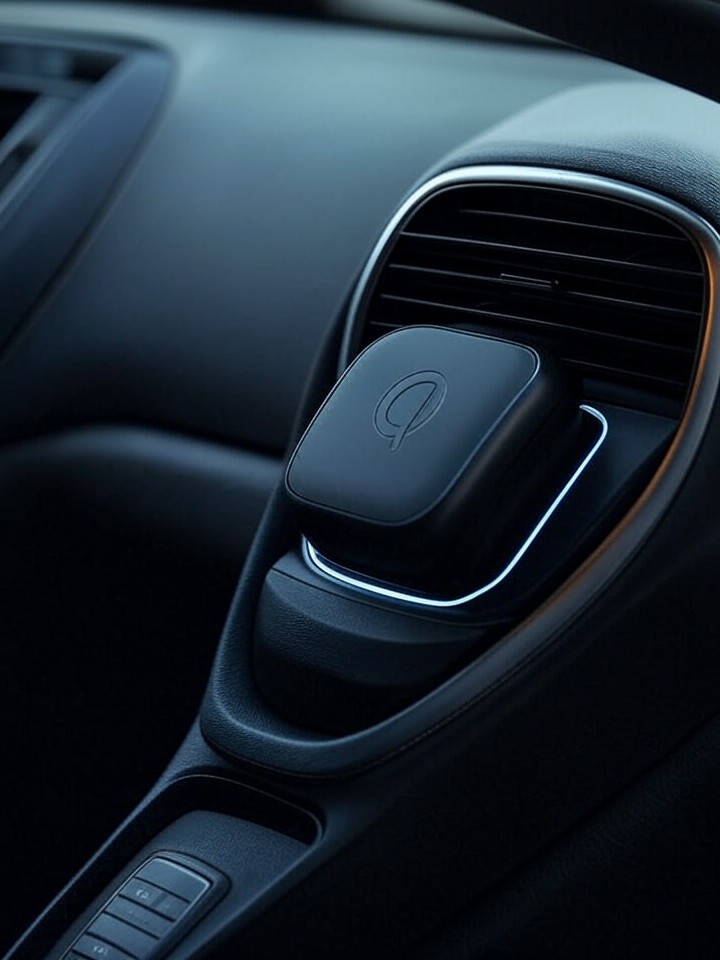
Nissan’s Magnetic Leap: Revolutionizing In-Car Wireless Charging
In the fast-evolving world of automotive technology, Nissan has emerged as a frontrunner by addressing one of the most persistent frustrations for drivers: unreliable in-car wireless charging. The Japanese automaker recently unveiled its adoption of Qi2 magnetic wireless charging technology in select 2026 models, promising to eliminate the headaches of misaligned phones and interrupted charging sessions. This move not only enhances user convenience but also positions Nissan at the forefront of integrating cutting-edge consumer electronics into vehicles.
Drawing from insights in a recent article by Digital Trends, Nissan’s implementation of Qi2 technology introduces magnetic alignment, ensuring devices stay securely in place even on bumpy roads. This innovation builds on the Qi standard but adds MagSafe-like features, allowing for faster charging speeds up to 15 watts and reduced heat buildup. For industry professionals, this represents a subtle yet significant shift in how automakers are blending smartphone ecosystems with vehicle interiors, potentially influencing design standards across the sector.
The rollout begins with the 2026 Nissan Murano and Pathfinder SUVs, marking the first U.S. market vehicles to feature this advanced system. According to details shared in the same Digital Trends piece, these models will include built-in Qi2 chargers that magnetically lock compatible smartphones, such as the latest iPhones and Android devices with Qi2 support, into optimal position. This addresses common complaints about earlier wireless chargers, where vibrations from driving often caused devices to slip, leading to inefficient charging or complete failures.
Magnetic Alignment: The Game-Changer for Road Warriors
Nissan’s engineers have focused on real-world usability, recognizing that drivers need reliable power without constant adjustments. As highlighted in a report from The Verge, the magnetic hold mimics Apple’s MagSafe technology, which has proven popular for its stability. In practical terms, this means a phone can charge from 10% to 90% in about 90 minutes, a marked improvement over previous systems that struggled with alignment issues.
Beyond the Murano and Pathfinder, Nissan plans to expand this feature to other models like the Rogue and Sentra, as noted in a blog post from Carson Nissan. This broader adoption signals Nissan’s commitment to standardizing high-quality wireless charging across its lineup, potentially pressuring competitors to follow suit. Industry insiders point out that while wireless charging has been available in cars for years, the inconsistency has deterred widespread enthusiasm until now.
The technology’s roots trace back to the Wireless Power Consortium’s Qi2 standard, finalized in 2023, which incorporates magnetic positioning for better efficiency. Nissan’s early adoption in the U.S. market gives it a competitive edge, especially as electric vehicles and connected cars demand more seamless integration of personal devices. Experts suggest this could reduce reliance on wired connections, freeing up USB ports for other uses and simplifying cabin layouts.
Engineering Insights from Nissan’s Team
At the heart of this development are key figures like Angela Moon, a senior manager at Nissan Technical Center North America, who specializes in automotive electrical systems. With over two decades of experience, Moon has spearheaded projects that integrate advanced tech into vehicles, as detailed in a press release from Nissan News. Her team’s work on Qi2 emphasizes not just speed but also safety, ensuring that charging doesn’t interfere with vehicle electronics or cause overheating.
Complementing Moon’s efforts is Matt Zimmerman, a research and development manager with extensive automotive background. The Nissan News release quotes Zimmerman on the importance of user-centric design, noting how the new charger minimizes distractions by keeping phones securely mounted. This focus on ergonomics is crucial for long drives, where maintaining battery life without fumbling for cables can enhance safety.
From a technical standpoint, Qi2 uses resonant inductive coupling, similar to methods described in broader discussions of wireless power transfer. While Nissan’s global website archives older innovations like its Wireless Charging System for electric vehicles, as seen on Nissan Global, the in-car application refines this for consumer devices. The result is a system that delivers power more consistently, even during sharp turns or over rough terrain.
Market Reception and Consumer Sentiment
Social media buzz, particularly posts on X (formerly Twitter), reflects growing excitement about Nissan’s Qi2 integration. Users have praised the magnetic feature for solving everyday annoyances, with some noting faster charging times in real-world tests. For instance, automotive enthusiasts on the platform have shared experiences of previous chargers failing mid-commute, contrasting them with Nissan’s promised reliability.
This sentiment aligns with industry analyses, such as an article from Android Authority, which highlights how built-in Qi2 could make Nissan’s vehicles more appealing to tech-savvy buyers. The article points out that as smartphones increasingly support wireless charging, automakers must keep pace to avoid obsolescence. Nissan’s proactive stance could boost sales, especially among younger demographics who prioritize seamless connectivity.
Competitors are watching closely. While some brands have experimented with wireless charging, few have embraced Qi2’s magnetic enhancements so comprehensively. A piece in F&I and Showroom discusses how this positions Nissan ahead in the SUV segment, where family-oriented features like reliable device charging can be a deciding factor for purchases.
Broader Implications for Automotive Innovation
Nissan’s initiative extends beyond mere convenience, touching on the intersection of automotive and consumer electronics industries. By adopting Qi2, the company is fostering compatibility with a wide array of devices, reducing the need for proprietary accessories. This universality is key in an era where drivers often switch between multiple gadgets, from phones to earbuds.
Environmental considerations also play a role. Wireless charging minimizes cable clutter, potentially reducing electronic waste from damaged cords. Although not directly addressed in Nissan’s announcements, industry observers note that efficient charging aligns with sustainability goals, as it encourages longer device lifespans without frequent replacements.
Looking ahead, Nissan’s move could accelerate the standardization of Qi2 across the automotive sector. As reported in Mobiwisy, this “innovation with a phone charger” might seem modest, but it underscores a trend toward integrating everyday tech seamlessly into vehicles. Automakers like Tesla have pioneered related advancements, such as parameter estimation for wireless charging in patents, but Nissan’s focus on in-cabin applications sets a new benchmark.
Challenges and Future Expansions
Despite the enthusiasm, challenges remain. Not all smartphones are Qi2-compatible yet, which could limit immediate adoption. Nissan addresses this by ensuring backward compatibility with older Qi devices, though without the magnetic benefits. Industry experts anticipate that as more phones adopt the standard, the full potential of these chargers will be realized.
Integration with vehicle infotainment systems is another area of interest. In the 2026 models, the charger works alongside Nissan’s connected services, potentially allowing for app-based monitoring of charging status. This ties into broader electrification efforts, where wireless tech could extend to EV charging pads, building on Nissan’s earlier explorations.
Cost implications for consumers are worth noting. While the feature adds value, it may contribute to higher vehicle prices. However, as production scales, economies could make it a standard inclusion, much like USB ports became ubiquitous.
Industry-Wide Ripple Effects
Nissan’s Qi2 adoption has sparked discussions among rivals. Posts on X from automotive accounts suggest that brands like Ford and GM might accelerate their own wireless charging upgrades to compete. This competitive pressure could lead to rapid advancements, benefiting consumers with more reliable in-car tech.
From a regulatory perspective, ensuring electromagnetic compatibility is crucial. Nissan’s engineers have tested the system to meet safety standards, preventing interference with vehicle operations or nearby devices. This diligence is essential as wireless technologies proliferate in confined spaces like car interiors.
Ultimately, Nissan’s innovation highlights a shift toward user-focused design in the automotive realm. By solving the “wireless charging conundrum,” as phrased in the Digital Trends article, the company is not just enhancing convenience but also redefining expectations for in-vehicle technology.
Pioneering the Next Wave of Connectivity
As Nissan expands Qi2 to more models, the technology could integrate with emerging features like vehicle-to-everything (V2X) communication. Imagine a future where your phone charges wirelessly while syncing navigation data seamlessly with the car’s system.
Collaborations with tech giants might follow. While Nissan has historically partnered with companies like Tesla for EV charging standards, as seen in older X posts about adopting the North American Charging Standard, this in-car focus opens doors to alliances with Apple or Google for optimized ecosystems.
For industry insiders, Nissan’s Qi2 rollout serves as a case study in agile innovation. By addressing a niche but nagging issue, the automaker demonstrates how incremental improvements can yield significant market advantages, paving the way for more integrated, user-friendly vehicles in the years ahead.


 WebProNews is an iEntry Publication