
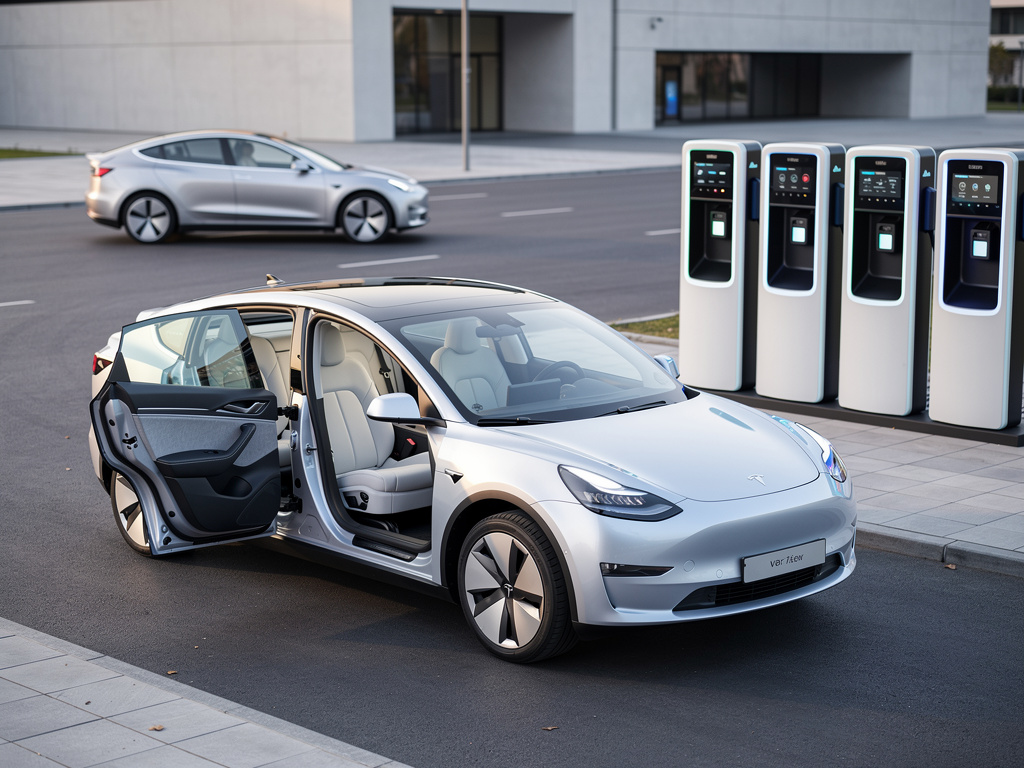
Nio has introduced a new affordable electric vehicle designed to compete directly with Tesla models in the mass market segment. The Chinese manufacturer announced the Onvo L60 on May 31 2026 positioning the crossover as a practical family option that undercuts the Model Y on price while matching or exceeding it in several key specifications. According to the Motley Fool article the move forms part of Nio’s broader strategy to expand beyond its premium brand image and capture a larger share of the world’s largest electric vehicle market.
The Onvo L60 arrives with a starting price equivalent to about 29 800 dollars in its home market making it roughly 20 percent less expensive than the base Tesla Model Y. This aggressive pricing reflects Nio’s determination to address the growing demand for reasonably priced electric cars among middle class Chinese consumers who have become more price sensitive amid economic headwinds. Battery options range from 60 kilowatt hours to 90 kilowatt hours giving the vehicle an estimated range of between 310 and 460 miles on the Chinese test cycle. These figures compare favorably with the Model Y which offers similar range capabilities but at a higher entry point.
Engineers at Onvo focused on interior space and family friendly features when designing the L60. The vehicle measures slightly longer than the Model Y yet maintains a streamlined profile that contributes to aerodynamic efficiency. Inside the cabin designers incorporated a flexible seating arrangement that allows for multiple configurations including a mode that turns the rear seats into a flat sleeping area. A large central touchscreen controls most vehicle functions while physical buttons for critical climate and driving controls remain available to reduce driver distraction. Materials throughout the interior appear durable and family oriented rather than overtly luxurious which aligns with the vehicle’s positioning as an everyday commuter rather than a status symbol.
Nio established Onvo as a distinct sub brand in 2024 with the specific goal of targeting younger buyers and families who prioritize value over brand prestige. The parent company continues to sell its higher end vehicles under the main Nio name while Onvo handles the more affordable segment. This two brand approach mirrors strategies employed by other Chinese automakers such as BYD with its Denza and Yangwang lines. The separation allows Nio to protect its reputation for advanced technology and premium quality while still participating in the intensely competitive budget electric vehicle category where price battles often dominate.
The timing of the L60 launch coincides with intensifying competition across the Chinese electric vehicle sector. Tesla has repeatedly adjusted pricing on its Model Y to maintain market share as local manufacturers flood the market with increasingly capable alternatives. Companies like Xiaomi have also entered the fray with the SU7 sedan generating significant attention for its combination of performance and competitive pricing. In this environment the Onvo L60 must offer clear advantages beyond mere cost savings to stand out. Nio executives highlighted the vehicle’s battery swapping capabilities during the launch event noting that owners can exchange depleted batteries for fully charged ones in approximately three minutes at dedicated stations. This feature addresses one of the primary concerns many potential electric vehicle buyers express regarding charging time and infrastructure availability.
Battery swapping represents a core element of Nio’s overall business model. The company has invested heavily in building a network of swapping stations across China with plans to expand the system to support Onvo vehicles as well. For the L60 Nio claims the swapping stations will eventually number in the thousands providing coverage that rivals traditional gasoline refueling networks in major cities. This infrastructure investment sets Nio apart from many competitors who rely solely on conventional charging methods. The approach does require significant capital expenditure but company leadership views it as a long term competitive advantage that enhances vehicle usability and residual value.
Beyond the vehicle itself Nio continues developing autonomous driving technology that will eventually filter down to Onvo models. The company’s proprietary NAD system already appears in premium Nio vehicles and uses a combination of cameras sensors and high definition mapping to provide advanced driver assistance. While the initial L60 launches with a more basic assistance package Nio indicated that over the air updates will bring enhanced capabilities to the vehicle in coming months. This software centric approach allows the company to improve vehicles after they reach customers and creates recurring revenue opportunities through subscription based features.
Production of the Onvo L60 will take place at an existing Nio manufacturing facility in Hefei which has undergone upgrades to accommodate higher volumes. The company projects annual production capacity of up to 200 000 units for the new model once full ramp up occurs. This output target reflects Nio’s ambition to move from a niche premium player to a mainstream manufacturer capable of challenging established leaders. Current Nio sales hover around 20 000 vehicles per month across all brands so achieving the L60 goals would represent a substantial increase in scale.
Financial analysts have mixed views regarding Nio’s ability to execute this expansion successfully. The company has reported steady revenue growth but continues to operate at a loss as it invests in research development and global infrastructure. The Onvo brand adds another layer of expense since it requires separate marketing sales channels and service networks. However the potential rewards are significant given that the affordable electric vehicle segment in China alone exceeds several million units annually. Success with the L60 could help Nio reach profitability while failure might strain its already stretched balance sheet.
International expansion remains part of Nio’s long term plans though the company has proceeded cautiously. After launching in Norway and several other European markets Nio has focused primarily on building brand recognition rather than chasing volume. The L60 could eventually reach those markets though regulatory compliance and local competition would present additional challenges. For now the company appears content to refine its approach in China where it understands consumer preferences and faces familiar competitors.
The Onvo L60 incorporates several technical features that address common criticisms of electric vehicles. Its heat pump system operates efficiently in cold weather helping maintain range during winter months when many electric cars experience significant drops in performance. The vehicle also supports vehicle to load functionality allowing owners to power external devices or even other electric cars from the battery pack. These practical additions demonstrate that Nio engineers studied real world usage patterns when specifying the L60 rather than focusing exclusively on laboratory test results.
Customer reaction to the launch has been largely positive based on early reservations and online commentary. Many prospective buyers appreciate the combination of competitive pricing generous range and family oriented design. Some observers however question whether Nio can maintain quality standards as production volumes increase. The company’s reputation for sophisticated battery technology and innovative features has been hard earned and any perception of cost cutting could damage both the Onvo and main Nio brands.
Looking ahead Nio has teased additional models under the Onvo banner including a larger SUV and possibly a sedan. These vehicles would round out the sub brand’s lineup and allow it to compete across multiple price points and vehicle categories. The company also continues research into solid state batteries which could eventually provide even greater range and faster charging times for both Nio and Onvo products. Such advancements would help differentiate the vehicles from competitors who rely on conventional lithium ion technology.
The broader context for the L60 launch includes shifting government policies regarding electric vehicle subsidies in China. As national and local incentives decrease manufacturers face pressure to reduce costs and improve efficiency without sacrificing performance. Nio’s focus on battery swapping and software updates offers one path toward maintaining customer satisfaction even as upfront purchase prices become more critical. The strategy requires precise execution across manufacturing supply chain management and service delivery but could create a sustainable business model less dependent on government support.
Tesla’s response to the growing competition from Nio and other Chinese manufacturers has included both price reductions and accelerated development of new models. The American company recently updated its Shanghai factory to increase Model Y output while also introducing the refreshed Model Y Juniper in some markets. These moves suggest that Tesla recognizes the threat posed by capable and less expensive alternatives. The resulting competition benefits consumers through lower prices and improved features though it creates challenging conditions for all participants.
Nio’s decision to launch the Onvo L60 reflects confidence in its technology and manufacturing capabilities. By offering a vehicle that directly challenges the Model Y on value proposition the company signals its intention to compete at scale rather than remain a specialized luxury brand. Whether this approach succeeds will depend on execution in areas ranging from production quality to customer service and infrastructure expansion. Early indicators suggest strong market interest but the coming months will reveal whether the L60 can translate that enthusiasm into meaningful sales growth and improved financial performance for Nio overall.
The introduction of the Onvo L60 adds another compelling option for Chinese consumers seeking an affordable yet capable electric vehicle. Its competitive pricing advanced features and focus on family needs position it as a serious contender in a crowded market. As Nio works to scale production and expand its battery swapping network the success of this new model could influence the company’s trajectory for years to come. For buyers the L60 represents a practical choice that balances cost performance and convenience in a segment where such options remain relatively scarce.


 WebProNews is an iEntry Publication