
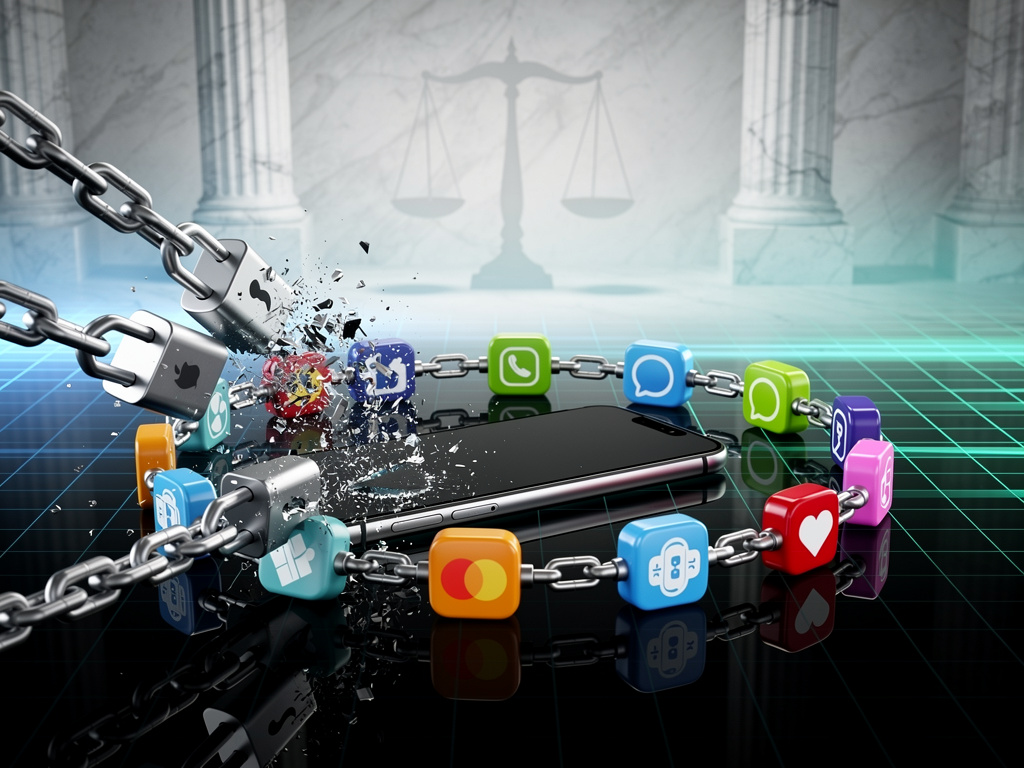
The Demise of Apple’s Fortress: How a Court Ruling Shattered the iOS Payment Empire
In a landmark decision that could reshape the dynamics of app distribution and developer economics, the U.S. Ninth Circuit Court of Appeals has largely upheld a lower court’s ruling against Apple Inc., effectively dismantling what developers have long dubbed the “Apple Tax.” This 27% commission on in-app purchases, a cornerstone of Apple’s revenue model, has been under fire since Epic Games Inc. challenged it in a high-stakes antitrust lawsuit. The appeals court’s affirmation means Apple must now allow developers to direct users to alternative payment methods outside the App Store, potentially saving billions in fees and fostering greater competition in the mobile app market.
The ruling stems from a 2021 injunction issued by U.S. District Judge Yvonne Gonzalez Rogers, who found Apple’s anti-steering provisions—rules preventing developers from informing users about cheaper payment options elsewhere—violated California’s unfair competition law. Apple had appealed, arguing its policies were necessary to maintain user safety and platform integrity. However, the Ninth Circuit disagreed on key points, stating that Apple’s implementation of the injunction was willful and insufficient. As reported by StartupNews, the court described Apple’s compliance efforts as “illusory,” forcing the company to open up its ecosystem in ways it has resisted for years.
This development arrives at a pivotal moment for the tech giant, which reported over $85 billion in services revenue last year, much of it from App Store commissions. Developers, particularly those in gaming and subscription services, have chafed under the 30% fee (reduced to 27% for external links under Apple’s grudging concessions). Epic Games CEO Tim Sweeney celebrated the outcome on social media, declaring it a death knell for the tax. Posts on X echoed this sentiment, with industry observers warning that the decision could accelerate a shift toward more open mobile platforms, potentially eroding Apple’s ironclad control over iOS.
Unpacking the Legal Battle’s Twists and Turns
The saga began in 2020 when Epic, maker of the blockbuster game Fortnite, deliberately violated Apple’s payment rules to provoke a confrontation. Removed from the App Store, Epic sued, alleging monopolistic practices. While Judge Rogers ruled largely in Apple’s favor on antitrust claims, she ordered the company to permit external payment links. Apple responded by allowing such links but imposing a 27% fee on transactions processed outside its system—a move critics called a “tax on links.”
The Ninth Circuit’s recent opinion, detailed in coverage from The Times of India, upheld the contempt finding but reversed some sanctions, including a requirement for Apple to prove the value of its intellectual property contributions. This partial reversal gives Apple wiggle room to justify future fees, but the core mandate remains: developers can now prominently feature alternative payment options without Apple’s cut on those transactions.
Industry insiders view this as a mixed bag. For smaller developers, the change could lower barriers to entry, enabling them to retain more revenue and experiment with pricing models. Larger players like Epic and Spotify Technology SA, which have lobbied against Apple’s policies globally, stand to gain the most. Yet, as noted in posts on X from tech analysts, Apple’s ability to charge for “actual costs” associated with links might lead to new fee structures, potentially sparking further litigation.
Broader Implications for Tech Giants and Regulators
Beyond the courtroom, this ruling intersects with global regulatory pressures mounting against Big Tech. In Europe, the Digital Markets Act has already forced Apple to allow third-party app stores and sideloading on iOS devices. Similar scrutiny is building in the U.S., where the Department of Justice’s antitrust suit against Apple accuses it of maintaining an illegal smartphone monopoly. The Ninth Circuit decision bolsters these efforts, signaling that courts are willing to chip away at walled gardens.
Financially, the impact could be profound. Analysts estimate that App Store fees generate about $20 billion annually for Apple. If even a fraction of transactions shift to external processors, it could dent margins in the services segment, which has been a growth engine amid slowing hardware sales. According to a report from Tax Foundation, unrelated tariff policies under the incoming administration might compound these pressures by raising costs for imported components, indirectly affecting Apple’s pricing strategies.
On X, discussions highlight potential ripple effects across the tech sector. One prominent thread suggests that tariffs on Chinese imports could inflate iPhone prices by 10-15%, jeopardizing Apple’s supply chain diversification efforts in India. Another post warns of a “tariff economic armageddon” crushing tech earnings by 15%, underscoring how trade policies might amplify the ruling’s economic fallout.
Developer Reactions and Strategic Shifts
Developers are already plotting their next moves. Epic plans to relaunch Fortnite on iOS with its own payment system, bypassing Apple’s fees entirely. Other firms, from streaming services to e-commerce apps, may follow suit, offering discounts for off-platform purchases to lure users. This could lead to a more fragmented user experience, where apps promote multiple payment paths, but it also empowers developers to build direct relationships with customers.
However, challenges loom. Apple’s ecosystem advantages—seamless integration, security features, and a vast user base—remain intact. As one X post from a policy think tank observed, discriminatory taxes and regulations targeting U.S. tech firms are spreading, potentially opening doors to foreign competitors like those from China. Apple has argued that opening payments increases risks of fraud and malware, a concern echoed in its lobbying against child safety bills, as reported by Reuters.
For consumers, the changes promise lower prices on in-app purchases, but they might also introduce confusion. Will users trust external links? Apple’s past warnings about security could sow doubt, potentially driving some back to its payment system despite the fees.
Navigating Global Tax and Policy Shifts
Complicating matters are Apple’s ongoing tax policy adjustments worldwide. In August, the company announced updates to App Store pricing due to tax changes in countries like Brazil, where a 3.5% financial operations tax was introduced, and Estonia, with a VAT hike to 24%. As detailed on Apple Developer News, these adjustments ensure consistent pricing across 175 storefronts, but they highlight the company’s vulnerability to regulatory whims.
In India, Apple is lobbying to modify income tax laws that could hinder its manufacturing expansion, according to sources in Reuters. The firm argues that taxing ownership of high-end machinery provided to contract manufacturers stifles growth. This push comes amid U.S. tariff threats that could disrupt global supply chains, as debated in X posts warning of higher consumer prices and slowed AI innovation.
Domestically, the ruling aligns with broader tax reforms. Recent legislation affecting Social Security beneficiaries’ taxes, covered by CNBC, underscores a shifting fiscal environment. For Apple, adapting to these means recalibrating its business model, perhaps by emphasizing hardware sales or new services.
Future Horizons for Innovation and Competition
Looking ahead, this decision could catalyze innovation. Freed from hefty commissions, developers might invest more in features and content, enriching the iOS app ecosystem. Startups, previously deterred by fees, could flourish, injecting fresh ideas into mobile tech. Yet, as an X post from a gaming commentator noted, Apple might counter by imposing new ecosystem access fees, prolonging the tug-of-war.
Regulators worldwide are watching closely. In the U.S., the ruling strengthens calls for comprehensive antitrust reform, potentially targeting other platforms like Google’s Play Store. Internationally, it bolsters cases in the EU and beyond, where Apple faces fines for non-compliance.
For Apple, the path forward involves balancing compliance with profitability. CEO Tim Cook’s recent meetings with lawmakers on child safety legislation, as per Reuters reports, show the company is actively shaping policy. Meanwhile, the tech sector braces for a more competitive arena, where payment freedom could redefine developer-platform dynamics.
Echoes Across the Industry Ecosystem
The broader tech industry feels the tremors. Rivals like Microsoft Corp. and Meta Platforms Inc., with their own app stores, may face similar scrutiny. Tariffs proposed by the Trump administration, analyzed in Tax Foundation reports, could exacerbate cost pressures, forcing companies to rethink global operations.
On X, sentiments range from optimism about stifled innovation giving way to growth to fears of economic fallout. One thread critiques tariffs as a “regulatory moat” benefiting giants like Apple while crushing smaller firms.
Ultimately, this ruling marks a turning point, challenging Apple’s dominance and inviting a more open mobile world. As developers and consumers adapt, the true measure of its impact will unfold in the coming years, potentially setting precedents for digital markets everywhere.


 WebProNews is an iEntry Publication