
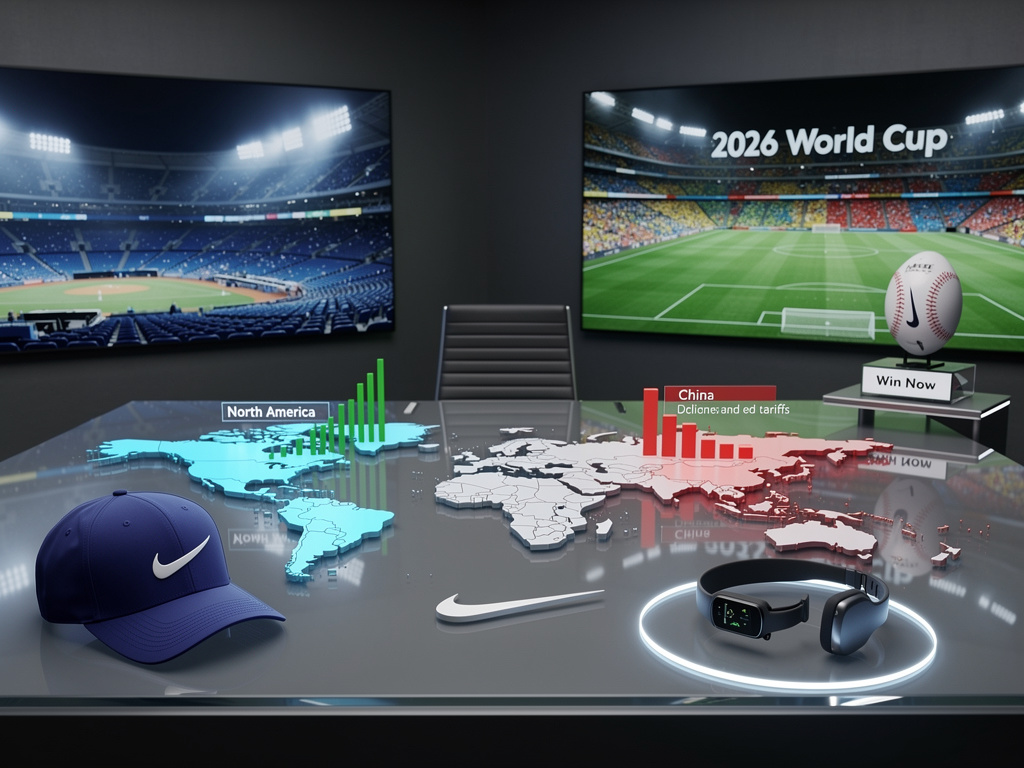
Just over a year into his tenure, Nike CEO Elliott Hill declared the company in the “middle innings” of a gritty comeback, leaning hard into sports spectacles to revive its fortunes. The athletic giant posted second-quarter fiscal 2026 revenue of $12.4 billion, a modest 1% rise from the prior year, as North American strength offset weakness elsewhere. Hill, speaking on an earnings call, emphasized that Nike remains “nowhere near our potential,” signaling more heavy lifting ahead in his “Win Now” blueprint paired with a “Sport Offense” push centered on athletes, product innovation, and high-stakes moments.
The flagship Nike brand generated $12.1 billion in sales, up 1%, propelled by North America gains that cushioned declines in Greater China, Asia Pacific, and Latin America. Nike Direct, the company’s e-commerce and owned-store channel, fell 8% to $4.6 billion, while wholesale revenue climbed 8% to $7.5 billion, largely on North American momentum. Converse, Nike’s streetwear arm, struggled with a 30% drop to $300 million, underscoring uneven recovery across the portfolio. Adweek highlighted these splits, noting Hill’s focus on reversing years of sales stagnation.
North America Fuels Early Wins
North America emerged as Nike’s cornerstone, with Hill pointing to potent marketing tied to the Los Angeles Dodgers’ World Series triumph and the Chicago Marathon as catalysts for brand heat. In September, Nike unveiled its “Why Do It?” campaign, a Gen Z-targeted evolution of the iconic “Just Do It” mantra, aiming to resonate with younger consumers amid shifting cultural currents. These efforts underscore a deliberate pivot toward event-driven storytelling to reclaim market share from rivals like On Holding and Hoka.
Looking ahead, Nike plans “significant investments” in soccer ahead of the 2026 World Cup, positioning the brand at the epicenter of global fandom. Product pipelines include the January debut of Nike Mind, a footwear platform designed to bolster athletes’ mental preparation for peak performance, and an international rollout of the NikeSkims collaboration, blending sport and fashion. Business Insider detailed how this “Win Now” strategy delivered a robust first quarter but exposed persistent hurdles in direct sales and international markets.
Sport Offense Takes Center Stage
Hill drew a vivid parallel to the Dodgers’ back-to-back World Series success, invoking their “perseverance” as a metaphor for Nike’s path. “Nike is in a similar moment. We’re the industry leader. Expectations are high. And yes, we’ve faced pressure and setbacks,” he said on the call. “But like the Dodgers, we’re leaning on each other, focused on the fundamentals, making the hard calls and building for the long game. Because in the end, greatness isn’t promised, it’s earned. And we’re ready to earn it.” This rhetoric aims to rally investors and employees around a narrative of earned dominance.
Yet challenges loom large. Greater China revenue plunged 16% in the quarter, a sore spot Hill described as “one of the most powerful long-term opportunities in sport” despite near-term pain from local competition and economic headwinds. Tariffs further eroded gross margins by 3 percentage points, with inventories dipping 3%, compounding pressures from supply-chain disruptions. Sports Business Journal reported on Hill’s candid assessment that the turnaround stretches longer than initially projected.
China’s Stubborn Headwinds
Nike’s exposure to China, once a growth engine, now tests the resilience of Hill’s playbook. Anta Sports and Li-Ning have chipped away at market share with aggressive pricing and localized innovation, forcing Nike to recalibrate its premium positioning. Hill acknowledged the lag but doubled down on sport-centric investments, betting that events like the 2026 World Cup could pierce through regional noise. Recent web reports indicate Nike is exploring deeper wholesale partnerships in the region to stabilize volumes.
Tariff impacts, tied to escalating U.S.-China trade frictions, shaved margins and prompted inventory pruning. Nike’s gross margin contraction reflects broader industry strains, as peers grapple with similar duties on imported goods. Hill’s team is accelerating supply-chain diversification, though full effects may lag into fiscal 2027. Investing.com covered the margin bleed amid these external blows.
Direct vs. Wholesale Rebalance
A core tenet of the pre-Hill era was an aggressive shift to Nike Direct, but recent quarters reveal a tactical retreat. The 8% wholesale surge signals renewed faith in retail partners, particularly in North America, where distribution muscle is proving vital against upstarts. Nike Direct’s decline stems partly from reduced promotions and a focus on full-price sell-through, though Hill warns of ongoing optimization needs. This hybrid model aims to blend digital prowess with physical reach.
Analysts praise the pivot but caution on execution risks. Earnings transcripts show Nike beating Q2 2026 expectations, lifting shares post-call, yet forward guidance tempers enthusiasm with margin pressures. Investing.com transcripts capture Hill’s measured optimism, with North America as the anchor amid global volatility.
Innovation Bets: Nike Mind and Beyond
Nike Mind represents a bold foray into performance psychology, with sensor-equipped footwear set to track biometric data for mental-state insights. Launching in January, it targets elite athletes and trickles down to consumers, aligning with Hill’s athlete-first ethos. The NikeSkims extension builds on a U.S. hit, expanding Kim Kardashian’s intimates empire into international sportswear aisles—a crossover play for lifestyle adjacency.
These initiatives fit the “Sport Offense,” which prioritizes category leadership in running, basketball, and soccer. Hill’s prior wholesale stint gives him credibility in scaling these bets, though Converse’s woes highlight lifestyle segment vulnerabilities. Web searches reveal buzz on X about Nike’s Dodgers ties and marathon dominance, amplifying organic reach.
Gen Z Imperative and Cultural Plays
The “Why Do It?” campaign marks Nike’s Gen Z outreach, probing motivations in an era of mental-health awareness and fragmented attention. Featuring Tara Davis-Woodhall and other stars, it refreshes branding without abandoning heritage. Hill ties this to broader sport moments, from MLB playoffs to marathons, fostering emotional loyalty over transactional buys.
Investor scrutiny intensifies on return metrics. While Q2 topped forecasts, full-year comps demand sustained acceleration. Financial Content dissected the 2025 reset, echoing Hill’s multi-year horizon. Posts on X underscore fan excitement for World Cup prep, though China sentiment sours.
Path to Sustained Momentum
Hill’s “middle innings” framing buys time but raises the bar for 2026 deliverables. With tariffs looming and China pivotal, Nike’s sport-focused offense must deliver outsized wins. Fundamentals—innovation, distribution, marketing—position the leader for a rebound, contingent on execution amid macroeconomic crosswinds.


 WebProNews is an iEntry Publication