
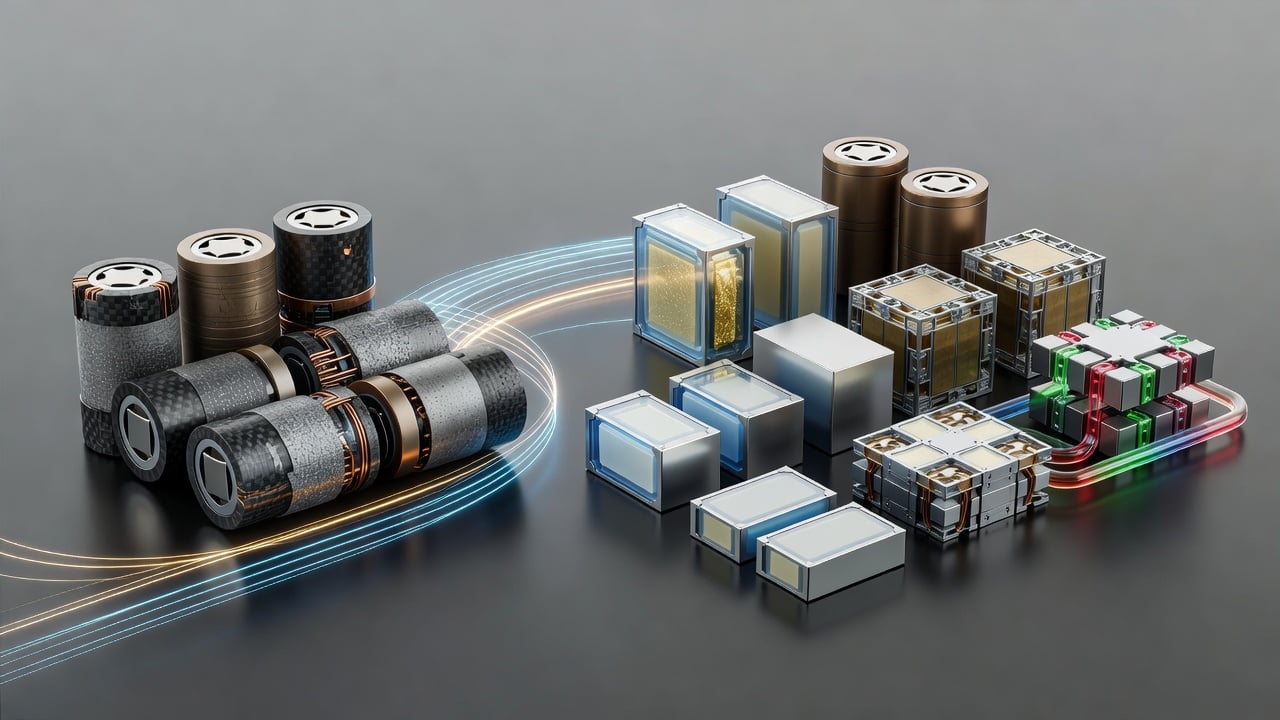
Silicon carbon batteries have already begun appearing in consumer devices and laboratory prototypes, yet researchers worldwide now focus their attention on alternatives that promise even greater performance gains. The article from MakeUseOf highlights how quickly battery technology advances, with new chemistries emerging that could make current silicon carbon designs seem outdated within just a few years. These next generation approaches aim to deliver batteries capable of holding charge for days rather than hours while supporting thousands of charging cycles without significant capacity loss.
Traditional lithium ion batteries rely on graphite anodes that have reached their theoretical limits. Engineers introduced silicon to these anodes because silicon can store roughly ten times more lithium ions than graphite. The challenge lies in silicon expanding up to 300 percent during charging, which causes cracking and rapid degradation. Manufacturers addressed this problem by creating silicon carbon composites that blend the two materials at the nanoscale. Companies like Panasonic and Amprius have already commercialized versions of these batteries for drones, smartphones, and electric vehicles. Early silicon carbon cells achieve energy densities around 300 to 400 watt hours per kilogram, representing a noticeable improvement over standard graphite based cells that typically hover between 250 and 300 watt hours per kilogram.
Despite these advances, silicon carbon technology carries inherent limitations. The expansion issue persists even in composite materials, leading to continuous solid electrolyte interphase growth that consumes lithium and reduces overall efficiency. Cycle life often falls short of what electric vehicle manufacturers demand, with many prototypes showing noticeable capacity fade after only 500 to 800 full charge cycles. Manufacturing costs remain higher than conventional batteries because producing uniform silicon carbon particles requires sophisticated chemical vapor deposition or milling processes. These factors explain why the industry continues searching for superior solutions.
Solid state batteries represent one of the most promising directions forward. Instead of liquid electrolytes that can leak or catch fire, these designs use solid ceramic or polymer materials to conduct lithium ions. The solid electrolyte eliminates many safety concerns associated with current batteries while allowing the use of pure lithium metal anodes. Lithium metal offers an extremely high theoretical capacity of 3860 milliampere hours per gram compared to graphite’s 372 milliampere hours per gram. When paired with advanced cathodes, solid state cells could reach energy densities exceeding 500 watt hours per kilogram. Several major automakers including Toyota, BMW, and Volkswagen have invested billions in solid state research, with some companies projecting commercial availability by the late 2020s.
The stability of solid electrolytes also opens possibilities for batteries that maintain performance across extreme temperature ranges. Current lithium ion batteries lose significant capacity below freezing and require careful thermal management above 40 degrees Celsius. Solid state designs demonstrate better performance in both cold and hot conditions because the solid materials resist degradation and maintain consistent ion transport. This characteristic makes them particularly attractive for aerospace applications and regions with harsh climates.
Another approach gaining momentum involves lithium sulfur chemistry. Sulfur cathodes provide a theoretical capacity five times higher than traditional nickel manganese cobalt cathodes. The abundance and low cost of sulfur could dramatically reduce battery prices if technical hurdles are overcome. The primary obstacle remains the polysulfide shuttle effect, where intermediate reaction products dissolve into the electrolyte and migrate to the anode, causing rapid capacity loss. Researchers have developed various containment strategies including specialized carbon scaffolds, metal organic frameworks, and modified separators that trap polysulfides effectively. Some laboratory cells now achieve over 1000 cycles with minimal degradation while delivering energy densities around 500 watt hours per kilogram.
Sodium ion batteries offer a different path that avoids lithium entirely. Sodium resources are far more abundant and evenly distributed globally than lithium, potentially stabilizing supply chains and reducing geopolitical risks associated with battery production. Although sodium ions are larger and heavier than lithium ions, leading to lower energy density, recent breakthroughs have narrowed the gap considerably. Companies like CATL and HiNa Battery have demonstrated sodium ion cells with energy densities approaching 160 watt hours per kilogram, suitable for stationary storage and entry level electric vehicles. The technology benefits from using many of the same manufacturing processes as lithium ion batteries, which could accelerate adoption and lower costs.
Lithium air batteries represent perhaps the most ambitious goal in energy storage. These systems use oxygen from the atmosphere as the cathode material, theoretically providing energy densities comparable to gasoline. In practice, researchers face substantial challenges including poor cycle life, sensitivity to moisture and carbon dioxide, and slow reaction kinetics. Despite these difficulties, progress continues with new catalysts and protected lithium anodes showing improved performance. While commercial lithium air batteries remain years away, the potential for batteries that could power electric aircraft for hundreds of miles makes the research particularly compelling.
Flow batteries take an entirely different approach by storing energy in liquid electrolytes contained in external tanks. This design allows independent scaling of power and energy capacity, making flow batteries ideal for grid storage applications where long duration discharge is required. Vanadium redox flow batteries already operate in commercial installations worldwide, offering lifespans exceeding 20 years with minimal degradation. Newer chemistries using organic molecules or iron could further reduce costs and improve performance. Although energy density remains lower than lithium based systems, the ability to store energy for days or even weeks addresses a critical need in renewable energy integration.
Beyond these established research areas, scientists explore exotic materials and concepts that could transform battery capabilities. Silicon nanowires grown directly on current collectors accommodate expansion without fracturing. Graphene enhanced electrodes improve conductivity and mechanical strength. Quantum dot modified interfaces enhance charge transfer rates. Some teams experiment with aluminum ion batteries, magnesium batteries, and even calcium based systems that could offer unique advantages in specific applications.
The pace of development suggests that silicon carbon batteries may indeed become yesterday’s news sooner than many expect. Laboratory results frequently demonstrate cells that retain over 90 percent capacity after 2000 cycles while delivering energy densities above 400 watt hours per kilogram. Manufacturing challenges remain significant, but each passing year brings improved processes and economies of scale. The transition from silicon carbon to these newer technologies will likely occur gradually, with different applications adopting different solutions based on their specific requirements.
Electric vehicle manufacturers face particularly complex decisions about which battery technologies to pursue. High energy density directly translates to longer driving range, but cost, safety, and longevity must also factor into the equation. Luxury vehicles might adopt solid state batteries first despite higher prices, while mass market models could favor improved lithium ion or sodium ion approaches that balance performance and affordability. The infrastructure for recycling and second life applications will need to evolve alongside these new chemistries to minimize environmental impact.
Consumer electronics stand to benefit enormously from advanced batteries. Smartphones that last several days on a single charge could eliminate charging anxiety for many users. Laptop computers might operate for 30 hours or more between charges. Wearable devices could function for weeks without recharging. Medical implants such as pacemakers and neural stimulators would require less frequent replacement surgeries. These improvements would enhance convenience while reducing the environmental burden of frequent battery production and disposal.
The shift toward longer lasting batteries carries broader implications for energy systems worldwide. Electric grids could incorporate more renewable sources when storage solutions reliably hold power for multiple days. Remote communities might achieve energy independence through combinations of solar panels and advanced storage. Transportation sectors including aviation and maritime shipping could electrify more completely with batteries that match the energy density of conventional fuels.
Challenges persist in bringing these technologies from laboratory to mass production. Scaling synthesis processes while maintaining quality presents substantial engineering problems. Raw material purity requirements often exceed current industrial capabilities. Safety testing for new chemistries demands extensive validation to meet regulatory standards. Intellectual property disputes occasionally slow collaboration between research institutions and manufacturers. Despite these obstacles, the momentum behind battery innovation shows no signs of slowing.
Government policies play an increasingly important role in determining which technologies succeed. Subsidies, research grants, and emissions regulations influence investment decisions across the industry. Countries that establish clear long term strategies for battery development gain competitive advantages in manufacturing and technology leadership. International cooperation on standards and recycling protocols could accelerate adoption while preventing fragmented markets.
Looking forward, the battery industry appears headed toward greater specialization rather than a single dominant chemistry. Different applications will likely adopt tailored solutions that optimize for their particular needs. Portable electronics might prioritize energy density and fast charging. Grid storage could favor longevity and low cost. Electric vehicles may split between high performance solid state packs for premium models and more affordable lithium iron phosphate or sodium ion variants for economy cars. This diversification could lead to more efficient overall energy use across society.
The rapid progress in battery technology reflects the intense global effort to address climate change and reduce dependence on fossil fuels. Each incremental improvement in energy density, cycle life, and cost brings society closer to widespread electrification of transportation and stable integration of renewable power sources. While silicon carbon batteries currently represent a meaningful step forward, the technologies emerging from research laboratories worldwide suggest that even greater advances lie just ahead. The coming decade will likely witness the introduction of commercial batteries that fundamentally change what consumers expect from their electronic devices and vehicles. These developments will reshape industries, influence global resource flows, and contribute substantially to efforts aimed at creating more sustainable energy systems. The pace of discovery ensures that today’s advanced batteries will continue giving way to tomorrow’s superior designs, driving continuous progress in energy storage capabilities.


 WebProNews is an iEntry Publication