
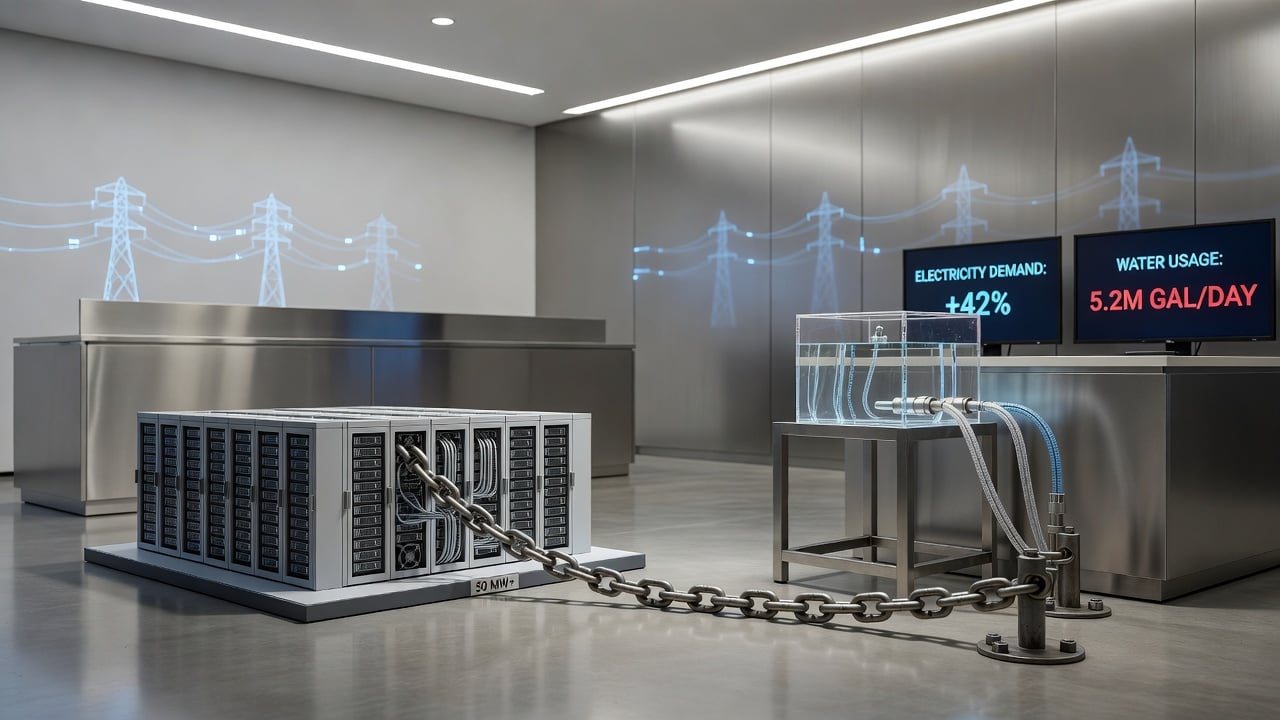
Governor Kathy Hochul signed an executive order Tuesday that stops new large-scale data centers in their tracks. New York now stands as the first state to impose a one-year moratorium on hyperscale facilities that consume 50 megawatts or more. The move comes as power demands from artificial intelligence surge faster than grids can handle.
Officials point to skyrocketing electricity bills. New York’s average residential price has climbed nearly 68 percent since 2019. Data centers threaten to push those costs even higher onto families and businesses. “These hyperscale AI data centers consume enormous amounts of power, truly threatening to outpace our grid’s capacity,” Hochul said, according to CNBC. “They drive up costs for local ratepayers, and I refuse to let those costs get passed down to New Yorkers.”
Water use adds another layer. These facilities need steady supplies for cooling thousands of servers. Noise pollution and land disruption round out the complaints from communities. Hochul made the stakes clear in Brooklyn. “The bottom line is that progress shouldn’t arrive with a higher utility bill, depleted water supply or noise pollution, so we have no choice but to address these challenges created by these massive facilities,” she declared, as reported by AP News.
The order pauses state environmental permits. It directs regulators to craft new standards covering energy demand, water consumption, grid reliability and local impacts. Existing projects with valid approvals continue. Smaller facilities for research, education or health care fall outside the ban. Yet the freeze hits hard. Up to 25 proposed developments totaling more than 9,000 megawatts now sit in limbo.
Concerns run deep. A Siena Research Institute poll from June found 46 percent of New Yorkers view the one-year pause as positive. Support crosses party lines. Democrats back it by a 37-point margin. Republicans by 13 points. Hochul herself leads her likely Republican challenger by 20 points in recent surveys. Public sentiment has shifted. Residents worry AI infrastructure benefits distant tech giants more than local pockets.
State Senator Kristen Gonzalez welcomed the decision. “Technology should make our lives better, not pollute our water, strain our energy grid, or drive up our utility bills,” she told CNET. Senator Kirsten Gillibrand echoed the call for safeguards. “Right now, New Yorkers aren’t convinced these massive facilities benefit them. Before we move forward, our communities need ironclad guarantees that their energy bills won’t spike, their water will be protected, and their air will remain clean.”
Environmental groups cheered. Laura Shindell of Food & Water Watch called it “a huge step forward for New York communities fighting against an onslaught of massive data center proposals.” The pressure came from below. Local voices in places like Lansing and East Fishkill had grown loud.
But critics warn of economic fallout. Assemblyman Scott Gray opposed the freeze. “A statewide moratorium is the wrong answer to the right questions. It freezes investment, takes decisions away from the communities that should be making them and duplicates or ignores work the governor’s own administration already has underway,” he wrote in a letter cited by CNBC. Pennsylvania Senator John Fetterman reacted bluntly on X. “China wins.”
The industry sees lost opportunity. New York once ranked high for attracting AI projects. Virginia and Texas have raced ahead, building hundreds of facilities. They now host nearly a quarter of U.S. AI infrastructure. New York operates 133 data centers, concentrated in New York City and Buffalo. The gap could widen. Billions in potential investment, construction jobs and tax revenue may flow elsewhere.
Broader forces shape this fight. Artificial intelligence demands unprecedented computing power. Training models requires warehouses of GPUs running nonstop. Cooling them burns water and electricity at scales that surprise even veterans. One facility can rival the draw of a small city. Multiply that across proposals, and grids strain. Backup generators often rely on fossil fuels. In Virginia, tens of thousands sit ready. They contribute to smog during heat waves and generate annual health damages estimated between $53 million and $99 million.
Similar tensions bubble nationwide. Lawmakers in 14 other states have introduced moratorium bills. None passed until now. Maine came close but faced a veto. The debate pits innovation against livability. Tech companies once received red-carpet treatment. Now politicians hear from voters tired of higher bills and industrial neighbors.
Hochul’s order builds on legislative momentum. The Responsible Data Center Development Act, passed earlier this year, proposed a similar pause for projects over 20 megawatts. She described that bill as complex and chose the executive route for speed. Her administration will review it further. Additional steps loom. Officials plan to repeal sales tax exemptions for these massive operations. They also explore a Grid Acceleration Fund. Data center operators could pay into it to upgrade the state’s aging infrastructure and support clean generation.
The moratorium lasts up to one year. It ends once a comprehensive framework emerges. That timeline gives breathing room. Yet it also creates uncertainty. Developers must wait. Communities wonder what rules will finally stick. And the AI race doesn’t pause. Global competitors push forward. Some analysts suggest foreign actors amplify anti-AI sentiment online to slow American progress.
New York’s decision lands at a pivotal moment. Electricity costs have already forced the state to soften certain climate targets. Reliability worries grow with rising demand. At the same time, artificial intelligence promises productivity gains and economic transformation. Hochul acknowledged the tension. “We’re in the midst of one of the most significant economic upheavals in generations … perhaps ever,” she said.
Recent reporting reinforces the stakes. A Washington Post analysis frames the pause as a striking setback for companies long courted for investment. Public fears over prices and resources drove the shift. Politico noted Hochul wading into a thorny political issue, balancing environmental calls with growth concerns. Fox Business highlighted critic warnings that the freeze could drive jobs out of state. Forbes detailed how the order halts buildouts amid growing backlash against AI infrastructure’s environmental toll.
The Cornell Chronicle earlier consulted experts on a potential pause. Fengqi You, who co-authored a state-by-state analysis of data center impacts, pointed to New York’s advantages in hosting such facilities if managed correctly. Those insights informed the discussion before Tuesday’s action.
Implementation details remain fluid. The permitting pause applies to state approvals. Local governments still hold some authority, though the statewide order carries weight. Regulators now face the task of balancing competing priorities. Protect ratepayers. Safeguard natural resources. Yet avoid choking off innovation that could define the next decade.
Industry insiders watch closely. Server suppliers like Quanta and Wistron, tied to the New York market, could see compressed pipelines. Tech giants planning expansions must recalibrate. Some may shift projects to friendlier states. Others might invest in efficiency or alternative cooling to meet future standards.
Supporters argue this buys time for smart policy. “By giving our State time to plan, we can ensure that development and innovation do not come at the expense of all of us,” Gonzalez said. The framework that emerges could set a national precedent. Strongest standards, Hochul promises. Requirements for grid contributions. Limits on water draw. Noise buffers. Real accountability.
Opponents counter that delay itself carries costs. Investment dollars move fast. Once lost, they rarely return. Local economies in upstate regions, hungry for jobs, feel the pinch most. The moratorium freezes decisions that communities might have tailored to their needs.
Polls tell a story. Gallup found 71 percent of Americans oppose data centers near their homes. That’s higher than opposition to nuclear plants at 63 percent. Sentiment runs strong. Technology should serve people. Not burden them with externalities.
New York steps forward first. Its choice forces a conversation other states have deferred. Energy grids everywhere face pressure from electrification and AI. Water resources grow scarce in many regions. Local pushback spreads. The easy growth phase for data centers may be ending.
What comes next matters. If New York crafts rules that allow responsible development, it could lead. Operators who adapt win. Those who don’t look elsewhere. The one-year clock ticks. Regulators scramble. Companies recalculate. And the AI infrastructure boom, relentless in its appetite, meets its first major regulatory speed bump.
The outcome will shape not just New York but the national approach to balancing technological ambition against everyday realities. Higher bills. Depleted resources. Uncertain futures. Hochul took action. Now the hard part begins.


 WebProNews is an iEntry Publication