
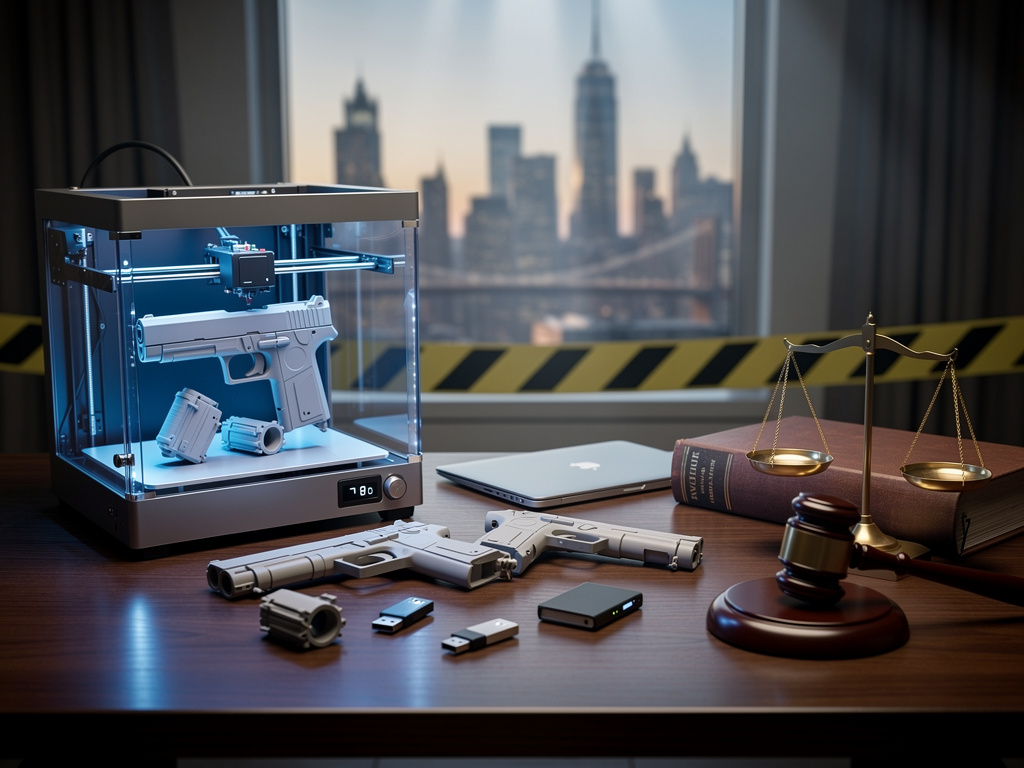
In recent developments, New York has taken decisive steps to address the growing concerns surrounding untraceable firearms produced through additive manufacturing techniques. Lawmakers in the state have approved legislation that specifically targets the creation and ownership of so-called ghost guns made with 3D printers. This move comes amid heightened scrutiny following a high-profile incident involving Luigi Mangione, who authorities allege used such a weapon in the fatal shooting of UnitedHealthcare CEO Brian Thompson. The case has spotlighted the intersection of emerging fabrication technologies and public safety, prompting debates on regulation, enforcement, and the broader implications for gun control in the United States.
The legislation, signed into law by Governor Kathy Hochul, prohibits the manufacture, possession, and sale of firearms or firearm components produced via 3D printing without serial numbers or other identifying marks. This ban extends to the distribution of digital files or instructions that enable the printing of such items. Penalties for violations include fines and potential imprisonment, aiming to close loopholes that have allowed individuals to bypass traditional background checks and registration processes. Supporters argue that these measures are essential to prevent the proliferation of undetectable weapons, which can evade metal detectors and lack the traceability of commercially produced guns.
The catalyst for this rapid legislative response appears tied to the December 2023 shooting in Manhattan, where Thompson was killed outside a hotel during a conference. Mangione, a 26-year-old suspect arrested in Pennsylvania, reportedly carried a 3D-printed handgun equipped with a suppressor, also believed to be homemade. Investigators found components consistent with additive manufacturing, including polymer parts that could be assembled into a functional firearm. As detailed in coverage from The Verge, the incident underscored how accessible tools like desktop 3D printers have made it possible for individuals to produce weapons at home, often using open-source designs shared online.
Ghost guns, a term for firearms assembled from kits or printed parts without serial numbers, have been a point of contention for years. Federal law requires licensed manufacturers to serialize guns, but homemade versions fall into a gray area. The Bureau of Alcohol, Tobacco, Firearms and Explosives (ATF) has attempted to regulate these through rules classifying certain kits as firearms, yet enforcement remains challenging. In New York, prior laws already restricted ghost guns, but the new bill focuses explicitly on 3D-printed variants, recognizing the unique challenges posed by digital fabrication. For instance, files for printing gun lowers—the frame that houses the firing mechanism—can be downloaded from websites or shared via file-sharing platforms, making physical distribution unnecessary.
Additive manufacturing, commonly known as 3D printing, works by layering materials like plastic, metal, or composites based on digital models. Affordable printers, starting at a few hundred dollars, have democratized this process, enabling hobbyists and enthusiasts to create complex objects. In the context of firearms, designs such as the Liberator pistol, first popularized by Defense Distributed in 2013, demonstrated that a fully printable gun could be made with basic equipment. While early models were rudimentary and prone to failure, advancements in materials and printer precision have improved reliability. Modern iterations might incorporate metal reinforcements or hybrid builds, blending printed polymers with off-the-shelf metal components like barrels or springs.
Mangione’s alleged weapon reportedly featured a 3D-printed frame and suppressor, paired with a threaded barrel for attachment. Suppressors, which reduce the sound of gunfire, are heavily regulated under the National Firearms Act, requiring registration and taxes. Producing one at home circumvents these requirements, raising alarms about potential misuse in crimes. The shooting not only highlighted the lethality of such devices but also their role in evading detection; the gun was disassembled and hidden in a backpack, according to police reports.
Beyond the immediate incident, this case reflects broader trends in how technology influences criminal activity. Online communities, including forums on Reddit and specialized sites like DEFCAD, host discussions and blueprints for printable guns. These platforms operate under the banner of free speech and Second Amendment rights, arguing that sharing knowledge is protected. However, critics contend that such accessibility facilitates illegal activities, from straw purchases to the creation of arsenals by prohibited persons. The ATF has seized thousands of ghost guns in recent years, with numbers rising sharply; in 2022 alone, over 19,000 were recovered at crime scenes nationwide.
New York’s ban builds on similar efforts in other states. California, for example, requires serialization of homemade guns, while New Jersey has outlawed the possession of 3D-printed firearm files. Federally, the Biden administration has pushed for stricter oversight, including a 2022 rule that mandates serialization of gun kits. Yet, legal challenges persist. Gun rights advocates, such as the Firearms Policy Coalition, have filed lawsuits claiming these regulations infringe on constitutional protections. In one notable case, a federal judge blocked the ATF’s rule in parts of Texas, citing overreach.
Proponents of the New York law emphasize its necessity in a state with stringent gun controls. Assemblymember Linda Rosenthal, a sponsor of the bill, stated that 3D-printed guns represent a direct threat to public safety, as they can be produced anonymously and used in acts of violence without leaving a paper trail. The legislation also includes provisions for law enforcement to monitor online platforms for prohibited files, though questions remain about implementation. How will authorities detect and remove digital blueprints? And what about encryption or decentralized networks that make tracking difficult?
Opponents argue that the ban is ineffective and overly broad. They point out that determined individuals can still access designs through virtual private networks or the dark web. Moreover, 3D printing is just one method; traditional machining or kit assembly offers similar workarounds. Cody Wilson, founder of Defense Distributed, has long championed the idea that gun control is futile in the digital age, likening printable guns to unstoppable information. His company’s Ghost Gunner machine, a CNC mill for completing unfinished receivers, further complicates regulation by automating what was once manual labor.
The Mangione case adds a layer of complexity, as his motives appear linked to grievances against the healthcare industry. Manifestos found with him criticized UnitedHealthcare for denying claims and prioritizing profits, framing the shooting as a protest against corporate greed. This narrative has sparked online discussions, with some viewing him as a folk hero, while others condemn the violence. The use of a 3D-printed gun in this context amplifies concerns about how such tools empower lone actors, potentially inspiring copycats.
Looking ahead, the ban could influence national policy. With ghost guns implicated in various crimes, from mass shootings to gang violence, pressure mounts for comprehensive federal action. Technologies like blockchain or AI-driven monitoring might emerge to track digital files, but privacy advocates warn of surveillance overreach. Meanwhile, innovations in 3D printing continue; printers capable of handling metals like titanium could produce more durable firearms, blurring lines between homemade and professional-grade weapons.
Enforcement will be key to the law’s success. New York plans to allocate resources for training officers to identify 3D-printed components, possibly through specialized scanners or forensic analysis. Partnerships with tech companies could help flag suspicious downloads, though this raises free speech issues. Internationally, countries like the United Kingdom and Australia have imposed strict bans on printable guns, offering models for the U.S.
The intersection of technology and firearms regulation presents ongoing challenges. As printers become more sophisticated and affordable, balancing innovation with safety grows more pressing. The Mangione incident serves as a stark reminder of the potential dangers, prompting New York to act swiftly. Whether this law sets a precedent or faces judicial hurdles remains to be seen, but it underscores the need for adaptive strategies in addressing tech-enabled threats.
In examining the broader impact, consider the economic aspects. The 3D printing industry, valued at billions, includes legitimate applications in aerospace, medicine, and prototyping. Regulations targeting misuse must avoid stifling growth. Companies like Stratasys and Formlabs produce printers for industrial use, and any blanket restrictions could affect hobbyists creating non-weapon items. Education campaigns might help, informing users about legal boundaries while promoting responsible innovation.
Public opinion on ghost guns is divided. Polls show strong support for serialization requirements, with many viewing untraceable weapons as a loophole exploited by criminals. Yet, in rural areas or among gun enthusiasts, there’s resistance to what some see as government intrusion into personal freedoms. The debate echoes historical tensions over gun rights, now amplified by digital tools.
Ultimately, New York’s approach highlights a proactive stance against emerging risks. By focusing on 3D-printed ghost guns, the state aims to mitigate threats before they escalate. As similar incidents occur elsewhere, other jurisdictions may follow suit, shaping a patchwork of laws that could eventually lead to unified federal standards. The Mangione case, tragic as it is, has accelerated this conversation, forcing a reckoning with how technology reshapes traditional domains like firearm production and control.


 WebProNews is an iEntry Publication