
In the relentless pursuit of artificial intelligence dominance, a quiet revolution is unfolding in the memory technology sector, where high-bandwidth memory (HBM) has long reigned as the elite fuel for AI hyperscalers. But a new innovation promises to slash costs dramatically, potentially reshaping how these tech giants build their data centers—while casting a shadow over everyday consumers scrambling for affordable RAM. At the heart of this shift is a serial technology breakthrough that could make HBM more accessible, yet it raises questions about whether the voracious appetite of AI will continue to devour resources meant for personal computing.
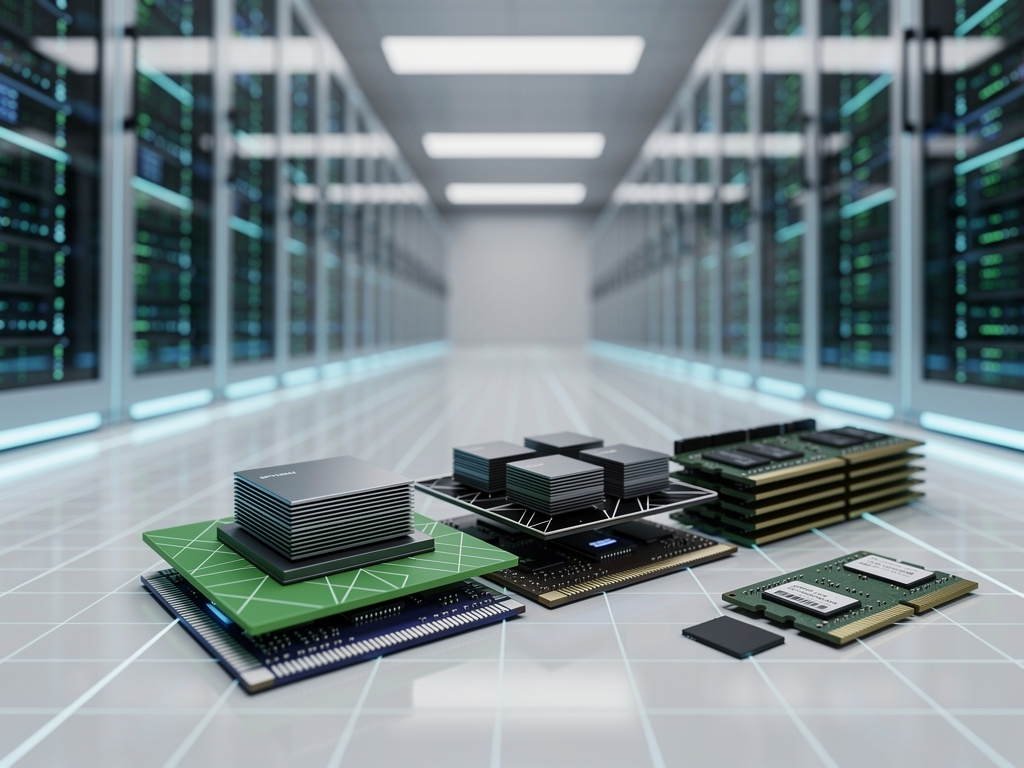
This development centers on SPHBM4, a serialized approach to HBM packaging that replaces expensive silicon interposers with cheaper organic substrates, according to a recent report from TechRadar. By serializing data paths, this method maintains HBM’s blistering bandwidth while cutting production expenses by up to 30%, industry insiders say. Hyperscalers like Google, Amazon, and Microsoft, which deploy massive AI accelerators, stand to benefit immensely, as HBM’s high costs have been a bottleneck in scaling their operations.
The timing couldn’t be more critical. AI models demand enormous memory bandwidth to process vast datasets, and HBM has become indispensable for GPUs from Nvidia and AMD. Yet, the fabrication of HBM requires three times the wafer capacity per gigabyte compared to standard DDR5 RAM, as highlighted in analyses from Tom’s Hardware. This disparity has led to a global shortage, diverting resources from consumer markets and inflating prices for everything from gaming PCs to smartphones.
The Escalating Memory Crunch Driven by AI Demands
As AI infrastructure expands, the strain on memory supply chains has intensified. Recent posts on X from industry observers note that hyperscalers are locking in long-term contracts for HBM, effectively turning memory into a strategic asset akin to oil reserves. One such post emphasized how AI servers now prioritize memory over compute, with each rack consuming terabytes of high-speed DRAM. This shift has ripple effects, pushing manufacturers like SK Hynix and Samsung to reallocate production lines.
The numbers are staggering: AI is projected to consume 20% of global DRAM wafer capacity by 2026, led by HBM and GDDR7, according to a report in TrendForce. This voracity stems from the “memory wall” problem, where data transfer speeds lag behind processing power, forcing innovators to seek alternatives. Enter serialized HBM tech, which not only reduces costs but also eases packaging complexities, allowing for denser stacks without the need for advanced silicon bridges.
However, this innovation isn’t a panacea for consumers. While SPHBM4 keeps HBM tied to enterprise AI systems, the underlying demand continues to squeeze commodity RAM. Prices for DDR5 have surged 170% year-over-year, as fabs pivot to lucrative HBM production, per insights from financial analysts on X who track market shifts.
Hyperscalers’ Growing Influence on Supply Chains
Hyperscalers’ influence extends beyond mere purchasing power; they’re reshaping the entire ecosystem. Companies like Micron are investing billions in new facilities, such as a $7 billion plant in Singapore, to ramp up HBM output, as noted in X posts from tech executives. This move aims to challenge South Korean dominance, where SK Hynix and Samsung control over 90% of the market. Yet, these expansions come at the expense of consumer-grade memory, with wafer capacity being “eaten” by AI needs, as described in NPR.
The serialized tech breakthrough could accelerate this trend. By lowering barriers to HBM adoption, it enables hyperscalers to deploy more AI clusters affordably, potentially increasing their overall memory consumption. Industry reports suggest this could lead to multi-year delays in supply relief for standard DRAM, exacerbating shortages in PCs and mobile devices.
Moreover, the evolution toward HBM4 and beyond, including custom base dies and expanded production in regions like China, is detailed in semiconductor newsletters like SemiAnalysis. These advancements promise higher densities and efficiencies, but they also highlight a bifurcation: elite memory for AI behemoths versus constrained supplies for the masses.
Consumer RAM Under Siege from AI Priorities
For everyday users, the fallout is palpable. Gaming enthusiasts and professionals building workstations are facing sticker shock, with RAM kits that once cost $100 now approaching $300. This isn’t mere inflation; it’s a direct result of production priorities shifting to HBM, which yields higher margins for manufacturers. As one X post wryly observed, the PS2’s memory architecture eerily foreshadowed today’s crisis, where specialized chips crowd out general-purpose ones.
Analysts at IDC warn that by 2026, rising DRAM and NAND costs could force smartphone makers to cut specs or hike prices, stunting market growth. The serialized HBM approach, while cost-reducing for hyperscalers, doesn’t trickle down; instead, it entrenches HBM as an “AI-only” technology, per TechRadar’s coverage, ensuring that consumer RAM remains collateral damage.
Innovations like High Bandwidth Flash (HBF) from SanDisk, which offers 8 to 16 times the capacity of HBM at lower costs, are being floated as potential solutions to the memory wall, according to X discussions among AI researchers. Yet, these are still nascent, and their adoption could further complicate supply dynamics if they pull resources from traditional DRAM lines.
Strategic Shifts in Global Memory Production
Globally, the memory wars are heating up, with AI transforming DRAM into critical infrastructure. Posts on X from investors describe how memory stocks hit all-time highs in 2025 due to shortages and moats created by HBM displacement. Manufacturers are converting NAND fabs to DRAM to meet AI demand, but this only deepens the imbalance, as noted by industry watchers.
Samsung’s qualification processes for next-gen HBM and Micron’s aggressive expansions signal a race for supremacy. However, geopolitical tensions add layers of complexity; domestic production in China, as outlined in SemiAnalysis, could disrupt supply chains if trade barriers escalate.
For hyperscalers, the cost reductions from serialized tech mean faster AI scaling. Google’s custom TPUs and Amazon’s Trainium chips already integrate massive HBM stacks, and cheaper packaging could enable even larger models, pushing the envelope of what’s computationally feasible.
Navigating the Bottlenecks in Advanced Packaging
Advanced packaging remains a key chokepoint. HBM’s traditional reliance on silicon interposers drives up costs and limits scalability, but SPHBM4’s organic substrates simplify this, potentially reducing barriers for smaller players. TechRadar’s report underscores how this keeps HBM exclusive to hyperscale environments, warding off incursions into consumer markets—at least for now.
Yet, the broader impact on consumer RAM is undeniable. As AI gobbles up chips, prices for devices like laptops and phones are poised to rise, with NPR reporting little chance of relief soon. This dynamic has sparked debates on X about whether governments should intervene to protect consumer access to essential components.
Emerging roadmaps, including HBM4’s shoreline expansion and process flow improvements, promise to alleviate some pressures, but they prioritize AI over broad-market needs. Analysts predict that without significant capacity increases, the shortage could persist into 2027, forcing consumers to adapt to higher costs or lower specs.
Innovations on the Horizon for Memory Equity
Looking ahead, alternative technologies like serialized HBM could pave the way for hybrid solutions that bridge enterprise and consumer divides. For instance, integrating HBF with existing DRAM could offer scalable memory for edge AI devices, as suggested in X posts from tech innovators. This might eventually democratize high-bandwidth access, but timelines remain uncertain.
Manufacturers are responding with strategic pivots. SK Hynix’s dominance in HBM, forecasted to grow to $46 billion in 2025 per X analyses, positions it as a bellwether. Meanwhile, U.S. efforts through Micron aim to bolster domestic supply, potentially mitigating some global shortages.
The interplay between cost reductions and demand surges creates a volatile environment. Hyperscalers’ long-term contracts, as detailed in TrendForce, ensure they get first dibs, leaving consumers to navigate a market where AI’s hunger shows no signs of abating.
The Broader Implications for Tech Ecosystems
This memory evolution underscores a fundamental realignment in technology priorities. What began as a niche for supercomputing has ballooned into a cornerstone of the digital economy, with HBM at its core. Serialized tech’s cost benefits could accelerate AI advancements, from autonomous systems to personalized medicine, but at the potential expense of equitable access to computing power.
Industry insiders on X warn of a deepening crisis, where SSD production is also affected as fabs shift focus. The lesson from past cycles, like the PS2 era’s memory constraints, is that innovation often comes with trade-offs, and today’s AI boom is no exception.
Ultimately, as serialized HBM lowers barriers for hyperscalers, the question lingers: Will this innovation stabilize supplies, or will it further entrench the divide? Stakeholders from chipmakers to end-users must watch closely, as the next wave of developments could redefine memory’s role in our increasingly AI-driven world.


 WebProNews is an iEntry Publication