
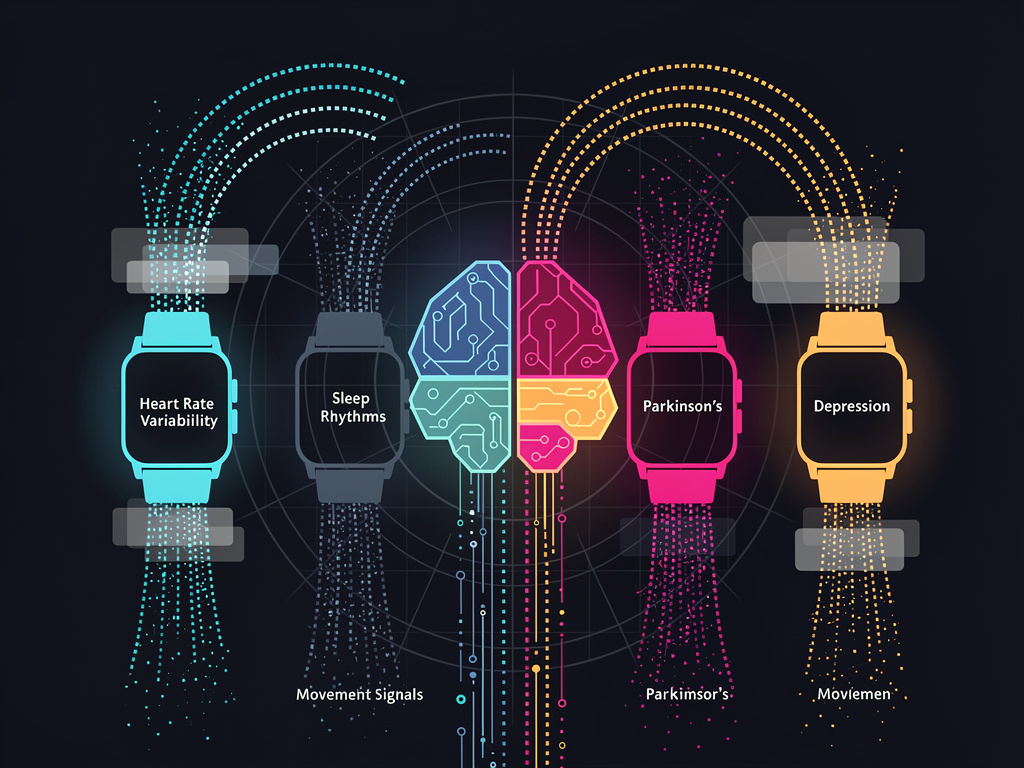
For years, the data streaming off your wrist — heart rate variability, sleep stages, movement patterns, skin temperature — has been largely ignored by the medical establishment. Consumer-grade wearables were considered too noisy, too inconsistent, and too far removed from clinical-grade instruments to matter. That’s changing fast.
Neuroscientists and neurologists are now actively exploring how smartwatch and fitness tracker data can inform the study and treatment of brain disorders. According to a detailed report from Android Police, researchers are finding that the continuous physiological signals captured by devices from Apple, Google, Samsung, and others may hold meaningful biomarkers for conditions like epilepsy, Parkinson’s disease, Alzheimer’s, and depression.
Not someday. Now.
The shift is partly pragmatic. Traditional neurological monitoring requires patients to visit clinics, get hooked up to EEG machines, or wear cumbersome research-grade sensors for limited periods. The data captured is high-fidelity but episodic — a snapshot of brain health rather than a continuous feed. Smartwatches flip that equation. They’re worn 24/7, they track dozens of physiological signals passively, and hundreds of millions of people already own one. The sheer volume of longitudinal data they generate is something clinical tools simply can’t match.
Epilepsy research is one of the most promising frontiers. Seizures are notoriously unpredictable, and patients often can’t recall or accurately report when they occur. But seizures trigger measurable autonomic responses — spikes in heart rate, changes in electrodermal activity, disrupted movement patterns. Wearable devices can catch these signals in real time. Companies like Empatica have already received FDA clearance for their Embrace2 wristband, which detects generalized tonic-clonic seizures using accelerometry and electrodermal activity sensors, then alerts caregivers. The fact that mainstream smartwatches carry similar (if less specialized) sensor arrays has researchers asking whether consumer devices could serve a comparable function at massive scale.
Parkinson’s disease presents another compelling case. Tremor, bradykinesia, and gait irregularities — the hallmark motor symptoms — produce data signatures that accelerometers and gyroscopes in smartwatches can detect. Apple’s Movement Disorder API, introduced several years ago, already allows the Apple Watch to track tremor and dyskinesia. Researchers at institutions including the University of Rochester have been running studies using smartphone and smartwatch data to monitor Parkinson’s progression remotely, with results suggesting wearable-derived metrics can correlate with clinical assessments.
Sleep data is where things get especially interesting for brain health broadly. Disrupted sleep architecture — particularly reductions in REM and deep sleep — is increasingly linked to neurodegenerative diseases. Some research suggests these sleep disturbances can appear years or even decades before cognitive symptoms emerge. Smartwatches track sleep stages using a combination of heart rate, movement, and sometimes blood oxygen sensors. The granularity isn’t equivalent to polysomnography, the clinical gold standard. But for population-level screening? It might be enough.
And that’s the real insight here. Nobody is claiming a Pixel Watch or Galaxy Watch can diagnose Alzheimer’s. The argument is subtler and more powerful: continuous, passively collected data from millions of wrists could help identify early warning patterns that clinical visits miss entirely. It’s a surveillance tool for health trends, not a diagnostic instrument.
Mental health monitoring is advancing along similar lines. Heart rate variability — a measure of the variation in time between heartbeats — has been correlated with stress, anxiety, and depressive episodes in a growing body of research. A 2023 study published in JAMA Psychiatry found that passively collected smartphone and wearable data could predict depressive symptom severity with reasonable accuracy. The implications for early intervention are significant, especially given the global shortage of mental health professionals.
Still, obstacles remain. Big ones.
Data quality is the most obvious concern. Consumer wearables aren’t built to medical-device specifications. Sensor accuracy varies across brands, models, and even skin tones. Motion artifacts corrupt readings. Algorithms that classify sleep stages or detect atrial fibrillation are proprietary and often opaque, making independent validation difficult. Researchers working with this data have to spend considerable effort cleaning and validating it before drawing any conclusions.
Privacy is another thorny issue. Health data collected by tech companies operates under different regulatory frameworks than data collected in clinical settings. HIPAA doesn’t apply to your Fitbit. And while Apple, Google, and Samsung have all made gestures toward user privacy and data control, the reality of how wearable health data gets stored, shared, and potentially monetized remains murky for most consumers.
Interoperability matters too. Researchers need standardized data formats to compare findings across devices and studies. Right now, every manufacturer structures its data differently, making large-scale meta-analyses cumbersome. Efforts like the Open mHealth standard and IEEE’s work on wearable data interoperability are underway, but adoption is slow.
So where does this leave us? In a transitional moment. The neuroscience community has moved past skepticism and into cautious engagement with consumer wearable data. Major research institutions are designing studies around it. The NIH’s All of Us research program actively collects Fitbit data from participants. Apple’s Research app has enrolled users in heart, hearing, and women’s health studies. Google Health has partnered with academic medical centers on wearable-informed research.
The trajectory is clear. Smartwatches won’t replace neurologists or brain imaging anytime soon. But they’re becoming a legitimate upstream data source — one that catches signals months or years before a patient ever walks into a clinic. For brain health specifically, where early detection can dramatically alter outcomes, that kind of continuous passive monitoring isn’t just nice to have. It’s becoming essential.
The watch on your wrist was designed to tell you your step count and buzz when you get a text. Turns out, it might also be whispering something about your brain. Neuroscientists are finally listening.


 WebProNews is an iEntry Publication