
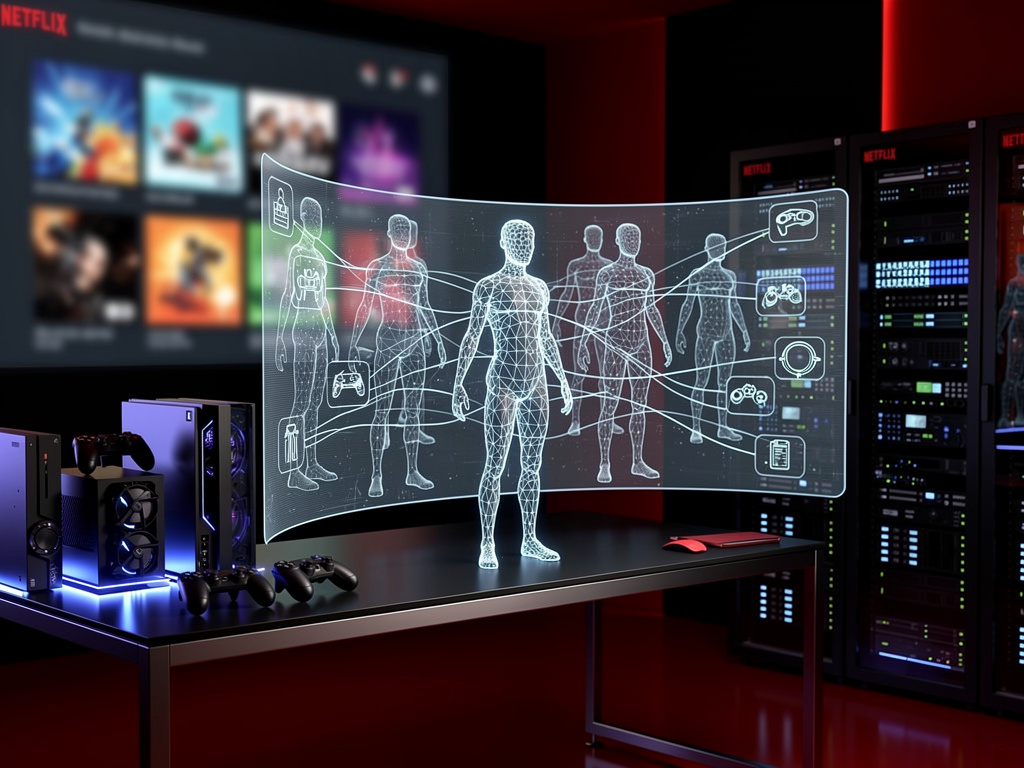
Netflix’s Bold Leap into Avatar-Driven Gaming
In a move that signals Netflix’s deepening commitment to interactive entertainment, the streaming giant has acquired Ready Player Me, an Estonian startup specializing in customizable avatars for gaming and virtual worlds. Announced on December 19, 2025, this acquisition aims to integrate persistent digital identities into Netflix’s expanding portfolio of games, allowing subscribers to carry personalized avatars across multiple titles. The deal underscores Netflix’s strategy to blend its core streaming business with gaming, creating a more immersive experience for users who increasingly expect seamless transitions between watching and playing.
Ready Player Me, founded in 2014, has built a reputation for its cross-platform avatar system, which lets users create and export digital selves to over 10,000 apps and games. Backed by $72 million in funding from investors including Andreessen Horowitz, the company has partnered with brands like Warner Bros. and Adidas, embedding its technology in metaverse-like environments. Netflix’s interest aligns with its recent push into gaming, which began in 2021 and now includes over 100 titles available to subscribers on mobile devices and, increasingly, on TVs.
The acquisition comes at a pivotal time for Netflix, as it navigates competition from gaming heavyweights like Microsoft and Sony, while also contending with slowing subscriber growth in its traditional video streaming sector. By incorporating Ready Player Me’s tools, Netflix plans to enable users to build avatars that reflect their personalities or fandoms, potentially tying into popular shows like “Stranger Things” or “The Witcher.” This could foster deeper engagement, turning passive viewers into active participants in Netflix-branded virtual spaces.
Strategic Integration and Market Positioning
Details of the financial terms remain undisclosed, but industry analysts estimate the deal’s value in the low hundreds of millions, given Ready Player Me’s funding history and technological assets. According to a report from TechCrunch, the startup’s platform will allow Netflix subscribers to create avatars that extend across gaming titles, enhancing personalization in multiplayer and party games. This move is part of Netflix’s broader ambition to make gaming a core pillar, as evidenced by its earlier acquisitions like Night School Studio and Spry Fox.
On social media platform X, reactions have been swift and varied, with users expressing excitement about the potential for unified gaming identities. Posts highlight how this could revolutionize user retention, with one tech enthusiast noting the “metaverse vibes” reminiscent of Ernest Cline’s “Ready Player One.” Such sentiment echoes broader industry trends toward interoperable digital assets, where avatars serve as bridges between virtual experiences. Netflix’s co-CEO Ted Sarandos emphasized in a statement that this acquisition will “unlock new ways for our members to connect with stories they love.”
Competitively, this positions Netflix against rivals like Roblox and Epic Games’ Fortnite, which have long leveraged avatars for social and monetization purposes. By acquiring Ready Player Me, Netflix gains a ready-made infrastructure to compete in this arena, potentially integrating avatars with its upcoming cloud gaming initiatives. The company’s recent experiments with TV-based gaming, including controllers via mobile apps, suggest avatars could become central to living-room multiplayer sessions.
Technological Synergies and Future Applications
Ready Player Me’s technology stands out for its ease of use: users can generate avatars from a single selfie, customizing features like clothing, hairstyles, and accessories. This AI-driven approach has been praised for its inclusivity, supporting diverse representations that appeal to Netflix’s global audience. As detailed in The Verge, the acquisition will enable users to build avatars specifically for Netflix’s games, with potential expansions into social features like virtual watch parties or interactive narratives.
Looking ahead, experts speculate on how this fits into Netflix’s metaverse aspirations. While the company has downplayed full-fledged virtual reality, the avatar system could pave the way for augmented reality tie-ins, such as AR filters for shows or games. A piece from Variety notes that Netflix will soon let customers create customized gaming avatars, fueling speculation about integrations with intellectual properties like “Squid Game” or Marvel adaptations. This could extend to merchandise, where virtual outfits translate to real-world sales.
Moreover, the deal highlights Estonia’s growing role as a tech hub, with Ready Player Me joining companies like Bolt and TransferWise in attracting international investment. The startup’s team of about 50 employees will reportedly join Netflix, bringing expertise in 3D modeling and blockchain-adjacent technologies for avatar ownership. This influx of talent could accelerate Netflix’s innovation cycle, addressing criticisms that its gaming efforts have lagged behind in user engagement.
Challenges and Industry Implications
However, the acquisition isn’t without hurdles. Privacy concerns loom large, as avatar creation often involves facial recognition data. Netflix must navigate regulations like GDPR in Europe and emerging AI laws in the U.S., ensuring user data is handled transparently. Critics on X have pointed out potential misuse, with posts warning of “creepy surveillance” in personalized gaming. Netflix has assured that data will be used solely to enhance user experiences, but rebuilding trust post-past scandals will be key.
Financially, Netflix’s gaming investments have yet to yield significant revenue, representing a small fraction of its $35 billion annual earnings. Skeptics argue that avatars alone won’t drive subscriptions unless tied to blockbuster content. As reported by Engadget, the focus is on creating digital avatars usable across games, but success depends on developer adoption and seamless integration.
Broader industry ripple effects are evident. Competitors may accelerate their own avatar initiatives; for instance, Disney’s recent metaverse explorations could intensify. Analysts from firms like Bloomberg Intelligence predict this could spark a wave of consolidations in the avatar tech space, where startups like Genies or Bitmoji parent Snap face acquisition pressures.
Innovation in User Engagement
Delving deeper, Ready Player Me’s interoperability is a game-changer. Unlike siloed systems in games like The Sims or Fortnite, its avatars work across platforms, powered by open standards. Netflix could leverage this for cross-promotions, such as avatars from “The Crown” appearing in strategy games. A post-acquisition roadmap, inferred from sources like iPhone in Canada, suggests initial rollouts in party games, evolving to narrative-driven experiences.
User feedback from X indicates high anticipation for social features, with fans envisioning avatar-based communities around shows. This aligns with Netflix’s data showing that interactive specials like “Black Mirror: Bandersnatch” boost retention. By owning avatar creation, Netflix reduces dependency on third-party tools, potentially cutting costs and improving customization speed.
Technologically, the integration involves merging Ready Player Me’s SDK with Netflix’s backend. Engineers will likely focus on low-latency rendering for TV streaming, addressing challenges in cloud gaming. Partnerships with hardware makers like Samsung or Roku could enhance this, making avatars a staple in smart TV ecosystems.
Global Expansion and Cultural Impact
Internationally, the acquisition opens doors in emerging markets. In Asia, where mobile gaming dominates, personalized avatars could appeal to K-drama fans, tying into Netflix’s investments in Korean content. Similarly, in Latin America, cultural customization might include region-specific attire, fostering inclusivity.
Cultural commentators see this as a step toward a “Netflix metaverse,” echoing themes from “Ready Player One.” While not a full virtual world, it borrows elements like persistent identities. Posts on X reference Ernest Cline’s deals with Warner Bros. for metaverse projects, drawing parallels to Netflix’s strategy.
Economically, this bolsters Netflix’s diversification amid cord-cutting trends. With gaming projected to reach $200 billion globally by 2026, avatars represent a monetization avenue through in-game purchases or premium customizations, without alienating core subscribers.
Ecosystem Building and Long-Term Vision
Building an ecosystem around avatars requires developer buy-in. Netflix plans to offer Ready Player Me’s tools to third-party studios, as hinted in 24 Brussels, aiming for subscriber-carried avatars in TV gaming. This could attract indie developers, expanding Netflix’s library.
Long-term, visions include AI-enhanced avatars that evolve based on viewing habits, suggesting games or shows. Ethical considerations arise, but if managed well, this could redefine entertainment convergence.
Industry insiders view this as Netflix’s bid to own the “identity layer” of digital entertainment, much like Apple’s control over app ecosystems. Success hinges on execution, but the acquisition marks a sophisticated evolution in Netflix’s playbook.
Refining the Gaming Frontier
Refinement will involve beta testing, with early access possibly in 2026. User data from trials could inform iterations, ensuring avatars enhance rather than complicate gameplay.
Comparisons to Meta’s Horizon Worlds underscore Netflix’s advantage: tying avatars to beloved IPs rather than abstract social spaces. This content-driven approach might yield higher engagement.
Ultimately, this acquisition cements Netflix’s transformation from streamer to multifaceted entertainer, with avatars as the connective tissue. As the sector evolves, such innovations will define winners in interactive media.


 WebProNews is an iEntry Publication