
Visions of the Untamed: Decoding National Geographic’s 2025 Wildlife Masterpieces
In the realm of visual storytelling, few institutions command the respect and anticipation that National Geographic does with its annual Pictures of the Year collection. For 2025, the selection has once again set a benchmark, particularly in the wildlife category, where photographers push the boundaries of endurance, technology, and artistry to capture moments that illuminate the fragility and ferocity of the natural world. This year’s lineup, drawn from thousands of images shot across remote corners of the globe, features 25 standout photographs, with a strong emphasis on animal behaviors, environmental challenges, and human-animal intersections. As revealed in a recent feature by Business Insider, seven of these wildlife images stand out for their striking composition and deeper narratives, highlighting endangered species and ecosystems under siege.
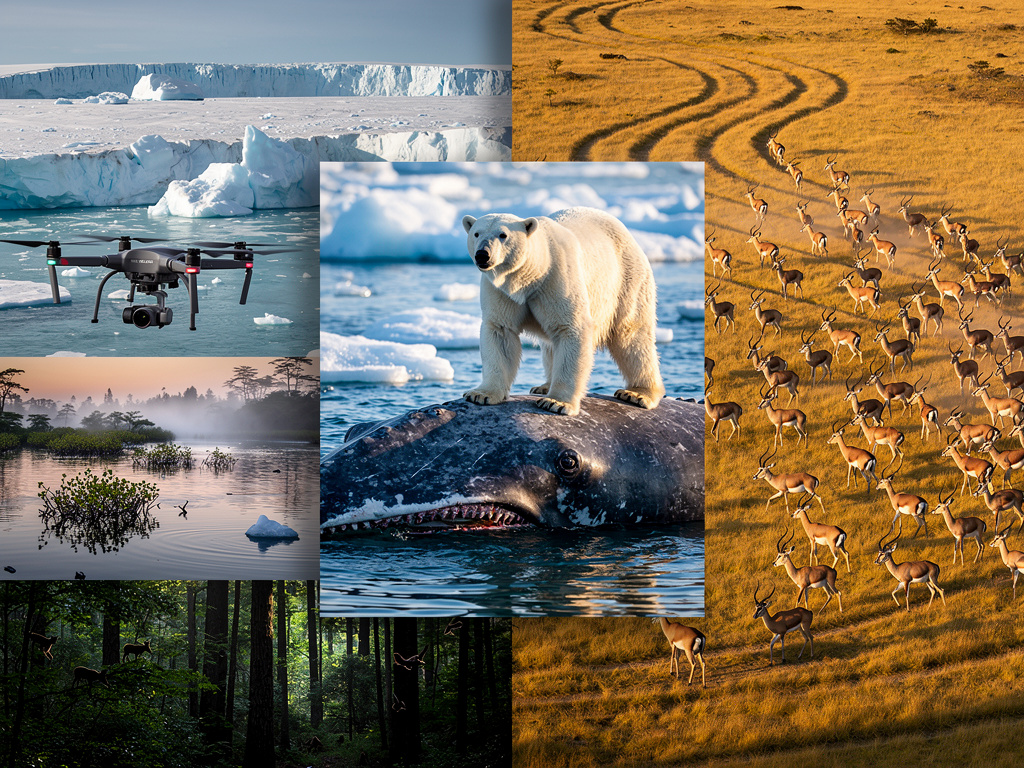
These photographs aren’t mere snapshots; they are meticulously crafted narratives that blend scientific insight with emotional resonance. Take, for instance, the image of a polar bear perched atop a massive sperm whale carcass in the icy waters of Svalbard, Norway. Captured by photographer Nima Sarikhani, this scene freezes a rare moment of survival in a changing Arctic environment, where melting sea ice forces predators into unconventional feeding grounds. The bear, balanced precariously on the frozen giant, embodies the raw struggle for existence amid climate shifts, a theme that echoes throughout the collection. Sarikhani’s work, part of the broader 2025 portfolio, underscores how wildlife photography has evolved from documentation to advocacy, urging viewers to confront the impacts of global warming on polar habitats.
Complementing this is a drone-captured vista of six million white-eared kob antelope thundering across South Sudan’s plains during what is described as the planet’s largest land migration. Photographer Nichole Sobecki employed innovative aerial technology to encapsulate the sheer scale of this event, revealing patterns of movement that mimic fluid rivers across vast terrains. This image not only showcases the majesty of mass migration but also highlights the threats from poaching and habitat fragmentation, issues that have plagued the region for decades. As detailed in reports from Discover Wildlife, such migrations are critical for ecological balance, yet they face increasing peril from human encroachment.
Technological Frontiers in Capturing Elusive Moments
Diving deeper into the technical prowess behind these images, photographers in the 2025 collection leveraged cutting-edge tools to access previously unreachable subjects. One standout is the first-ever underwater photograph of a great white shark off the coast of Maine, a feat accomplished by Brian Skerry. Using specialized diving gear and remote-operated cameras, Skerry navigated frigid waters to document the shark’s predatory grace, marking a shift in the species’ range due to warming oceans. This image, as noted in coverage from ABC7 Los Angeles, signals broader marine ecosystem changes, with sharks venturing into new territories that could disrupt local fisheries and tourism.
Equally compelling is the intimate portrait of a female polar bear and her cubs in the Canadian Arctic, photographed by Thomas Vijayan. Employing long-lens telephoto setups from a safe distance, Vijayan captured the tenderness of maternal care against a backdrop of dwindling ice floes. This photograph serves as a poignant reminder of conservation efforts, with polar bear populations declining by an estimated 30% in recent decades, according to data referenced in National Geographic’s own archives. The image’s emotional depth is amplified by its timing—shot during a brief window of optimal light in the high Arctic summer—demonstrating how patience and environmental knowledge are as crucial as equipment.
Another highlight involves a composite image of Botswana’s Boteti River watering hole, where photographer Stephen Wilkes compressed 18 hours of activity into a single frame. By stitching together thousands of exposures, Wilkes created a dynamic tableau showing elephants, zebras, and predators converging in a diurnal rhythm. This technique, known as day-to-night photography, not only illustrates biodiversity hotspots but also the pressures of drought and human development on these vital oases. Insights from 121Clicks.com emphasize how such innovative methods allow photographers to convey temporal stories that static images cannot, making complex ecological narratives accessible to a wider audience.
Conservation Narratives Woven Through Lenses
The 2025 wildlife selections go beyond aesthetics, embedding urgent conservation messages that resonate with industry professionals in photography, environmental science, and media. Consider the haunting depiction of a brown-throated three-toed sloth clinging to a barbed wire fence in a deforested area of Costa Rica, an image that won accolades in related photography awards and echoes themes in National Geographic’s year-end picks. Photographer Emmanuel Tardy’s work, as shared in posts on X (formerly Twitter), captures the sloth’s desperate adaptation to human-altered environments, symbolizing habitat loss that has reduced sloth populations by half in some regions over the past 20 years.
This theme of displacement extends to a photograph of Sami reindeer herders in northern Europe, the continent’s last Indigenous people, whose traditional ways are threatened by industrial expansion. Kiliii Yüyan’s lens documents the herders guiding their animals through snowy expanses, blending cultural heritage with wildlife conservation. The image highlights how climate change affects migration routes, leading to food scarcity for both humans and reindeer. Drawing from a press release on DET Press, this narrative underscores the interconnectedness of human and animal survival, a recurring motif in the collection.
Further amplifying these stories is a close-up of a hatching chick, captured at the precise moment of emergence by Jasper Doest. Using high-speed macro photography, Doest reveals the vulnerability of avian life cycles, tying into broader discussions on biodiversity loss. This image, featured in analyses from USA Today, serves as a microcosm of global threats like pollution and habitat destruction, which have led to the decline of over 1 billion birds in North America alone since 1970.
Behind the Scenes: Photographers’ Perils and Passions
Delving into the human element, the photographers behind these 2025 images often endure extreme conditions to secure their shots. Brian Skerry, for example, spent weeks in sub-zero temperatures and faced equipment failures to photograph the Maine shark, a process that involved collaboration with marine biologists to ensure ethical practices. Such endeavors highlight the ethical tightrope wildlife photographers walk—balancing intrusion with respect for their subjects. Industry insiders note that advancements in non-invasive tech, like AI-assisted tracking, are reducing risks, yet the physical demands remain immense.
Nima Sarikhani’s polar bear image required months of planning, including partnerships with local Inuit guides to navigate Svalbard’s treacherous terrain. This collaboration not only ensured safety but also enriched the cultural context of the photograph, as Indigenous knowledge informed the timing and location. Recent news on X platforms echoes this, with users praising how such images foster global awareness, amassing millions of views and sparking discussions on conservation funding.
Stephen Wilkes’ Botswana composite demanded over 3,000 individual shots, edited with proprietary software to maintain authenticity. As explored in features from Popular Science, this method represents a fusion of art and science, where data visualization techniques enhance storytelling. Wilkes himself has spoken in interviews about the meditative aspect of such long-duration shoots, which allow for unexpected discoveries, like nocturnal predator behaviors that add layers to the final piece.
Global Impact and Future Trajectories
The ripple effects of these wildlife photographs extend into policy and public perception. For instance, the antelope migration image has been cited in advocacy campaigns by organizations like the World Wildlife Fund, pushing for protected corridors in South Sudan. This demonstrates how National Geographic’s platform amplifies conservation efforts, influencing everything from international treaties to local land-use policies. Industry analysts predict that as drone and AI technologies advance, future collections will feature even more immersive experiences, potentially incorporating virtual reality elements.
Moreover, the 2025 selections reflect a diversification in storytelling, with more contributions from underrepresented photographers, including those from the Global South. This shift, as highlighted in posts across X, promotes inclusive narratives that challenge Western-centric views of wildlife. One such example is a photograph of Amazonian river dolphins navigating polluted waters, capturing the impact of mining on aquatic life and drawing attention to underreported crises.
Looking ahead, the enduring power of these images lies in their ability to inspire action. Photographers like those featured continue to innovate, using social media to extend their reach—evidenced by National Geographic’s own X posts garnering hundreds of thousands of engagements. As the world grapples with biodiversity loss, these visual testaments serve as both warnings and wonders, reminding us of the untamed beauty worth preserving. In an era of rapid environmental change, the 2025 wildlife masterpieces from National Geographic not only document the present but chart a course for a more sustainable future, one frame at a time.


 WebProNews is an iEntry Publication