
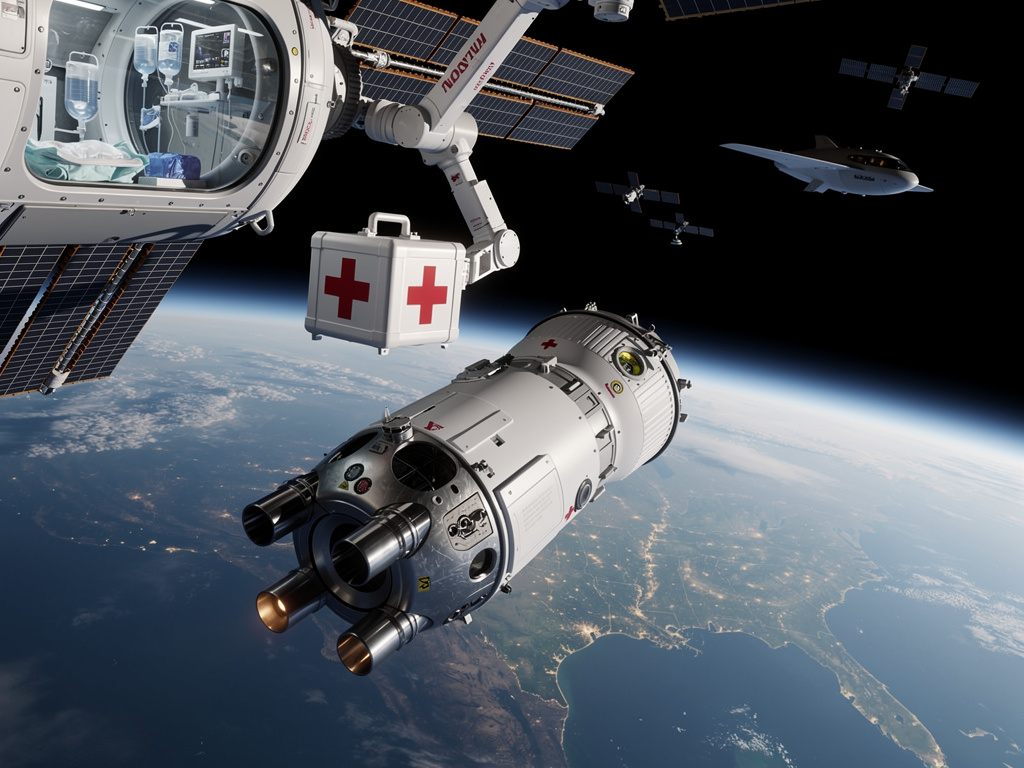
On January 8, 2026, NASA disclosed a medical issue aboard the International Space Station, prompting the early return of the Crew-11 mission in a unprecedented move. This marked the space agency’s first-ever medical evacuation from orbit, sending four astronauts—two Americans, one Russian, and one Japanese—back to Earth aboard a SpaceX Dragon capsule. The crew splashed down off San Diego on January 15, with all members reported stable post-landing.
The revelation came via an official International Space Station X post, stating NASA was ‘closely monitoring a stable medical situation involving one International Space Station crew member and evaluating all options, including an early Crew-11 return.’ This vague update fueled speculation, with Daily Mail reporting NASA’s ‘hint’ at the emergency, noting it as the first such incident in the agency’s 65-year history.
Genesis of the Crisis
Crew-11, launched in late 2025, included NASA astronauts Anne McClain and Nichole Ayers, Roscosmos cosmonaut Sergey Ryzhikov, and JAXA astronaut Takuya Onishi. Their mission focused on microgravity research, but the medical issue disrupted operations. NASA Administrator Jared Isaacman later clarified during a post-splashdown briefing that the situation, while serious, allowed a week of planning, indicating stability. ‘The fact that NASA took a week to plan the return out showed that the situation was stable and not an urgent emergency,’ Isaacman said, per Space.com.
Details on the affected astronaut remain undisclosed, respecting privacy protocols. BBC News described it as a ‘serious medical condition,’ forcing the mission’s end ahead of schedule. The Dragon capsule’s capability to loiter in orbit for up to five days post-undocking, combined with U.S. military recovery assets, enabled a measured response, as noted by NASA Commercial Crew Program manager Steve Stich.
Operational Precision in Orbit
Preparations for return involved meticulous checks of the Crew Dragon’s life support and reentry systems. Three Expedition 74 crew members stayed aboard to maintain station operations and science experiments. A follow-up ISS X post on January 17 confirmed the crew’s safe arrival in Houston, with all completing evaluations and stable.
NASA’s post-splashdown news conference highlighted recovery protocols. Astronauts emerged smiling from the Pacific Ocean capsule, per BBC News. The Guardian reported the crew member’s condition as ‘stable,’ underscoring the success of remote diagnostics and telemedicine from ground control.
Precedents and Near-Misses
This event echoes past incidents without evacuation. In June 2024, a simulated decompression audio sparked false alarms, quickly clarified by ISS X: ‘There is no emergency situation.’ Spacesuit leaks during EVAs, like Tracy Dyson’s in 2024, were contained without returns, as detailed in multiple ISS updates.
Historical context includes astronaut John Blaha’s 1997 arrhythmia treatment via medication, avoiding evacuation. The Crew-11 case tests new contingencies under commercial crew paradigms, with SpaceX’s rapid reusability proving vital.
Immediate Aftermath and Crew Welfare
Upon landing, the crew underwent medical checks at the Johnson Space Center. The New York Times noted the multinational team’s safe return, splashing down after one fell ill. NASA emphasized no danger to remaining crew, with microbiology research continuing to safeguard health, per a January 20 ISS X post.
Readaptation to gravity poses challenges; astronauts strap into sleeping bags in microgravity, as NASA X explained. All Crew-11 members are recovering, with privacy maintained on specifics.
Shifting Mission Timelines
Crew-12, featuring NASA Commander Jessica Wittner, Pilot Luke Hathaway, ESA’s Sophie Adenot, and Roscosmos’ Andrey Fedyaev, targets no earlier than February 15 launch, per a January 21 ISS X post and Space.com. Three holdover crew ensure continuity, capturing Earth imagery and maintenance.
This pivot underscores ISS resilience, with NASA balancing health risks against operational needs.
Strategic Implications for Space Medicine
The evacuation highlights advances in orbital healthcare, from AI diagnostics to real-time consults. The Guardian (January 9) detailed NASA’s order for return ‘in the coming days.’ Future Artemis missions, like Crew-12’s lunar precursor, will build on this, per Space.com.
Industry insiders note boosted confidence in commercial providers. SpaceX’s Dragon, with 24-hour global recovery via military pacts, sets benchmarks. As BBC News observed, ‘The four members of Crew-11 beamed as they stepped out,’ signaling procedural triumph.
Forward Horizons
With Crew-11’s return, focus shifts to sustaining ISS through 2030, amid Axiom and private missions. This first medical evacuation refines protocols, ensuring human spaceflight’s viability amid growing deep-space ambitions.


 WebProNews is an iEntry Publication