
Mars’ Tranquil Vista: Curiosity’s Latest Snapshot Redefines Red Planet Serenity
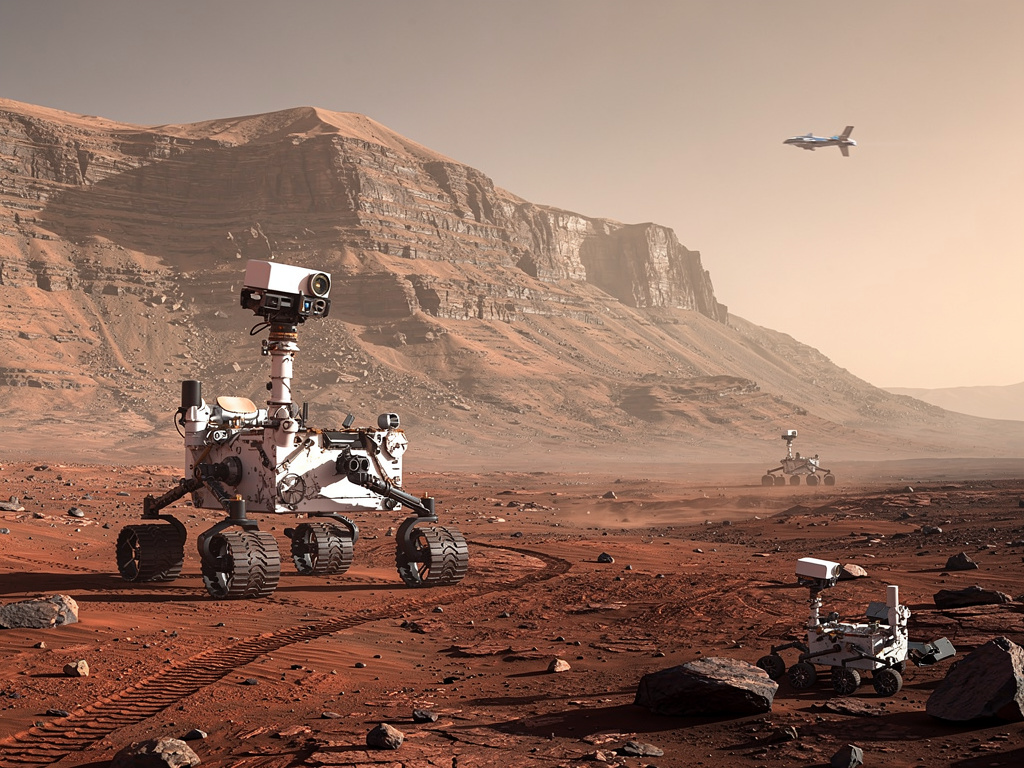
Nearly 14 years after touching down in Gale Crater, NASA’s Curiosity rover continues to captivate scientists and space enthusiasts alike with its unyielding exploration of the Martian surface. In a recent transmission that has stirred widespread admiration, the rover beamed back an image portraying an unusually peaceful expanse of the red planet’s terrain, evoking a sense of calm rarely associated with the harsh, alien world. This photograph, captured amid the rover’s ascent up Mount Sharp, showcases a hazy horizon under a pale sky, with subtle ridges and undulating features that hint at ancient geological processes. As reported in Digital Trends, the image was taken during a brief pause in Curiosity’s journey, offering a moment of reflection on the rover’s enduring mission to uncover signs of past microbial life.
The serenity captured in this vista stems from a combination of atmospheric conditions and the rover’s vantage point high on Mount Sharp, a central peak within Gale Crater that towers over the surrounding plains. Curiosity, equipped with advanced imaging tools like the Mastcam, has been methodically documenting the planet’s geology since its 2012 landing. This particular shot, processed to enhance colors and contrast, reveals layers of sediment that could hold clues to Mars’ watery past. Experts at NASA’s Jet Propulsion Laboratory note that such images not only serve scientific purposes but also humanize the distant world, making the abstract tangible for those on Earth.
Beyond its aesthetic appeal, the image underscores the technological prowess enabling these feats. Curiosity’s cameras, resilient against dust storms and extreme temperatures, provide high-resolution data that informs models of Martian climate history. Recent analyses suggest that the formations visible in the photo may represent wind-sculpted deposits from eons ago, when the planet’s atmosphere was thicker and more dynamic. This ties into broader narratives of planetary evolution, where Mars transitioned from a potentially habitable environment to the arid desert we observe today.
Unveiling Martian Mysteries Through Imagery
In the context of ongoing NASA missions, this serene capture arrives amid a flurry of activity from multiple rovers and orbiters. Just weeks prior, the Perseverance rover, operating in Jezero Crater, documented striking megaripples—large sand formations that offer insights into current wind patterns and ancient geologic activity. According to a feature in Space.com, Perseverance’s intensive study of the “Hazyview” ripple involved over 50 observations using instruments like SuperCam and Mastcam-Z, revealing whether these features are dormant or still shaped by Martian winds.
Curiosity’s latest contribution complements these efforts, providing a panoramic view from Mount Sharp that includes boxwork formations—intricate, vein-like structures indicative of past water flows. A separate report from the same publication details a stunning panorama assembled over two Martian days, highlighting the rover’s path through Gale Crater and the scientific treasures unearthed along the way. These images collectively paint a picture of Mars as a dynamic world, where erosion and deposition have crafted intricate patterns over billions of years.
The integration of data from Curiosity and Perseverance is crucial for NASA’s long-term goals. While Curiosity focuses on habitability in Gale Crater, Perseverance collects samples for potential return to Earth, a mission now facing uncertainties. Recent congressional decisions, as outlined in Science from the American Association for the Advancement of Science, have effectively halted the Mars Sample Return project, shifting the burden to international partners like China, which plans its own retrieval efforts.
Technological Triumphs Amid Budgetary Battles
This pivot highlights the precarious funding landscape for space exploration. The cancellation, backed by the current administration, reallocates resources but leaves a gap in understanding Martian biosignatures. Industry insiders speculate that private entities, such as SpaceX with its Starship ambitions, could fill this void, potentially accelerating human missions to the red planet. Meanwhile, orbital assets like the Mars Reconnaissance Orbiter continue to support ground operations, recently marking its 100,000th image milestone with a shot of shifting sand dunes, as noted in Live Science.
Curiosity’s serene image also resonates on social platforms, where posts on X (formerly Twitter) from users like NASA Solar System and the SETI Institute amplify its reach. These shares emphasize the rover’s role in testing technologies for future astronauts, including navigation systems and environmental sensors. One post from NASA Mars highlights orbital views of rover tracks, underscoring the synergy between surface and space-based observations.
The engineering behind these captures involves sophisticated software that stitches together multiple frames, compensating for the thin Martian atmosphere’s scattering of light. This results in visuals that mimic Earth-like sunsets, as explored in a USA Today piece on a Curiosity photo simulating terrestrial skies. Such adaptations not only enhance public engagement but also aid in precise scientific measurements, like assessing atmospheric haze and dust levels.
Evolving Narratives of a Habitable Past
Delving deeper, the serene vista from Curiosity invites speculation on Mars’ climatic history. Geologists interpret the layered rocks as evidence of ancient lakes and rivers, environments that might have supported life. Ongoing analyses of drill samples reveal organic molecules, though debates persist on their origins—biological or abiotic. This image, with its tranquil expanse, serves as a backdrop for these inquiries, reminding researchers of the planet’s vast, unexplored regions.
Comparisons with Perseverance’s findings in Jezero Crater, a former delta, suggest parallel stories of water-shaped terrains. The “Honeyguide” site’s megaripples, for instance, preserve recent surface evolution, potentially linking to global wind patterns influenced by Mars’ axial tilt and orbital variations. As detailed in NASA’s own releases via NASA Mars, raw images from both rovers allow citizen scientists to contribute to mapping efforts, democratizing space exploration.
Budget constraints notwithstanding, the scientific community remains optimistic. The cancellation of sample return opens doors for innovative approaches, such as in-situ analysis with advanced spectrometers on future missions. Insiders point to collaborations with the European Space Agency and private firms as pathways forward, ensuring that discoveries from images like Curiosity’s continue to inform our understanding.
Bridging Science and Human Aspiration
The emotional impact of these visuals cannot be overstated. In an era of rapid technological advancement, a single serene image from Mars fosters a connection between humanity and the cosmos. It inspires engineers to push boundaries, from developing radiation-resistant materials to autonomous driving algorithms tested on rover paths. Posts on X reflect this sentiment, with users sharing enhanced versions and discussions on implications for colonization.
Moreover, these captures contribute to educational initiatives, where schools use rover data to teach geology and robotics. NASA’s features on NASA Science provide in-depth stories, blending imagery with narratives of discovery. This latest from Curiosity, portraying a hushed Martian scene, exemplifies how visual storytelling drives funding and public support for space programs.
As rovers like Curiosity age, their legacies endure through archives of images that chronicle Mars’ secrets. The serene view not only highlights technical achievements but also evokes wonder, prompting questions about our place in the universe. With each transmission, NASA edges closer to unraveling whether life once thrived on this neighboring world.
Future Horizons in Martian Exploration
Looking ahead, the integration of artificial intelligence in rover operations promises even more detailed documentation. Upcoming missions, potentially involving drone companions like Ingenuity’s successors, could capture aerial perspectives complementing ground-level serenity. Industry experts anticipate that private ventures will accelerate timelines, with Mars becoming a testing ground for sustainable habitats.
The recent policy shifts, as reported in Live Science on the handover to China, underscore a multipolar space race. This could lead to collaborative breakthroughs, where shared data from serene vistas and sample analyses reveal definitive evidence of past life.
Ultimately, Curiosity’s image stands as a testament to perseverance—both the rover’s and humanity’s. It transforms abstract data into a narrative of exploration, inviting insiders to ponder the next chapter in our quest to understand Mars. As new technologies emerge, these tranquil glimpses will continue to guide scientific inquiry and inspire generations.


 WebProNews is an iEntry Publication