
The Slow March to the Moon: NASA’s Artemis II Edges Toward Liftoff
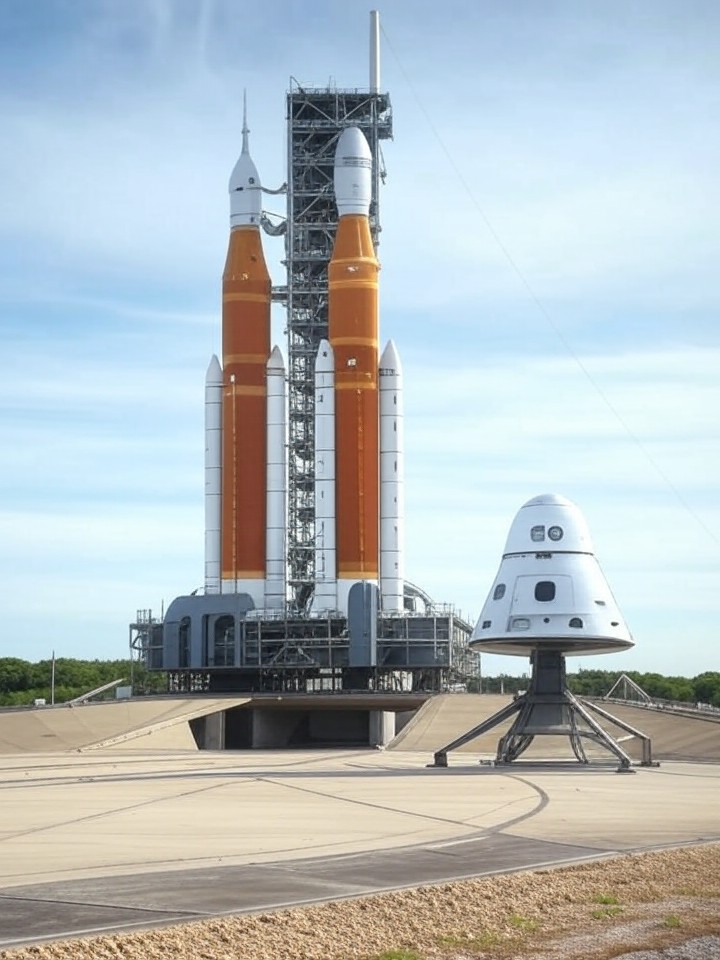
NASA’s Artemis II mission, the first crewed lunar voyage in over half a century, took a pivotal step forward this weekend as the towering Space Launch System (SLS) rocket and Orion spacecraft completed their deliberate crawl to Launch Complex 39B at Kennedy Space Center. On January 17, 2026, at precisely 6:42 p.m. EST, the 322-foot-tall stack arrived at the pad after a painstaking 12-hour journey from the Vehicle Assembly Building, covering just 4.2 miles at a glacial pace of less than 1 mph. This rollout marks a critical milestone for a program that has faced years of delays, technical hurdles, and escalating costs, yet it underscores NASA’s unyielding push to return humans to the vicinity of the Moon.
The journey was no small feat, orchestrated by the agency’s Exploration Ground Systems team using the massive crawler-transporter, a behemoth vehicle weighing 6.6 million pounds and capable of hauling loads up to 18 million pounds. Engineers monitored every inch of the trek, ensuring the rocket’s stability on the mobile launcher platform. This isn’t just logistics; it’s a testament to the engineering precision required for a mission that will send four astronauts—NASA’s Reid Wiseman, Victor Glover, Christina Koch, and Canadian Space Agency’s Jeremy Hansen—on a 10-day orbital loop around the Moon, without landing.
As the rocket settles into its seaside perch, attention now turns to a battery of pre-launch tests that will determine if Artemis II can meet its targeted February 6 launch window. Among these, the wet dress rehearsal stands out as the make-or-break event, simulating a full countdown with propellant loading but stopping short of ignition. This test, expected in the coming weeks, will validate the integrated systems of the SLS core stage, solid rocket boosters, and Orion capsule under near-launch conditions.
Rollout Realities and Historical Echoes
The rollout process itself drew widespread coverage, with live streams and updates captivating space enthusiasts worldwide. According to a report from NASA, the operation began early on January 17, with the stack emerging from the Vehicle Assembly Building amid cheers from assembled teams. This echoes the Apollo era, when similar crawls to the pad symbolized the dawn of human lunar exploration, but today’s version incorporates modern safeguards like real-time structural monitoring and environmental protections against Florida’s unpredictable weather.
Posts on X, formerly Twitter, buzzed with excitement and speculation. NASA’s official account shared timelapse footage of the rollout, garnering millions of views and highlighting the public’s renewed interest in lunar ambitions. Industry observers noted the contrast with private ventures like SpaceX’s Starship, which often move at a brisker pace, but NASA’s methodical approach prioritizes safety for its human cargo. The Artemis program’s international flavor adds layers, with contributions from the European Space Agency for Orion’s service module and Japan’s involvement in future missions.
Yet, this progress comes against a backdrop of scrutiny. The SLS, developed by Boeing as the prime contractor, has ballooned in cost to over $23 billion, with each launch estimated at $4 billion. Critics argue the program’s reliance on legacy Space Shuttle technology, while reliable, stifles innovation. Supporters counter that it’s the only vehicle currently capable of hurling Orion to the Moon with the necessary power and precision.
Looming Tests and Technical Challenges
The upcoming wet dress rehearsal is particularly fraught, given lessons from Artemis I’s uncrewed test flight in 2022, which faced multiple scrubs due to hydrogen leaks and valve issues. For Artemis II, teams have implemented upgrades, including redesigned seals and enhanced cryogenic systems, but the proof will be in the execution. A successful rehearsal would involve loading more than 700,000 gallons of liquid hydrogen and oxygen into the core stage, followed by a simulated countdown to T-minus 10 seconds.
Insights from BBC News emphasize that this test is essential for certifying the rocket’s readiness for crew. Any anomalies could push the launch into later windows in March or April, delaying the mission and potentially affecting downstream Artemis goals, like the planned lunar landing in Artemis III. Engineers are also testing the launch pad’s sound suppression system, which floods the area with water to mitigate acoustic shockwaves during liftoff— a system vetted in prior evaluations at Pad 39B.
Beyond the rehearsal, ground teams will conduct interface verifications between the rocket and pad infrastructure, including umbilical connections for power, data, and propellants. These checks are crucial, as any misalignment could lead to catastrophic failures. The Orion spacecraft, meanwhile, undergoes its own regimen, with crew module pressurization tests and abort system validations to ensure astronaut safety in emergencies.
Crew Perspectives and Mission Stakes
The four astronauts selected for Artemis II bring a mix of experience and diversity, representing a new chapter in space exploration. Commander Reid Wiseman, a veteran of the International Space Station, has spoken publicly about the mission’s significance, noting in interviews that it’s about proving the system’s reliability before attempting landings. Victor Glover, set to become the first Black astronaut to orbit the Moon, emphasizes the inspirational aspect for underrepresented communities.
Christina Koch, who holds the record for the longest single spaceflight by a woman, will be the first female to venture beyond low Earth orbit on this flight. Jeremy Hansen rounds out the crew as the first Canadian on a lunar mission, highlighting the collaborative nature of Artemis, which includes partnerships with over 20 countries. Their training, intensified in recent months, includes simulations of the high-speed reentry that will see Orion hitting the atmosphere at 25,000 mph, generating temperatures up to 5,000 degrees Fahrenheit.
The stakes extend beyond the crew. Artemis II is a linchpin for NASA’s broader vision of sustainable lunar presence, paving the way for the Gateway space station and eventual Mars missions. Delays here could ripple into budget battles on Capitol Hill, where funding for the program faces competition from defense priorities and climate initiatives.
Engineering Marvels Under the Microscope
Diving deeper into the SLS design, the rocket’s core stage, built by Boeing, features four RS-25 engines repurposed from the Shuttle program, each capable of producing 512,000 pounds of thrust. Flanked by two solid rocket boosters from Northrop Grumman, the system generates 8.8 million pounds of thrust at liftoff—more than any rocket since Saturn V. The interim cryogenic propulsion stage, provided by United Launch Alliance, handles the translunar injection burn.
Recent X posts from space industry accounts, including those from Boeing Space, celebrated the rollout’s completion and teased the wet dress as the next hurdle. These updates reflect a community eager for success but wary of past setbacks, like the core stage’s green run test anomalies in prior builds. For Artemis II, the absence of a full green run at Stennis Space Center—opted out to accelerate the timeline—places extra emphasis on pad tests.
Environmental considerations also play a role. Kennedy Space Center’s location amid wildlife refuges requires mitigation strategies, such as noise barriers and water deluge systems to protect local ecosystems. NASA’s sustainability efforts include recycling propellants where possible and monitoring emissions, aligning with broader agency goals for eco-friendly spaceflight.
Global Context and Future Horizons
Artemis II doesn’t exist in isolation; it’s part of a renewed space race with China’s ambitious lunar plans, including a crewed landing by 2030. The U.S. program aims to establish norms for international cooperation, contrasting with more unilateral approaches elsewhere. Partnerships with commercial entities like SpaceX for the Human Landing System add complexity, as Artemis III relies on Starship for the actual Moon touchdown.
Coverage from Space.com details how the rollout’s success boosts morale, but insiders know the real test is ahead. Any slip could affect timelines for Artemis IV and beyond, which envision a lunar south pole base for resource utilization, like mining water ice for fuel.
As preparations ramp up, live briefings and media events are scheduled, offering glimpses into the operations. NASA plans a press conference post-rehearsal to discuss findings, potentially confirming the launch date. For industry watchers, this phase is a masterclass in high-stakes project management, blending cutting-edge tech with human ingenuity.
Pathways to Lunar Legacy
The mission’s trajectory involves a free-return path around the Moon, slinging the spacecraft back to Earth without orbital insertion, a safer profile for this test flight. This allows for extensive systems checks, from life support to navigation, ensuring readiness for more complex endeavors.
Reflecting on the program’s evolution, Artemis has overcome significant obstacles since its inception under the Trump administration and continuation under Biden. Budget allocations have fluctuated, but recent congressional support has stabilized funding at around $7.5 billion annually for human exploration.
Ultimately, as the SLS stands sentinel at Pad 39B, it embodies decades of accumulated knowledge and aspiration. The coming weeks will reveal if Artemis II can ignite the next era of exploration, carrying not just astronauts but the hopes of a planet watching from afar.
Innovations and Industry Implications
Innovations in Artemis II extend to Orion’s heat shield, upgraded after Artemis I’s reentry data showed unexpected ablation patterns. Ablative material now features enhanced composites for better thermal protection. The European Service Module, built by Airbus, provides propulsion and power, showcasing transatlantic collaboration.
For the aerospace sector, success here could validate reusable elements in future SLS variants, potentially reducing costs. Companies like Lockheed Martin, Orion’s builder, stand to gain from proven performance, influencing contracts for deep-space habitats.
As tests proceed, the world awaits whether this slow march will culminate in a triumphant leap, rekindling humanity’s lunar dreams.


 WebProNews is an iEntry Publication