
Celestial Spectacles: NASA’s 2026 Skywatching Kickoff Highlights Venus’s Dazzling Display
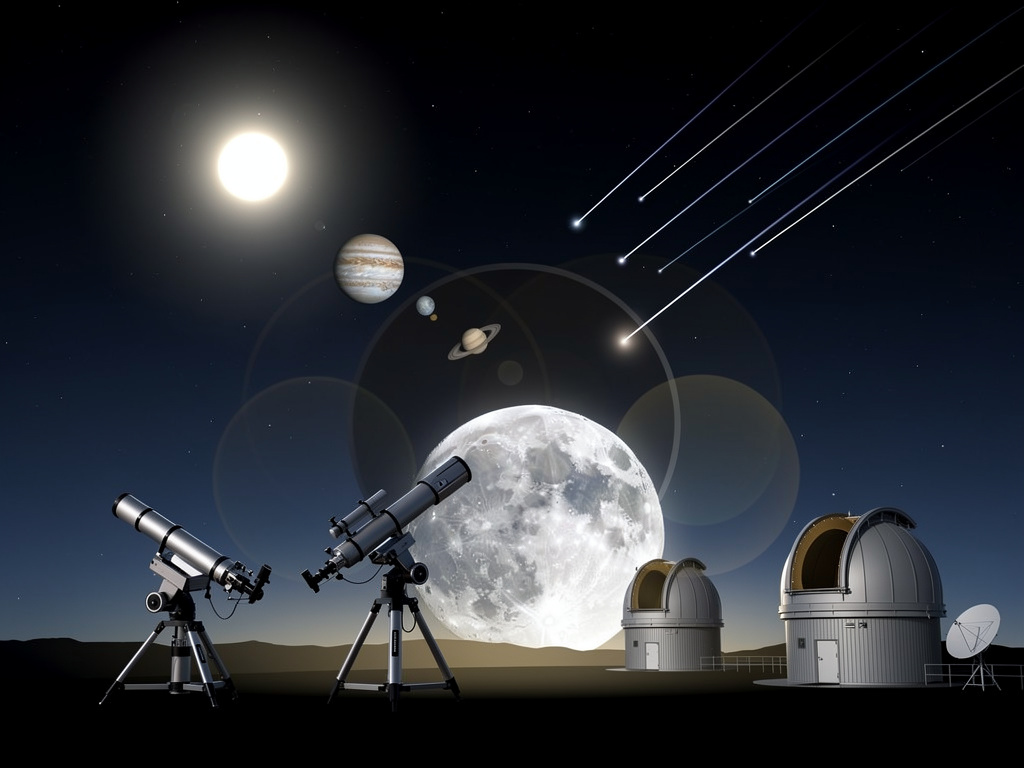
As the new year unfolds, astronomy enthusiasts and casual stargazers alike are turning their eyes skyward, guided by NASA’s latest recommendations for January 2026 observations. The space agency’s inaugural skywatching tips for the year emphasize a particularly radiant appearance by Venus, often dubbed the “evening star,” which promises to captivate viewers with its exceptional brightness. This phenomenon, coupled with other notable celestial events, sets the stage for an exciting start to a year filled with astronomical highlights. Drawing from NASA’s ongoing “What’s Up” video series, these tips provide accessible insights for observers at all levels, blending scientific precision with the wonder of cosmic exploration.
The focus on Venus stems from its position in the solar system, where it reaches a point of greatest elongation from the Sun, making it visible for extended periods after sunset. According to details shared in a recent article from Digital Trends, NASA highlights how Venus will shine at a magnitude of -4.6, outshining all other planets and stars in the night sky except for the Moon. This brightness is due to Venus’s thick atmosphere reflecting sunlight efficiently, creating a beacon that’s impossible to miss in the western horizon shortly after dusk. For industry professionals in astronomy and space education, this event underscores the importance of public outreach, as NASA’s tips encourage using simple tools like binoculars to enhance the viewing experience.
Beyond Venus, the tips include observations of other bright planets such as Jupiter and Saturn, which will be prominent in the predawn sky. NASA’s guidance, as outlined in their Jet Propulsion Laboratory-produced videos, suggests looking eastward before sunrise to spot these gas giants. This aligns with broader patterns in planetary motion, where oppositions and conjunctions create optimal viewing windows. For those in the field, understanding these alignments can inform telescope calibrations and educational programming, ensuring that observatories and planetariums capitalize on these moments to engage audiences.
Venus Takes Center Stage
Venus’s prominence in January 2026 isn’t just a fleeting glow; it’s part of a larger cycle where the planet alternates between morning and evening apparitions. NASA’s tips, echoed in a comprehensive guide from Space.com, note that on January 10, Venus reaches its greatest eastern elongation, extending its visibility to about four hours after sunset. This elongation allows observers to see the planet at its highest point above the horizon, minimizing atmospheric interference that can dim fainter objects. Astronomy insiders might appreciate how this event ties into historical observations, reminiscent of Galileo’s early telescopic views that revealed Venus’s phases, challenging geocentric models centuries ago.
Complementing Venus’s display, the month features a full moon on January 3, which NASA describes as a supermoon due to its proximity to Earth at perigee. This “Wolf Moon,” as it’s traditionally known, will appear larger and brighter, potentially washing out fainter stars but providing a stunning backdrop for planetary sightings. According to posts found on X from accounts like NASA Solar System, similar alignments in past years have drawn widespread attention, with users sharing photos of Venus near the Moon, fostering a community-driven appreciation for these events. For professionals, this supermoon offers a chance to study lunar illumination effects on sky brightness, aiding in the planning of dark-sky preservation efforts.
NASA’s recommendations also extend to meteor showers, with the Quadrantids peaking around January 3-4. Though the bright moon may hinder visibility, the agency advises seeking dark locations away from city lights to catch up to 25 meteors per hour. This shower originates from the debris of asteroid 2003 EH1, and for experts in meteoritics, it represents an opportunity to collect data on radiant points and velocities, contributing to models of cometary evolution.
Planetary Alignments and Observation Strategies
Shifting to the broader array of bright planets, Jupiter will be visible in the evening sky, reaching opposition later in the year but already prominent in January. NASA’s tips, as detailed in their monthly video series, suggest using apps or star charts to locate it near the constellation Taurus. This gas giant’s visibility is enhanced by its size and reflective cloud bands, making it a favorite for amateur astronomers equipped with modest telescopes. Industry insiders know that Jupiter’s opposition periods are prime for high-resolution imaging, revealing details like the Great Red Spot and its four largest moons.
Saturn, meanwhile, graces the morning sky, offering views of its iconic rings tilted at an angle that maximizes their visibility. Drawing from a recent piece in Royal Observatory Greenwich, the planet’s position allows for observations of its ring system, which appears edge-on in some years but is more open in 2026. For those in aerospace and optics, this presents a testing ground for new imaging technologies, as capturing Saturn’s subtle ring details requires advanced filters to combat light pollution.
Mars adds to the mix, though it’s less dominant in January, building toward its own opposition later in the year. NASA’s guidance encourages tracking its reddish hue in the eastern sky before dawn, a precursor to more spectacular views in subsequent months. Posts on X from users like Celestron highlight how January’s long nights provide steady air for observations, ideal for resolving Martian surface features with higher-powered scopes.
Eclipses and Meteor Peaks on the Horizon
Looking ahead within NASA’s 2026 framework, the year promises major events like a total solar eclipse in August, visible from parts of Greenland, Iceland, and Spain. While January’s tips focus on immediate sights, they build anticipation for this rarity, as noted in an article from Smithsonian Magazine. For astronomy professionals, preparing for such eclipses involves coordinating international expeditions and public safety campaigns to promote safe viewing practices.
Meteor showers continue to feature prominently, with the Perseids in August expected to deliver up to 100 meteors per hour under favorable conditions. NASA’s tips for January’s Quadrantids serve as a warmup, emphasizing the need for patience and proper equipment. Insights from EarthSky suggest that 2026’s showers may be enhanced by planetary gravitational influences, a topic of interest for researchers modeling orbital dynamics.
Additionally, a “blood moon” lunar eclipse in March will tint the Moon reddish due to Earth’s atmospheric scattering of sunlight. This event, previewed in NASA’s broader skywatching resources, offers educational value in explaining Rayleigh scattering, a principle with applications in atmospheric science and climate modeling.
Technological Aids and Community Engagement
To make the most of these observations, NASA recommends digital tools like their Skywatching app and augmented reality features in mobile devices. These innovations, as discussed in a news item from stupidDOPE, democratize astronomy, allowing even urban dwellers to participate despite light pollution. For industry experts, this shift highlights the growing market for astronomy software, with potential integrations of AI for real-time event predictions.
Community involvement is key, with social media platforms buzzing about these events. Posts on X from NASA JPL and others share tips on photographing Venus’s phases, encouraging user-generated content that can be analyzed for citizen science projects. This grassroots data collection aids in tracking phenomena like atmospheric haze affecting visibility.
Professional networks, including those at observatories, are leveraging these tips to host virtual and in-person events. For instance, aligning with NASA’s video series, institutions are planning webinars on planetary photography, fostering collaborations between educators and tech developers.
Broader Implications for Astronomy in 2026
The year’s skywatching calendar includes festive supermoons, such as one in December, tying into cultural celebrations. NASA’s emphasis on these, as per Scientific American, connects astronomical events to human traditions, broadening appeal beyond scientific circles.
For insiders, 2026 represents a pivotal time with advancements in space telescopes like the upcoming Roman Space Telescope, which could provide deeper insights into exoplanets visible during these alignments. NASA’s tips indirectly support this by building public interest in planetary science.
Moreover, environmental factors play a role; darker skies due to reduced light pollution initiatives enhance observations. Professionals are advocating for policies that preserve night skies, ensuring future generations can enjoy Venus’s brilliance without interference.
Emerging Trends in Stargazing Technology
Innovations in telescope design, such as smart scopes with auto-tracking, are transforming how we observe events like Venus’s elongation. Drawing from X posts by Star Walk, these tools make complex alignments accessible, potentially increasing participation in global astronomy networks.
Data from past observations, including those of the Large Magellanic Cloud as mentioned in NASA Science, inform predictions for 2026, highlighting star-forming regions visible alongside planets.
Ultimately, NASA’s January tips set a tone of accessibility and excitement, inviting deeper exploration of the cosmos through both traditional and cutting-edge means. As the year progresses, these initial highlights promise to evolve into a tapestry of discoveries, enriching our understanding of the universe.


 WebProNews is an iEntry Publication