
Shaking the Moon: Inside JPL’s Rigorous Trials for Tomorrow’s Lunar Pioneers
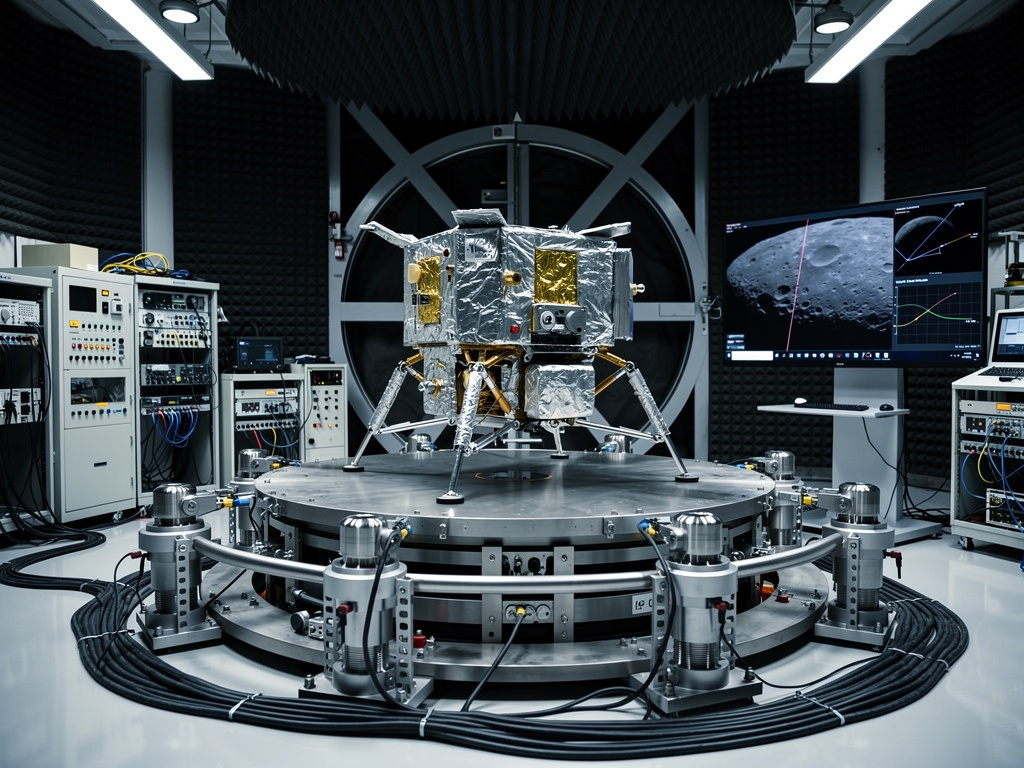
In the heart of Southern California, NASA’s Jet Propulsion Laboratory is channeling decades of space exploration expertise into a new era of commercial lunar missions. Engineers at JPL recently subjected an engineering model of Firefly Aerospace’s Blue Ghost Mission 2 lander to intense vibration and acoustic tests, simulating the brutal conditions of launch and space travel. This effort, part of NASA’s broader Commercial Lunar Payload Services initiative, aims to ensure that private companies can reliably deliver payloads to the Moon, supporting the Artemis program’s ambitious goals.
The tests took place in JPL’s Environmental Test Laboratory, a facility with a storied history dating back to the 1960s. Originally built to qualify spacecraft like the Ranger lunar probes, it has since tested iconic missions including the Voyager probes, the Perseverance Mars rover, and the Europa Clipper. Now, it’s being used to vet commercial hardware, marking a shift toward public-private partnerships in space. According to reports from NASA Jet Propulsion Laboratory, the lab’s massive shakers and chambers replicate the jolts, rattles, and extreme noise levels experienced during rocket ascents.
Firefly Aerospace’s Blue Ghost Mission 2 is designed to follow up on the company’s successful first lunar landing, targeting a launch as early as 2026. The structural qualification unit tested at JPL represents the full configuration of the lander stack, helping refine design margins and validate flight plans. This rigorous process is crucial for mitigating risks in uncrewed missions that will carry scientific instruments and technology demonstrations to the lunar surface.
Vibrations from the Past Echo into the Future
Industry experts note that these tests are not just routine checks but critical validations that could define the reliability of commercial space ventures. By using historic facilities for modern commercial spacecraft, JPL is bridging generations of technology, ensuring that lessons from Voyager’s interstellar journey inform the next wave of lunar explorers. Posts on X from space enthusiasts and organizations like Spaceflight Now highlight the excitement around these developments, with users sharing updates on how such testing advances the timeline for sustainable lunar presence.
Beyond vibration and acoustics, the tests help predict how the spacecraft will behave under the stresses of launch vehicles, which can impose forces many times greater than gravity. Firefly’s lander, standing tall like a towering sentinel, was strapped to shakers that mimic the violent shaking of a rocket’s engines firing. Acoustic chambers blasted it with sound levels exceeding 150 decibels, simulating the roar of liftoff. This data, as detailed in coverage from Phys.org, allows engineers to tweak designs before committing to flight hardware.
The collaboration underscores NASA’s strategy to foster a robust commercial sector for lunar deliveries. Under the Artemis campaign, which seeks to return astronauts to the Moon, initiatives like Commercial Lunar Payload Services are outsourcing routine cargo missions to private firms. Firefly, having achieved a soft landing with its first Blue Ghost mission, is now scaling up for more complex payloads, including potential contributions to lunar infrastructure.
Commercial Ambitions Meet Rigorous Standards
As the space industry evolves, the integration of commercial players brings both innovation and challenges. JPL’s role extends beyond testing; it provides a stamp of approval that can attract investors and partners. Recent news from SpaceDaily emphasizes how the lab’s accumulated experience is now extended to industry partners, refining test plans that could prevent costly failures in orbit.
Firefly Aerospace isn’t alone in this lunar push. Other companies, such as Intuitive Machines and Astrobotic, are also developing landers under similar NASA contracts. For instance, Intuitive Machines recently completed human-in-the-loop testing for its Moon RACER lunar terrain vehicle at NASA’s Johnson Space Center, as noted in posts on X from NASA Artemis. These parallel efforts illustrate a burgeoning ecosystem where multiple firms compete and collaborate to establish regular lunar access.
The economic implications are significant. Successful commercial missions could lower costs for scientific research and resource utilization on the Moon, paving the way for mining operations or habitats. Analysts point out that by leveraging JPL’s facilities, companies like Firefly can accelerate development cycles, potentially launching missions annually rather than sporadically.
Echoes of Voyager in Lunar Shakes
Diving deeper into the technical specifics, the vibration tests involve mounting the spacecraft on electrodynamic shakers that can produce forces up to 50,000 pounds. These simulate the random vibrations from engine thrust and atmospheric turbulence. Acoustic testing, meanwhile, uses reverberant chambers to expose the vehicle to intense sound pressure, ensuring structural integrity against potential resonances that could cause cracks or failures.
Historical context adds layers to this narrative. The same chambers that prepared Voyager for its grand tour of the outer planets—now over 50 years into their mission—are adapting to commercial needs. This continuity, as explored in articles from NASA, highlights JPL’s enduring expertise in environmental simulation.
For industry insiders, the real value lies in the data harvested from these tests. Engineers analyze sensor readings to model stress distributions, predict fatigue life, and optimize materials. In the case of Blue Ghost Mission 2, this has led to refinements in the lander’s propulsion system and landing legs, ensuring stability on the uneven lunar terrain.
Broader Implications for Artemis and Beyond
NASA’s Artemis program, aiming for sustained human presence on the Moon by the end of the decade, relies heavily on these commercial capabilities. The upcoming Artemis II mission, which will send astronauts around the Moon in the Orion spacecraft, sets the stage for landings. Updates from Space.com recount 2025 as a year of milestones, including private moon landings that complement government efforts.
Challenges remain, however. Recent incidents, such as NASA losing contact with the MAVEN spacecraft orbiting Mars, remind the community of space’s unforgiving nature. As reported in NASASpaceFlight.com, such events underscore the need for robust testing regimes like those at JPL to build redundancy into systems.
Moreover, environmental considerations on the Moon are gaining attention. New tests at NASA Langley are examining plume-surface interactions, where engine exhaust can erode lunar soil and pose risks to nearby assets. Coverage from SpaceDaily notes how these studies support safer landings for both crewed and uncrewed missions.
Innovations in Testing Methodologies
Advancements in testing technology are enhancing these efforts. JPL has upgraded its facilities with digital controls and real-time data analytics, allowing for more precise simulations. This evolution, as discussed in Daily Galaxy, enables engineers to iterate designs faster, reducing time from concept to launch.
For Firefly, the JPL tests represent a milestone toward operational maturity. The company’s Blue Ghost lander incorporates advanced navigation and propulsion, drawing from lessons in previous missions. Industry observers on X, including accounts like Relativity Space, share enthusiasm for similar propulsion testing, indicating a wave of innovation across the sector.
Looking ahead, these tests could influence international collaborations. With agencies like ESA and private entities worldwide eyeing the Moon, JPL’s methodologies might become global standards, fostering interoperability in lunar operations.
Pushing Boundaries for Lunar Economy
The push for commercial lunar flights is also driving economic models. By certifying spacecraft through JPL, companies can secure contracts not just with NASA but with private clients interested in lunar science or tourism. Reddit discussions on r/nasa, linking to JPL news, reflect public interest in how these tests accelerate the path to a lunar economy.
Technical deep dives reveal that acoustic testing at JPL reaches sound levels that could damage unprotected human hearing, yet are essential for spacecraft survival. Vibration protocols follow standards like MIL-STD-1540, ensuring compliance with launch provider requirements.
Firefly’s next steps involve integrating payloads and conducting full system checks. With a launch window in 2026, the mission could deliver instruments for resource mapping, contributing to in-situ resource utilization—key for long-term habitation.
Sustaining Momentum in Space Exploration
As JPL continues to “shake things up,” the lab’s work exemplifies the blend of heritage and innovation defining modern spaceflight. Partnerships with firms like Firefly are democratizing access to the Moon, potentially leading to breakthroughs in science and technology.
Recent X posts from NASA’s Johnson Space Center highlight parallel rover testing, showing a holistic approach to lunar mobility. These interconnected efforts ensure that when astronauts return, they’ll have reliable support systems in place.
Ultimately, the tests at JPL are more than technical exercises; they’re investments in humanity’s extraterrestrial future, where commercial ingenuity meets governmental vision to expand our reach beyond Earth. With each shake and roar, the path to the Moon becomes clearer, promising a new chapter in exploration.


 WebProNews is an iEntry Publication