
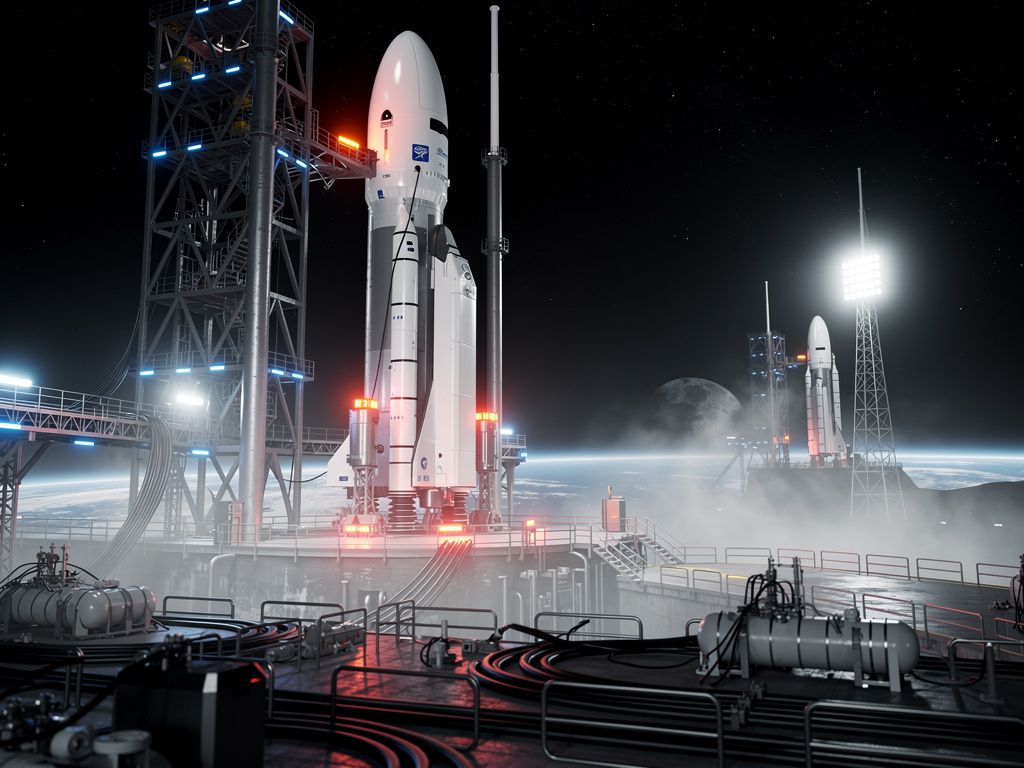
Starliner’s Silent Alarm: NASA’s Wake-Up Call on Overlooked Risks in Human Spaceflight
In the high-stakes world of human spaceflight, where margins for error are razor-thin, a recent report from NASA’s Aerospace Safety Advisory Panel has sent ripples through the agency and its contractors. The panel critiqued NASA’s handling of a critical anomaly during Boeing’s Starliner spacecraft’s uncrewed return to Earth in September 2024, suggesting the agency downplayed the severity of the issue. This incident, involving unexpected thruster pulses during the spacecraft’s deorbit burn, has reignited debates about safety protocols, risk assessment, and the pressures of commercial partnerships in space exploration. Drawing from the panel’s annual report released last week, insiders are now questioning whether NASA’s culture of optimism may have blinded it to potential dangers that could have implications for future missions.
The anomaly in question occurred as Starliner, fresh from a troubled crewed test flight that left two astronauts stranded on the International Space Station for months, made its way back to Earth without passengers. According to details outlined in the report, the spacecraft’s guidance system detected an unexplained shift in its center of gravity during the deorbit maneuver, prompting automatic thruster firings to compensate. While the vehicle landed safely in New Mexico, the panel argued that this event warranted far more scrutiny than it initially received. “This particular anomaly deserves to be right up front and center for quite some time,” the report stated, emphasizing that such issues could pose significant risks in crewed scenarios.
Boeing and NASA have since initiated investigations, but the panel’s critique highlights a broader concern: the agency’s communication and transparency during crises. For months following Starliner’s docking issues in June 2024, public updates were sparse, leaving even internal teams in the dark about the full extent of the propulsion problems. This lack of openness, the panel suggests, filtered through NASA’s workforce and potentially dulled the response to subsequent anomalies like the one during reentry.
Unpacking the Thruster Mystery
Delving deeper into the technical details, the deorbit anomaly stemmed from Starliner’s reaction control system thrusters firing unexpectedly to maintain attitude control. Engineers suspect a combination of factors, including residual helium leaks from earlier in the mission and possible software glitches in the spacecraft’s navigation algorithms. These issues echo problems encountered during Starliner’s 2022 uncrewed test flight, where thruster failures nearly derailed the mission. The 2024 crewed flight amplified these concerns when multiple thrusters overheated and failed, forcing NASA to extend the astronauts’ stay on the ISS and return the capsule empty.
The safety panel’s report, presented to NASA leadership, recommends a thorough root-cause analysis and potential redesigns before Starliner’s next flight, now slated for April 2026 as an uncrewed cargo mission. This decision, announced in November 2025, reflects a contractual modification reducing Boeing’s committed astronaut flights from six to three, as reported by Reuters. The move underscores the financial and reputational toll on Boeing, already grappling with aviation scandals, as it competes with SpaceX’s more reliable Crew Dragon.
Industry experts point out that such anomalies aren’t isolated. Similar thruster issues plagued earlier spacecraft like the Space Shuttle, but NASA’s current commercial model places more responsibility on contractors like Boeing. This shift, while cost-effective, raises questions about oversight. “The panel is essentially saying NASA needs to treat these events as near-misses, not footnotes,” noted one aerospace engineer familiar with the program, speaking on condition of anonymity.
Echoes from Past Missions
Historical parallels abound. The Starliner saga mirrors the Challenger disaster in 1986, where ignored O-ring concerns led to tragedy, or the Columbia breakup in 2003, attributed to foam debris dismissed as minor. In both cases, safety panels later criticized NASA’s risk normalization. Today’s report from the Aerospace Safety Advisory Panel echoes those findings, urging NASA to elevate anomaly investigations in its decision-making processes.
Public sentiment, as gleaned from recent posts on X (formerly Twitter), reflects growing frustration. Users have highlighted Boeing’s pattern of issues, from parachute soft-link failures in 2023 to flammable tape on wire harnesses, drawing connections to the company’s broader quality control problems. One post from a space journalist in May 2024 listed multiple ground-discovered flaws, including helium leaks and propulsion vulnerabilities, underscoring the persistent challenges leading up to the crewed test.
NASA’s response has been measured. Agency officials have acknowledged the panel’s input and committed to integrating it into ongoing reviews. Yet, the decision to proceed with an uncrewed Starliner flight next year suggests a cautious path forward, balancing safety with the need to certify the vehicle for regular ISS rotations. As Space.com detailed in November 2025, this adjustment reduces the program’s scope but aims to rebuild confidence through demonstrated reliability.
Broader Implications for Artemis and Beyond
The Starliner incident’s fallout extends to NASA’s ambitious Artemis program, which aims to return humans to the Moon. The safety panel has recommended a comprehensive review of Artemis architectures, warning that similar oversights could jeopardize lunar landings. With Starliner intended as a backup to SpaceX’s vehicles for ISS transport, any delays ripple into crew availability for Moon missions.
Financially, Boeing faces steep penalties. The company has already absorbed over $1.5 billion in losses on the Starliner program, per internal estimates. Reducing missions further strains this, potentially shifting more reliance to SpaceX, which has successfully flown dozens of crewed missions without major incidents. Analysts suggest this could prompt congressional scrutiny, especially as NASA budgets tighten amid competing priorities like Mars exploration.
Internally, NASA’s culture is under the microscope. The panel noted that uncertainty about Starliner’s issues permeated the workforce, potentially eroding trust. “For the better part of two months last year, most of us had no idea how serious the problems were,” the report quoted, as covered by MacMegasite. This opacity contrasts with NASA’s post-Columbia reforms emphasizing open communication.
Industry Reactions and Forward Paths
Reactions from the aerospace sector have been swift. Competitors like SpaceX have quietly capitalized on Boeing’s setbacks, with Elon Musk’s company securing additional ISS contracts. Posts on X from December 2025 amplify this, with users debating Boeing’s “corporate mess” and referencing the panel’s findings as evidence of systemic flaws.
To address these, NASA is ramping up simulations and ground testing. Boeing engineers are dissecting thruster data from the 2024 flight, incorporating lessons into software updates. The panel praises progress in some areas, such as the January 2025 update from SpaceNews, which noted significant advancements in resolving earlier test flight issues.
Looking ahead, the uncrewed mission in 2026 will be pivotal. Success could restore faith, but failure might sideline Starliner indefinitely. As one insider put it, “This is about more than one spacecraft; it’s about ensuring human spaceflight remains viable in an era of commercial pressures.”
Lessons in Risk Management
The panel’s critique also touches on NASA’s handling of anomalies in critical phases like reentry. The unexpected thruster activity, while not catastrophic, highlighted vulnerabilities in center-of-gravity calculations, possibly exacerbated by fuel slosh or sensor inaccuracies. Engineers are now modeling these scenarios more rigorously, drawing from data shared across programs.
Comparatively, SpaceX’s iterative approach—testing rapidly and learning from failures—contrasts with Boeing’s more traditional engineering. This difference has fueled discussions on X, where posts question why Starliner issues persist despite billions invested. A December 2025 thread referenced a “mysterious case” of a Starlink satellite anomaly, drawing loose parallels to orbital safety concerns.
Ultimately, the Starliner incident serves as a reminder of spaceflight’s inherent dangers. NASA’s commitment to addressing the panel’s recommendations, including enhanced anomaly tracking, could strengthen its safety framework. As the agency prepares for the next era of exploration, integrating these lessons will be crucial to preventing minor issues from escalating into major crises.
Navigating Commercial Partnerships
The evolving dynamics between NASA and its commercial partners add another layer. Boeing’s contract modifications, as reported, reflect a pragmatic downsizing amid performance shortfalls. This shift may encourage other firms to enter the fray, diversifying options for crew transport.
Public and expert discourse continues to evolve. Recent web searches reveal articles like one from AP News in November 2025, emphasizing the cargo-only next flight as a safety proof point. On X, sentiments range from skepticism about cover-ups to calls for accountability.
In closing reflections, the Starliner anomaly underscores the need for vigilance. By heeding the safety panel’s advice, NASA can fortify its processes, ensuring that future missions prioritize human lives above all. This episode, while challenging, offers an opportunity to refine the intricate balance of innovation, safety, and collaboration in pursuing the stars.


 WebProNews is an iEntry Publication