
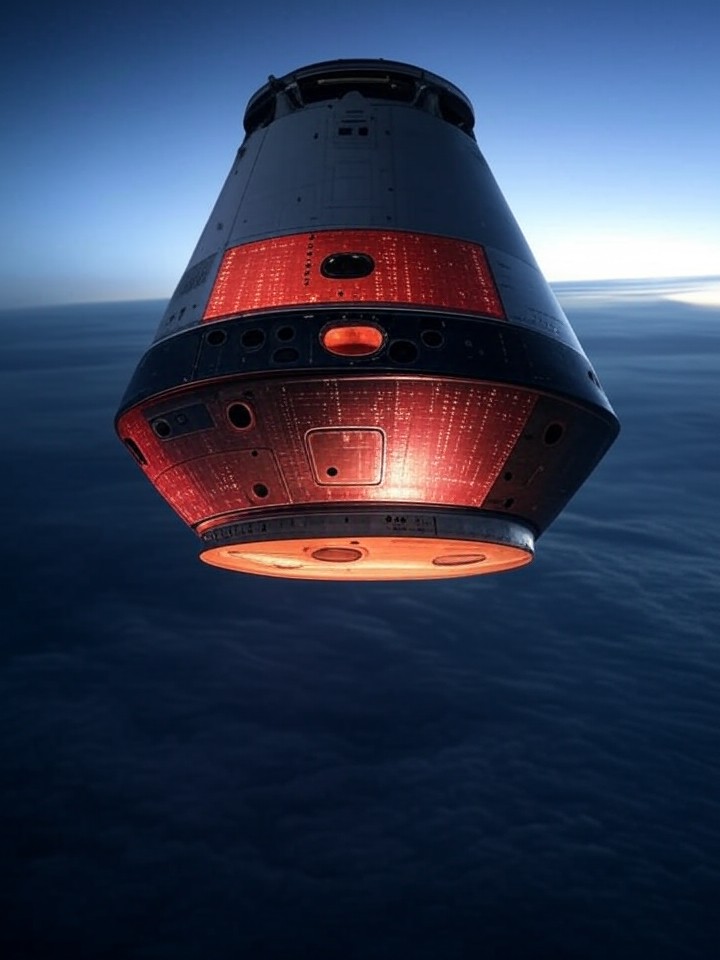
Shielding Ambitions: NASA’s Bold Bet on Orion’s Heat Shield for the Artemis II Leap
In the high-stakes arena of space exploration, where every component must withstand the unforgiving extremes of re-entry, NASA’s Orion spacecraft has been under intense scrutiny. The heat shield, a critical barrier against the fiery plunge back to Earth, faced questions after unexpected erosion during the uncrewed Artemis I mission in 2022. Now, as the agency gears up for Artemis II—the first crewed flight around the Moon since Apollo—NASA’s leadership has voiced unwavering assurance in the system’s reliability. This confidence stems from exhaustive reviews and operational adjustments, setting the stage for a launch that could redefine human spaceflight.
The saga began with Artemis I, where the Orion capsule returned from its lunar orbit test, revealing more char material loss than anticipated. Engineers at NASA dissected the issue, pinpointing how gases trapped within the Avcoat ablative material built up pressure, leading to cracks and material ejection. Rather than a full redesign, which could delay the program by years, the agency opted for procedural tweaks, such as altering the re-entry trajectory to reduce heat loads. This decision, detailed in a NASA press release from December 2024, underscores a pragmatic approach to balancing safety with schedule pressures.
As of early 2026, preparations for Artemis II are accelerating. The mission, slated for a potential February launch, will carry four astronauts on a 10-day journey looping around the Moon, testing the Space Launch System rocket and Orion in crewed configuration. Recent updates indicate that rocket stacking completed in October 2025, with the Orion module fully integrated. NASA’s commitment to this timeline reflects not just technical fixes but a broader strategy to maintain momentum in the Artemis program, aimed at returning humans to the lunar surface by the decade’s end.
Engineering Insights and Risk Management
Delving deeper into the heat shield’s performance, NASA’s investigation revealed that the Avcoat blocks, molded into a honeycomb structure, performed as expected in ablating heat but faltered in venting gases efficiently. According to a report from NASA, this led to localized failures during the 2022 re-entry, where temperatures soared to 5,000 degrees Fahrenheit. The agency’s response involved simulations and ground tests, confirming that a shallower re-entry angle would mitigate peak heating, preserving the shield’s integrity without hardware changes.
Industry experts have praised this transparency. In a recent analysis by Ars Technica, NASA’s new administrator conducted a final review, expressing full confidence ahead of the flight. This endorsement highlights the agency’s data-driven process, involving cross-checks with contractors like Lockheed Martin, which built Orion. Yet, some observers note the inherent risks: any miscalculation could imperil the crew, including commander Reid Wiseman and his international team.
Beyond the shield, Artemis II’s preparations encompass the entire vehicle. The European Service Module, providing propulsion and life support, underwent vacuum chamber tests in mid-2024, as noted in NASA’s updates. These steps ensure the spacecraft can sustain astronauts in deep space, far from Earth’s safety net. With the mission now targeting no earlier than February 6, 2026, per reports from Space.com, the focus shifts to final integrations at Kennedy Space Center.
Timeline Pressures and Historical Parallels
The road to Artemis II has been marked by delays, originally eyed for 2023 but pushed back due to development hurdles. A Wikipedia entry on Artemis II chronicles how heat shield concerns and life support issues extended the timeline, with rocket stacking only beginning in November 2024. This mirrors challenges in the Apollo era, where technical setbacks were overcome through iterative engineering, but today’s program operates under public and congressional scrutiny, amplified by budget constraints.
NASA’s strategy to proceed without a shield redesign draws from lessons in risk assessment. As outlined in a SpaceNews piece, the agency is minimizing publicity to manage expectations, a departure from the fanfare of past missions. This subdued approach allows engineers to concentrate on milestones like the upcoming wet dress rehearsal, scheduled after the rocket’s rollout to Launch Pad 39B around January 17, 2026.
Social media buzz on X, formerly Twitter, reflects growing excitement and some skepticism. Posts from NASA’s official account emphasize progress, such as the core stage rollout in July 2024 and recent podcast episodes offering behind-the-scenes access. Users have echoed confidence in the fixes, though a few question if operational changes suffice for crew safety. These sentiments underscore the public’s vested interest in a program funded by taxpayers.
Operational Adjustments and Crew Readiness
To address the heat shield’s vulnerabilities, NASA plans to adjust Orion’s re-entry path for Artemis II, opting for a “skip” trajectory that dips into the atmosphere twice, dissipating heat more gradually. This method, validated through modeling, reduces the thermal stress on the Avcoat material, as explained in a NASA technical update. Engineers anticipate this will prevent the pressure buildups seen in Artemis I, ensuring the shield erodes predictably.
Crew training has intensified in parallel. Astronauts, including the first woman and first person of color on a lunar mission, have simulated re-entry scenarios in high-fidelity mockups. Reid Wiseman, in a December 2024 briefing, highlighted the team’s preparedness, drawing from Artemis I data. This human element adds layers to the technical narrative, as the mission tests not just hardware but the endurance of explorers venturing 240,000 miles from home.
International collaboration bolsters the effort. Canada’s Jeremy Hansen and ESA’s contributions to the service module exemplify the program’s global scope, aiming for diverse lunar landings in future Artemis phases. As per a Newser report, the heat shield’s performance will be the ultimate test, with success paving the way for Artemis III’s surface mission.
Broader Implications for Space Exploration
The heat shield resolution speaks to NASA’s adaptive engineering ethos, where data from uncrewed tests informs crewed flights. Critics, however, argue that skipping a redesign might shortcut long-term reliability, especially for sustained lunar operations. A WebProNews article details how the agency weighed redesign costs against timeline impacts, choosing tweaks to keep Artemis on track for South Pole explorations.
Looking ahead, Artemis II’s success could accelerate commercial partnerships, with companies like SpaceX contributing to lunar landers. NASA’s quiet push toward February, as noted in recent X posts about rollout plans, signals internal optimism. Yet, external factors like weather or unforeseen anomalies could still intervene, reminiscent of Hurricane Ian’s disruption in 2022.
Public engagement efforts, such as the Houston Texans’ Space City Day event covered by NASA, aim to build support. These initiatives humanize the mission, showcasing astronauts amid football festivities, while underscoring the program’s cultural footprint.
Path Forward and Lingering Uncertainties
As rollout nears, NASA’s focus intensifies on the wet dress rehearsal, a full fueling test to verify systems. Success here would lock in a launch window, potentially as early as February 6, according to Space.com updates. This rehearsal, critical for identifying leaks or pressure issues, builds on lessons from Artemis I’s ground tests.
Uncertainties remain, particularly around the heat shield’s real-world performance with a crew aboard. While simulations predict success, re-entry’s chaos—plunging at 25,000 mph—leaves no room for error. NASA’s confidence, echoed in Ars Technica’s coverage of the administrator’s review, rests on rigorous analysis, but history teaches caution: Apollo 13’s near-disaster stemmed from overlooked risks.
Ultimately, Artemis II represents a pivotal step in humanity’s return to deep space. By addressing the heat shield through smart engineering, NASA not only safeguards its astronauts but also fortifies the foundation for Mars ambitions. As the agency presses forward, the world watches, hopeful that this shield will hold firm against the inferno, ushering in a new chapter of exploration.
Sustaining Momentum in Lunar Pursuits
The program’s ripple effects extend to technology spinoffs, from advanced materials to life support innovations. Orion’s heat shield, evolved from Shuttle-era tech, exemplifies iterative progress, with Avcoat’s formulation refined over decades. NASA’s December 2024 findings, identifying gas venting as the culprit, have already informed designs for future missions.
Crew diversity adds symbolic weight: Victor Glover, the first Black astronaut to orbit the Moon, embodies inclusivity in space. Training regimens, incorporating virtual reality for re-entry drills, prepare them for contingencies, as detailed in agency briefings.
With launch pads buzzing at Kennedy, the coming weeks will test NASA’s resolve. A successful Artemis II would validate the heat shield fixes and propel the program toward landings, fostering international alliances and inspiring generations.
Reflections on Innovation and Perseverance
In retrospect, the heat shield challenge highlights the complexities of pushing boundaries. NASA’s choice to adapt rather than overhaul mirrors agile methodologies in modern engineering, prioritizing speed without compromising safety. References to past missions, like the valve repairs in 2020 X posts, show a consistent pattern of overcoming hurdles.
As February approaches, stakeholder confidence grows. Industry insiders view this as a make-or-break moment for Artemis, with implications for funding and policy. The administrator’s endorsement, as reported, signals that the pieces are aligning.
Finally, the mission’s legacy will hinge on execution. If Orion’s shield performs flawlessly, it will affirm NASA’s expertise, clearing the path for bolder ventures. In this endeavor, the fusion of human ingenuity and technological prowess promises to redefine our reach into the cosmos.


 WebProNews is an iEntry Publication