
NASA revealed the four astronauts who will fly its pivotal Artemis III mission. The announcement came Tuesday at Johnson Space Center in Houston. Commander Randy Bresnik, pilot Luca Parmitano of the European Space Agency, and mission specialists Andre Douglas and Frank Rubio make up the team. They face a complex test flight in low Earth orbit. No lunar landing this time.
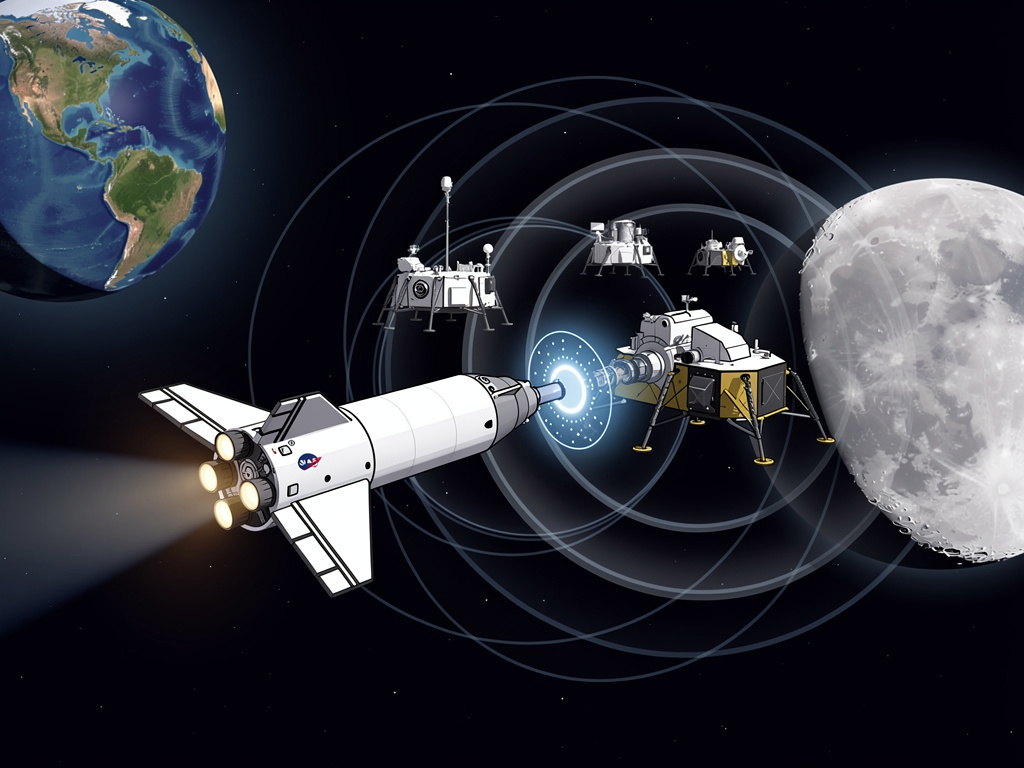
The mission, now scheduled for 2027, marks a deliberate step back from earlier plans. It will rehearse the intricate dance of docking Orion with commercial lunar landers from SpaceX and Blue Origin. Success here clears the path for Artemis IV, the first crewed touchdown since 1972. Delays piled up. Technical hurdles with the Space Launch System, Orion life support, and the landers forced NASA to regroup. But the agency insists this profile reduces risk. It buys time to perfect systems that must work flawlessly near the Moon.
Bresnik brings command experience from two prior spaceflights, including a long-duration stint on the International Space Station. Parmitano, a veteran of two ISS expeditions, adds international perspective and piloting skill. Rubio holds the U.S. record for longest single spaceflight after 371 days aboard the station in 2022-2023. Douglas, a first-time flyer, comes from a background in aerospace engineering and served as a lead for extravehicular activity development. Their combined expertise will prove vital. The crew will train immediately on Orion systems and the test versions of the landers.
Shifting Timelines Force a New Mission Profile
Original Artemis III concepts called for a South Pole landing as soon as 2026. That target slipped repeatedly. In February 2026, NASA Administrator Jared Isaacman confirmed the pivot to an Earth-orbit test. The change allows more launch windows. It also lets engineers evaluate docking hardware, next-generation spacesuits in microgravity, and extended Orion operations without the pressure of lunar distances. Two crew members would have transferred to a lander for descent under the old plan. Now the entire team stays in orbit. They will practice rendezvous, docking with at least one lander pathfinder, and undocking maneuvers. The demonstrations mirror Apollo 9 in 1969, when astronauts tested the lunar module in Earth orbit before the first landing.
Critics question the delay. Supporters see prudent engineering. Either way, the stakes remain high. Commercial partners must deliver functional human landing systems. SpaceX’s Starship HLS and Blue Origin’s Blue Moon Mark II both require extensive uncrewed flights first. NASA’s own SLS rocket and Orion capsule must perform beyond Artemis II’s lunar flyby. That mission returned safely in April 2026 after a successful trip around the Moon. Its data informs this next leap.
And the international angle matters. Parmitano’s selection underscores Europe’s contribution to Orion’s service module and the broader Artemis Accords. The program now counts more than 40 nations as partners. Their involvement spreads both cost and expertise. Yet it also adds layers of coordination. Every interface between spacecraft must align perfectly. One misalignment could cascade into mission failure.
Frank Rubio spoke briefly after the announcement about the record he set. He described the psychological demands of long-duration flight. His experience offers direct insight for the two-week Artemis III test, which will push Orion’s life support further than Artemis II. Andre Douglas, the rookie, represents the next generation. His work on spacesuit design directly shapes what future Moon walkers will wear. The crew portrait shows four focused professionals. They posed together Tuesday, aware their flight will shape the next decade of human spaceflight.
Backup astronaut Bob Hines rounds out the immediate support. He will mirror training and stand ready if needed. The primary crew begins intensive sessions now. They will log hours in simulators, study lander mockups at contractor facilities, and participate in hardware reviews. Their feedback will refine procedures for the actual lunar missions.
This test flight buys NASA breathing room. The agency faces budget pressures and competing priorities. China advances its own lunar program with plans for a crewed landing before 2030. The U.S. aims to stay ahead. Artemis IV now targets 2028 for the first boots on lunar soil near the South Pole. That region holds water ice in shadowed craters. Scientific payoff could prove enormous. Resource extraction might follow. Both goals require reliable transportation from lunar orbit to surface and back.
Engineers have already shipped final SLS booster segments to Kennedy Space Center. Orion hardware for Artemis III advances through testing. The docking mechanism sits at the Florida launch site. Progress feels tangible. Still, integration challenges remain. The lander rendezvous in a high elliptical orbit around Earth demands precision navigation. Communication lags, though shorter than at the Moon, still exist. Thermal extremes test every component.
So the crew’s role extends beyond flying. They will debug systems in real time. Their observations on habitability, suit mobility in zero gravity, and docking dynamics will inform every subsequent mission. NASA officials described the assignment as both honor and heavy responsibility. The team accepted with typical astronaut understatement.
Publication NASA detailed the crew assignments and revised objectives hours after the event. Coverage from The New York Times captured live reactions and background on each member. Earlier speculation in Space.com highlighted likely candidates from the Artemis roster. The original Engadget report on crew selection, though predating the redesign, outlined program ambitions at the time.
Recent analysis from ESA emphasized the European hardware contributions and Parmitano’s selection. Wikipedia’s rapidly updated entry, drawing from official releases, confirms the crew and 2027 target. These sources paint a consistent picture. Artemis III has become the dress rehearsal. Its success will determine whether the Moon landing timeline holds or slips again.
The four astronauts now shoulder expectations that reach beyond their flight. They carry the hopes of a program restarted after decades of shuttle and station focus. Public interest runs high. Schoolchildren watched the announcement. Industry partners recalibrate schedules. Congress watches budgets. The crew simply prepares. Their task looks straightforward on paper. Fly. Dock. Test. Return. Execution will prove anything but simple. Decades of development ride on the outcome. The Moon waits. First, these four must prove the ride works.


 WebProNews is an iEntry Publication