
Orbit’s Unforeseen Detour: NASA’s Urgent Recall of ISS Astronauts Amid Health Crisis
In a rare and unprecedented move, NASA has decided to cut short the mission of four astronauts aboard the International Space Station (ISS), opting for an early return to Earth due to a serious medical condition affecting one crew member. This decision, announced on January 8, 2026, marks the first emergency evacuation in the station’s quarter-century history, underscoring the inherent risks of long-duration spaceflight. Senior NASA officials, during a hastily convened press conference, emphasized that while the affected astronaut is stable, the agency is prioritizing health and safety by accelerating the crew’s departure.
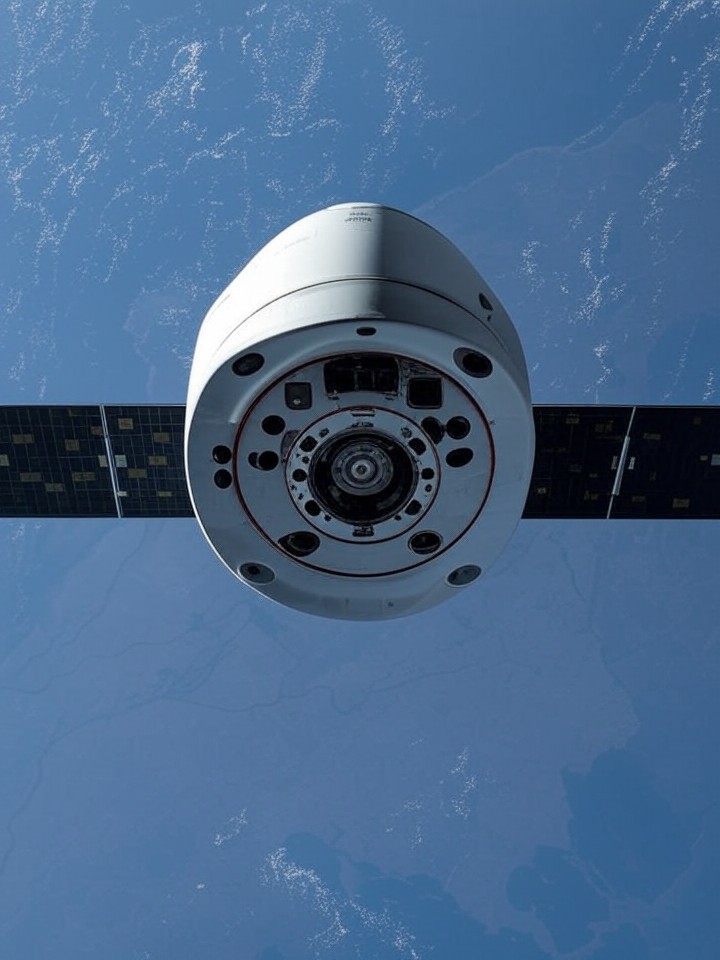
The incident revolves around NASA’s Crew-11 mission, which launched aboard a SpaceX Crew Dragon spacecraft. The team, including ISS Commander Mike Fincke and flight engineer Zena Cardman, had been conducting routine operations when the medical issue emerged. According to reports from Reuters, the condition was described as “serious” but not life-threatening, prompting the cancellation of a planned spacewalk and the early termination of the mission months ahead of schedule. This step reflects NASA’s protocol for handling in-orbit health emergencies, where ground-based medical teams collaborate with onboard physicians to assess and respond.
Details remain sparse to protect privacy, but the agency confirmed that the astronaut is receiving care on the station and that the early return will allow for more comprehensive medical evaluation on Earth. The decision affects the entire crew, highlighting the interconnected nature of ISS operations where individual health can impact mission timelines and international partnerships.
The Medical Imperative Driving NASA’s Decision
NASA’s choice to bring the crew home early isn’t taken lightly, given the logistical complexities involved. The ISS, a collaborative venture involving agencies from the U.S., Russia, Europe, Japan, and Canada, operates on meticulously planned rotations. Disrupting this for a medical reason sets a new precedent, as noted in coverage by The Guardian, which reported the cancellation of Thursday’s spacewalk as an initial response. Officials stressed that this is not an emergency evacuation but a precautionary measure to ensure the astronaut’s well-being.
Industry experts point out that space medicine has advanced significantly since the ISS’s inception in 1998, yet challenges persist in microgravity environments. Prolonged exposure to zero gravity can exacerbate conditions like fluid shifts, muscle atrophy, and cardiovascular strain, potentially complicating underlying health issues. In this case, while specifics are undisclosed, the situation echoes past incidents, such as the 2024 Crew-8 mission where an astronaut required hospitalization upon return, as discussed in posts found on X.
The early return involves coordinating with SpaceX for a safe deorbit and splashdown, likely in the coming days. NASA’s administrator highlighted during the briefing that erring on the side of caution is paramount, especially as the agency prepares for more ambitious endeavors like Artemis missions to the Moon.
Historical Context and Precedents in Space Health Crises
Looking back, the ISS has seen its share of medical hurdles, but none have prompted a full crew recall until now. For instance, in 2024, astronauts Sunita Williams and Butch Wilmore faced an extended stay due to Boeing Starliner issues, leading to significant physical tolls including weight loss and muscle degradation, as detailed in various X posts from that period. Such events underscore the physiological demands of space, where even routine missions can turn precarious.
This 2026 incident draws parallels to earlier scares, like the 2018 Soyuz abort or minor health concerns during Shuttle-era flights. However, as reported by NBC News, the current case is unique in its decision to end the mission prematurely for the entire team, rather than isolating treatment in orbit. This approach minimizes risks to the station’s operations while ensuring the affected individual gets terrestrial medical attention.
International partners have been looped in, with Roscosmos and the European Space Agency adjusting their schedules accordingly. The ripple effects could influence future crew assignments and health protocols, prompting a reevaluation of pre-flight screenings and onboard medical capabilities.
Logistical Challenges of an Expedited Return
Executing an early return from the ISS is no small feat, involving precise orbital mechanics and contingency planning. The Crew Dragon spacecraft, designed for such scenarios, will undock, reenter the atmosphere, and splash down off the Florida coast, weather permitting. ABC News noted that NASA is ending the Crew-11 mission a month early, a timeline that compresses what would typically be a multi-week preparation into days.
Ground teams at NASA’s Johnson Space Center and SpaceX’s facilities are working around the clock to simulate reentry trajectories and ensure crew safety. This includes monitoring the spacecraft’s systems, which have proven reliable in past missions but must now handle an abbreviated timeline. The medical team on Earth is prepared with specialized facilities to address spaceflight-induced conditions, drawing from lessons learned in previous returns.
Moreover, the decision impacts ongoing experiments aboard the ISS, from biological research to materials science. Some projects may be paused or handed off to the remaining crew, illustrating how a single health event can cascade through the station’s scientific agenda.
Broader Implications for Space Exploration Strategies
The incident raises questions about the robustness of current space health infrastructures as humanity pushes toward Mars and beyond. NASA’s protocols, refined over decades, include telemedicine consultations and emergency medical kits, yet experts argue for enhancements like advanced imaging tools or AI-assisted diagnostics. Coverage from NPR highlighted the rarity of this step, emphasizing that it’s the first medical evacuation in ISS history, which could spur investments in orbital healthcare.
For industry insiders, this event spotlights the human element in space tech. Companies like SpaceX and Boeing, key players in crew transport, may face scrutiny on vehicle reliability and emergency response features. The early return also tests the flexibility of public-private partnerships, where NASA’s oversight meets commercial innovation.
Looking ahead, this could influence crew selection criteria, favoring those with resilient health profiles for extended missions. It also underscores the need for psychological support, as isolation and high-stakes environments can compound physical ailments.
Technological and Operational Adjustments Post-Incident
In response to the medical situation, NASA has already postponed key activities, including the spacewalk involving Fincke and Cardman, as mentioned in CNBC. This adjustment ensures crew focus remains on health and preparation for departure, with backup plans activating to maintain station stability.
From a technological standpoint, the ISS’s life support systems, including air recycling and waste management, are designed to handle such disruptions. However, an early crew swap means accelerating the next rotation, potentially straining resources. Industry analysts suggest this could accelerate development of autonomous medical systems, reducing dependency on Earth-based interventions.
Furthermore, the event has sparked discussions on X about past stranded astronaut scenarios, like the 2024 Starliner delays, fueling public interest and calls for transparency. NASA has committed to updates without compromising privacy, balancing operational security with accountability.
International Collaboration Under Pressure
The ISS thrives on multinational cooperation, and this medical recall tests those bonds. Partners like Roscosmos have offered support, potentially providing alternative return options via Soyuz if needed, though NASA is proceeding with Crew Dragon. Space.com reported that the agency is evaluating all options, highlighting the collaborative spirit that defines the station.
This incident may prompt joint reviews of health protocols, ensuring alignment across agencies. For example, differing medical standards between NASA and international partners could be harmonized to prevent future issues.
Economically, the early return incurs costs, from expedited logistics to potential delays in commercial payloads. Yet, it reaffirms the priority of human life over schedules, a principle that could shape funding priorities in upcoming budgets.
Lessons Learned and Future Safeguards
As the crew prepares for reentry, reflections on this event are already informing NASA’s strategies. Enhanced monitoring, perhaps through wearable tech tracking vital signs in real-time, could become standard. The situation also validates the importance of redundant systems, ensuring no single failure—medical or mechanical—jeopardizes missions.
Industry insiders anticipate post-mission debriefs will yield valuable data, contributing to databases on space-induced health effects. This knowledge is crucial for ventures like private space stations from Axiom Space or Blue Origin, which aim to expand human presence in orbit.
Ultimately, this episode serves as a stark reminder of spaceflight’s vulnerabilities, even as technology advances. By addressing it proactively, NASA not only safeguards its astronauts but also strengthens the foundation for sustained exploration.
Evolving Narratives in Space Health Management
Drawing from additional insights, such as those in The New York Times, the agency’s cautious approach aligns with a broader shift toward preventive care in space. This includes preemptive returns when conditions warrant, rather than risking escalation in orbit.
Public sentiment, as gauged from recent X posts, mixes concern with admiration for the crew’s resilience. Narratives of past missions, like the extended 2024 stays, amplify awareness of these risks, potentially boosting support for space medicine research.
For the affected astronaut and team, the focus now is recovery and reintegration, with NASA’s support systems ready to assist. This chapter, while challenging, enriches the annals of space history with lessons on humanity’s limits and ingenuity.
Pioneering Paths Amid Uncertainty
In the wake of this recall, the space community is poised for innovation. Advances in telehealth and regenerative medicine could mitigate similar risks, ensuring longer, safer missions. Collaborations with tech firms might yield breakthroughs, from AI diagnostics to bio-printed tissues for in-orbit repairs.
The incident also highlights gender dynamics in space, with female astronauts like Cardman involved, prompting studies on how microgravity affects diverse physiologies. Such research, building on current data, will inform inclusive mission planning.
As NASA navigates this, the emphasis remains on adaptability, turning a health crisis into a catalyst for progress in human spaceflight.
Reflections on Resilience in Orbital Endeavors
Finally, this event encapsulates the dual nature of space exploration: thrilling yet fraught with peril. The early return, while disruptive, exemplifies NASA’s commitment to its personnel, setting a benchmark for future operations.
Industry observers note that such precedents could influence insurance models for commercial spaceflight, factoring in medical contingencies. Moreover, it reinforces the value of international solidarity, as agencies rally to maintain the ISS’s legacy.
Through it all, the astronauts’ story inspires, reminding us that venturing into the cosmos demands not just technology, but profound human resolve.


 WebProNews is an iEntry Publication