
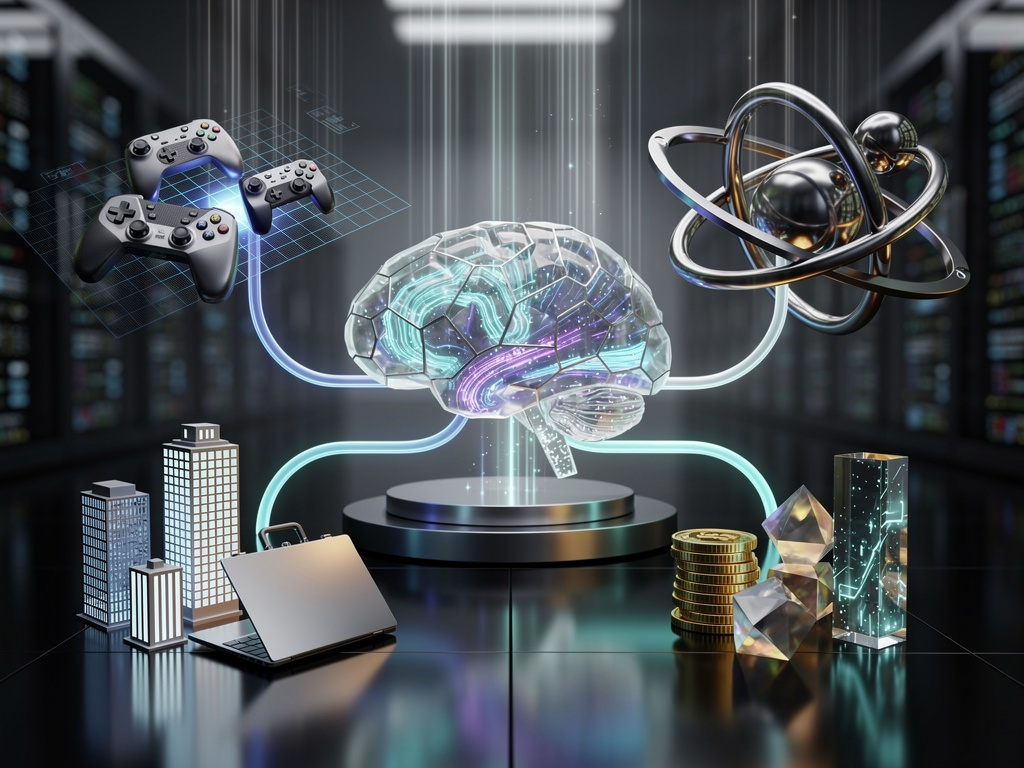
From Brain Teasers to Big Data: MyIQ’s Vanguard Role in Redefining IQ Testing
In an era where personal data drives everything from fitness tracking to financial planning, traditional IQ tests are undergoing a profound metamorphosis. Once confined to clinical settings or academic evaluations, these assessments are now emerging as sophisticated data instruments, offering insights far beyond mere intelligence quotients. At the forefront of this shift is MyIQ, a platform that’s not just administering tests but harnessing cognitive data to fuel personal and professional growth. According to a recent piece in Digital Trends, MyIQ is pioneering this transition by integrating advanced analytics with user-friendly interfaces, turning raw test results into actionable intelligence.
This evolution reflects broader trends in digital self-assessment, where users seek more than scores—they demand context, benchmarks, and pathways for improvement. MyIQ’s approach leverages machine learning to analyze patterns in cognitive performance, providing users with personalized reports that link IQ metrics to real-world applications like career advising or skill development. Industry observers note that this isn’t just about gamifying intelligence; it’s about democratizing access to data that was once the domain of psychologists and researchers.
The platform’s rise comes amid a surge in online cognitive tools, spurred by the pandemic’s push toward remote everything. What sets MyIQ apart is its emphasis on data privacy and ethical use, ensuring that users retain control over their cognitive profiles. As digital natives increasingly view self-knowledge as a commodity, MyIQ positions itself as a trusted broker in this emerging market.
The Data Revolution in Cognitive Assessment
Delving deeper, the transformation of IQ tests into data tools involves sophisticated algorithms that process vast amounts of user inputs. MyIQ, for instance, employs adaptive testing methods that adjust question difficulty in real time, much like how streaming services recommend content based on viewing habits. This dynamic approach yields more precise measurements and generates rich datasets that can reveal trends in cognitive health across populations.
Recent coverage in TechBullion highlights how MyIQ integrates with fintech ecosystems, where cognitive data informs financial decision-making tools. Imagine an app that correlates your problem-solving speed with investment risk tolerance—MyIQ is making that a reality. This intersection of intelligence testing and data analytics is reshaping how businesses evaluate talent, moving beyond resumes to cognitive fingerprints.
Moreover, the platform’s global reach allows for cross-cultural comparisons, enriching the data pool with diverse perspectives. Users from Doha to Dallas contribute to a collective intelligence database, which MyIQ anonymizes and aggregates to spot emerging patterns, such as how urban living influences spatial reasoning.
Leadership Shifts and Strategic Pivots at MyIQ
Amid this innovation, MyIQ is navigating a period of leadership transition that could define its future trajectory. Sources indicate that the company is in the process of appointing a new CEO with a background in AI ethics, aiming to steer the platform through regulatory challenges in data handling. This move comes as no surprise, given the heightened scrutiny on tech firms dealing with personal metrics.
Posts on X, formerly Twitter, reflect industry buzz about these changes, with users speculating on how new leadership might accelerate MyIQ’s expansion into enterprise solutions. One thread discusses the potential for MyIQ to partner with major corporations for workforce analytics, blending IQ data with performance metrics to optimize team dynamics.
In parallel, MyIQ’s current executives have been vocal about integrating emerging AI trends. A report from The Gadget Flow details how the platform incorporates cognitive tech to enhance self-discovery, positioning it as a leader in a field where competitors are still catching up.
Integrating IQ Insights with Everyday Applications
The practical applications of MyIQ’s data-driven model extend into unexpected realms, such as gaming and relationships. Gamers, for example, use the platform to understand their cognitive edges in strategy and reaction times, as explored in a feature on GameTyrant. This isn’t mere novelty; esports professionals leverage these insights to train more effectively, turning abstract IQ scores into competitive advantages.
On the personal front, couples are turning to MyIQ for compatibility assessments, analyzing how their cognitive styles mesh in communication and problem-solving. An article in OK Magazine notes this trend, suggesting that data from IQ tests can foster deeper emotional connections by highlighting strengths and gaps.
Business professionals, too, find value in MyIQ’s tools for decision-making. Entrepreneurs use cognitive profiles to refine strategies, as outlined in Mind My Business NYC, where IQ data informs hiring and innovation processes.
Global Contexts and Technological Synergies
Looking globally, nations like Qatar are advancing AI leadership, which indirectly bolsters platforms like MyIQ. A piece in The Peninsula Qatar describes investments in digital milestones that could integrate cognitive assessments into national development plans. MyIQ’s model aligns with such initiatives, potentially exporting its tech to regions prioritizing human capital.
Synergies with AI are evident in how MyIQ draws from advancements in large language models. X posts from AI enthusiasts, such as those tracking IQ gains in models like GPT-5, underscore the parallel progress in human and artificial intelligence testing. These discussions highlight a future where MyIQ might benchmark human cognition against AI baselines.
Furthermore, the platform’s science-backed foundation, as praised in American SPCC, ensures reliability amid a sea of dubious online quizzes. This credibility is crucial as users demand evidence-based tools.
Challenges in the Data-Driven IQ Era
Yet, this transition isn’t without hurdles. Privacy concerns loom large, with critics questioning how cognitive data might be misused by employers or insurers. MyIQ addresses this through transparent policies, but the industry as a whole must navigate evolving regulations like GDPR extensions to personal metrics.
Ethical dilemmas also arise in data aggregation. While anonymized datasets can drive research, there’s a fine line between insight and intrusion. Industry insiders, per sentiments on X, call for standardized ethics in cognitive tech to prevent biases in algorithms that could skew results based on demographics.
Competition is heating up, with rivals eyeing MyIQ’s market share. The platform’s leadership transition could be a pivotal moment, potentially introducing fresh strategies to outpace newcomers.
Innovative Features Driving User Engagement
MyIQ’s user-centric design is a key differentiator, featuring intuitive dashboards that visualize cognitive progress over time. Users can track improvements through repeated tests, receiving tailored training modules to boost weak areas, much like a personalized gym regimen for the mind.
Integration with wearable tech is on the horizon, where biometric data could correlate with IQ metrics for holistic health insights. This forward-thinking approach is echoed in Entrepreneur, which chronicles MyIQ’s journey to a global movement.
Community features, such as forums for sharing experiences, foster a sense of belonging, transforming solitary testing into a social endeavor.
Future Trajectories for MyIQ and Beyond
As 2025 winds down, MyIQ’s role in the IQ testing evolution seems poised for expansion. Partnerships with educational institutions could embed its tools in curricula, helping students map cognitive growth alongside academic achievements.
The platform’s data tools might also inform public policy, providing aggregated insights on societal intelligence trends. X conversations about AI’s rapid IQ gains suggest a converging path where human testing adapts lessons from machine learning.
Ultimately, MyIQ exemplifies how traditional assessments can reinvent themselves in the digital age, offering not just measurements but mirrors for self-improvement.
Sustaining Momentum Amid Transitions
The leadership shift at MyIQ, while transitional, signals a commitment to innovation. Incoming executives are expected to prioritize scalability, potentially expanding into new markets like corporate wellness programs.
User feedback, gleaned from platforms like Reddit as mentioned in Buddy Magazine, praises the platform’s alignment with modern lifestyles, emphasizing its role in self-development.
This adaptability ensures MyIQ remains relevant as cognitive tech advances.
Broader Implications for Industry and Society
The ripple effects of data-ified IQ tests extend to workforce dynamics, where cognitive diversity becomes a hiring metric. Businesses using MyIQ-like tools could build more resilient teams, adapting to automation’s demands.
Socially, accessible IQ data empowers individuals from underrepresented groups to advocate for themselves, bridging gaps in opportunity.
In education, these tools could personalize learning, identifying cognitive styles early to tailor teaching methods.
Pioneering Ethical Standards in Cognitive Data
MyIQ’s emphasis on ethics sets a benchmark, with features like data export options empowering users. This contrasts with less scrupulous platforms, fostering trust in an industry ripe for regulation.
Collaborations with AI firms, inspired by trends in X posts about model evaluations, could refine testing accuracy.
As the field matures, MyIQ’s leadership will likely influence standards for cognitive data handling worldwide.
Envisioning the Next Wave of Intelligence Tools
Looking ahead, MyIQ might incorporate virtual reality for immersive testing, enhancing spatial and creative assessments. This could revolutionize how we understand intelligence in a multi-dimensional way.
Integration with health apps could link cognitive data to mental well-being, preempting issues like burnout.
The platform’s global self-knowledge movement, as described in earlier sources, positions it as a catalyst for widespread cognitive empowerment.
Navigating Uncertainties in a Dynamic Field
Uncertainties remain, such as how AI advancements might obsolete current tests. Yet, MyIQ’s agile framework, bolstered by its transition, equips it to evolve.
User adoption rates, surging per recent web searches, indicate strong demand for these tools.
In this context, MyIQ not only leads but defines the future of intelligence as data.


 WebProNews is an iEntry Publication