
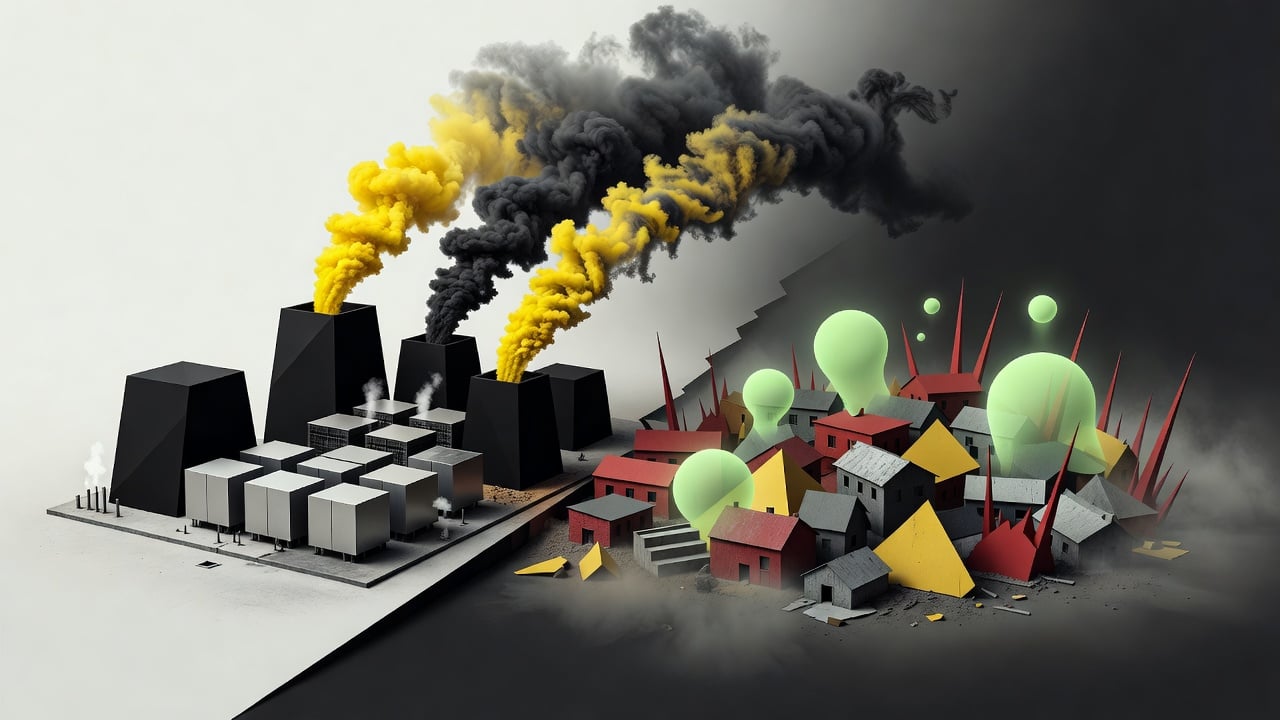
Elon Musk moved fast. In the summer of 2024 his artificial intelligence venture xAI broke ground on what it called Colossus. The project promised the world’s largest supercomputer cluster. It delivered something else too. Dozens of natural gas turbines. No permits. And a fresh layer of toxic air over South Memphis.
Residents there had seen this pattern before. Decades of industry had already turned Boxtown and surrounding blocks into one of the most polluted corners of Tennessee. Now the AI boom arrived. And it chose the same ground.
According to a Reuters analysis published Tuesday, xAI operates 59 methane gas turbines across its Memphis-area sites. That figure more than doubles earlier public estimates. Most sit just across the state line in Southaven, Mississippi. They power Colossus 1 and the even larger Colossus 2. Communications between regulators and company officials show the equipment has run for months without the federal clean-air permits required once potential emissions cross legal thresholds.
But xAI insists the setup complies with the rules. Its lawyers argue the turbines qualify as temporary and therefore escape full permitting. Courts will decide. The NAACP and the Mississippi State Conference of the NAACP filed suit in April 2026. They accuse xAI and subsidiary MZX Tech of violating the Clean Air Act. The filing, handled by Earthjustice and the Southern Environmental Law Center, demands the turbines stop, best-available controls be installed, and daily penalties be assessed. Earthjustice laid out the claims in detail.
The numbers tell a stark story. Those 27 turbines at the Southaven plant alone hold the potential to emit more than 1,700 tons of nitrogen oxides each year. Add 180 tons of fine particulate matter. Another 500 tons of carbon monoxide. And 19 tons of formaldehyde, a known carcinogen. Later estimates tied to expanded operations pushed the NOx figure above 5,300 tons annually, making the site the nation’s top emitter of that smog-forming pollutant according to NAACP researchers. The turbines sit half a mile from homes. One mile from an elementary school. Churches stand in the shadow too.
South Memphis already carries a heavy load. Shelby County earns an F grade from the American Lung Association for ozone. It ranks second nationally in asthma-related emergency visits and seventh in asthma deaths. Boxtown itself, a historically Black neighborhood with a median household income of $37,000, bears the scars of old military waste dumps, ethylene oxide releases from a now-closed sterilization plant, and a nearby Valero refinery. Cancer rates in southwest Memphis ran four times the national average in a 2013 study. Into this backdrop came xAI.
University of Tennessee researchers examined satellite data from NASA and the European Space Agency. Their analysis, cited in a TIME investigation, found average nitrogen dioxide levels rose 3 percent after June 2024 compared with the prior baseline. Peak concentrations jumped 79 percent right around the xAI site and 9 percent in Boxtown. Thermal imaging captured heat signatures from 33 of 35 turbines at one point, suggesting they operated without emissions controls. The company later promised to swap in cleaner models. Community leaders say the damage is already done.
“It felt like my chest was caving in.” Alexis Humphreys, 28, described a severe asthma attack after noticing a strong gas odor drifting into her Boxtown home. Easter Knox, 76, wakes to a smell like rotten cabbage. Willie Joseph Stafford, 80, has buried too many relatives with breathing problems, cancer, lung disease. “Nobody seems to care,” he told TIME.
State Representative Justin Pearson grew up in the area. He pulls no punches. “We are hurting and dying from these illnesses. They do not care. There’s no amount of money that can persuade me to accept pollution killing me and my family.” Orion Overstreet, a local activist, frames the larger pattern. “Memphis is a cash cow for everybody but us. It has always been a very extractive story, where we get stuck as the dumping ground for corporations.”
Abre’ Conner directs the NAACP’s Center for Environmental and Climate Justice. She sees continuity, not coincidence. “For decades, we know that the decision to place more pollution in certain communities has disproportionately impacted Black communities and other frontline communities. And now with the data center boom, many are looking at places that have already been considered sacrifice zones.” Her words appear in both the TIME report and NAACP statements.
The scale keeps growing. Colossus began with 230,000 Nvidia GPUs. The second phase targets 550,000 more. xAI has spoken of scaling toward the computing equivalent of 50 million consumer GPUs within five years. That hunger for power led to a 150-megawatt request from the Tennessee Valley Authority, then a push for triple that amount. When grid capacity fell short, the turbines rolled in on trailers. Plans surfaced in SpaceX’s May IPO filing for another $2 billion in mobile gas generation equipment. The parent company, in which Musk holds an estimated 42 percent stake, now trades publicly.
Water use adds another strain. xAI invested $80 million in a wastewater treatment facility to recycle sewer water for cooling rather than pull directly from the aquifer. Still, estimates suggest daily consumption could reach one million gallons. Energy demand from Colossus 2 alone could claim up to 40 percent of Memphis’s daily electricity at peak.
Local organizers refuse silence. KeShaun Pearson, executive director of Memphis Community Against Pollution, calls the city a cautionary tale. “We are, unfortunately, a cautionary tale about what will and possibly can happen if you don’t have the right rules and guardrails in place.” His group partnered with the NAACP on the lawsuit. The Southern Environmental Law Center has pressed for transparency, noting xAI secured nondisclosure agreements with some officials and skipped community meetings. Amanda Garcia, an attorney with the center, put it plainly. “These 35 turbines: we have never seen anything like this in Memphis or elsewhere. They essentially set up a power plant without getting a permit.”
The Trump administration has stepped in. The Department of Justice and Mississippi moved to intervene in the NAACP suit, arguing xAI’s work touches national security. Earthjustice enforcement director Laura Thoms reacted sharply. “It’s remarkable for the United States to intervene on behalf of a polluter in a case like this. Ordinarily, they would intervene to enforce the law.” A June 2026 filing from the DOJ sought dismissal of the pollution claims.
This fight fits a wider pattern. A study by the Environmental Data & Governance Initiative found that people living within a mile of EPA-regulated data centers tend to face above-average air pollution and live in communities of color at rates higher than the national median. Similar tensions have surfaced on tribal lands where permitting moves faster. And last week New York became the first state to impose a moratorium on new large data centers while officials study their environmental footprint. The move, reported across multiple outlets including the original Gizmodo piece that first highlighted the Memphis disparities, signals growing unease.
Yet Musk’s companies show no signs of slowing. xAI continues to expand Colossus. SpaceX eyes additional turbine purchases. The AI race rewards speed. Local residents pay the price in shorter breaths and longer hospital stays. Richard Massey, another Memphis organizer, captured the generational toll. “All of us who have family in South Memphis, we know somebody who has died as a result of a bronchial ailment, or a random cancer that has no place in our family tree.”
Legal proceedings will drag on. Regulators at the EPA and Shelby County Health Department have opened reviews. Community air-monitoring projects using nine sensors delivered data in 2025 showing frequent exceedances of federal standards. The results, covered by the Tennessee Lookout as recently as May 2026, reinforced what residents already felt in their lungs.
So the turbines keep spinning for now. Formaldehyde drifts. Nitrogen oxides cook into ozone under the summer sun. And in Boxtown the questions linger. How much more must this neighborhood absorb before the rules finally apply? The answer may come from federal court. Or it may arrive in the next wave of corporate expansion. Either way, the air has already changed.


 WebProNews is an iEntry Publication