
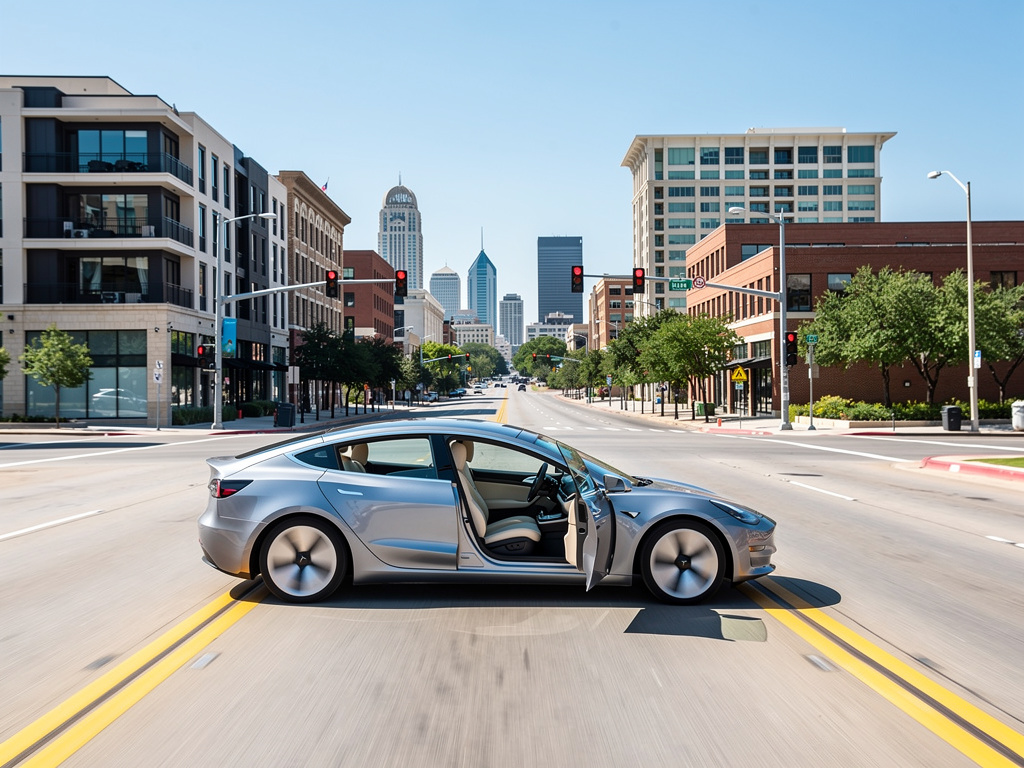
Elon Musk, Tesla Inc.’s chief executive, revealed on X that he rode in a passenger seat of a Tesla vehicle navigating Austin streets entirely on its own, with no safety monitor aboard. The December 22 disclosure marks a pivotal demonstration of the company’s unsupervised Full Self-Driving technology, signaling confidence after years of development.
“A Tesla with no safety monitor in the car and me sitting in the passenger seat took me all around Austin on Sunday with perfect driving,” Mr. Musk posted on X (link). This ride, conducted without human intervention, underscores Tesla’s push toward commercial robotaxi services amid regulatory scrutiny and competition from Waymo.
Tesla investor Teslaconomics hailed the event as a market signal. “If your CEO is literally riding in the passenger seat while the car drives itself around a major U.S. city, with no safety monitor in the vehicle, that’s about as bullish of a signal you can send to the market that autonomy is here and Tesla has solved it,” the account posted on X (link).
Tesla’s Path to Unsupervised Drives
Tesla’s journey began in 2016 with the introduction of Full Self-Driving as a software capability, promising eventual autonomy through over-the-air updates and vast data collection from its fleet. The company iterated through hardware versions, shifting to a vision-only system eschewing lidar sensors favored by rivals.
Recent tests in Austin represent the culmination. Tesla CEO Elon Musk confirmed at an xAI hackathon that unsupervised FSD was “basically solved,” with robotaxis set to operate without safety drivers in three weeks, according to posts on X from Teslaconomics. Tesla has removed safety monitors from engineering tests, as detailed in Not a Tesla App.
Engineering Milestones in Austin
Tesla AI Principal Engineer Phil Duan shared video of a driverless Model Y ride in Austin, confirming no safety monitors for internal validation. Tesla VP of AI Ashok Elluswamy also took such a ride, per X posts from Teslaconomics. These sessions involved complex urban navigation, including festival crowds, as Mr. Musk noted in prior updates.
The rides leverage FSD Shadow Mode, which runs silently in the background, comparing AI decisions to human drivers to refine performance, according to Not a Tesla App. This data-driven approach has amassed billions of miles, enabling Tesla to claim superior safety metrics over human drivers.
From Promises to Public Roads
Mr. Musk’s Austin ride echoes earlier claims, such as a 2023 post where a Tesla drove him all day without interventions despite crowds. Tesla began unsupervised testing in Austin last week, with Model Y vehicles spotted sans drivers, as reported by Electrek and TechCrunch.
Expansion plans include paid unsupervised FSD services in Austin by year-end, per earlier Mr. Musk statements tracked on Reddit’s r/TeslaLounge and r/teslamotors. Internationally, Tesla eyes UAE rollout in January 2026, as noted in Not a Tesla App.
Challenges Amid Early Wins
Despite progress, hurdles persist. A Tesla crash during a livestream demo of FSD highlighted risks, with the vehicle veering into oncoming traffic, per Electrek. Tesla’s robotaxi fleet in Austin appears smaller than boasted, based on app reverse-engineering by an engineering student, as covered by Electrek.
Regulators demand rigorous validation. Tesla’s October confirmation of safety monitor removal targeted December, aligning with these tests, according to Teslarati. Mr. Musk’s personal involvement—riding shotgun—serves as ultimate endorsement, yet invites skepticism given past timeline misses.
Investor and Market Signals
Tesla shares often surge on autonomy news. Teslaconomics emphasized the decade-long buildup: “years of real world data collection, multiple hardware generations, vision only going against industry consensus of LiDAR, endless doubt.” When “the person with the most to lose is willing to trust the system with his own life, this debate now ends overnight.”
Competition intensifies with Waymo scaling driverless rides. Tesla’s edge lies in scale, with millions of vehicles potentially becoming robotaxis. Mr. Musk’s Sunday ride, flawless across Austin, bolsters claims of readiness for unsupervised paid services.
Next Horizons for Autonomy
Recent FSD v14.2.1 adds texting-while-driving simulation, per Teslarati, testing edge cases. InsideEVs reports Tesla finally enabling solo robotaxi drives post-years of promises (link).
These developments position Tesla at a crossroads, balancing breakthroughs with safety imperatives for widespread deployment.


 WebProNews is an iEntry Publication