
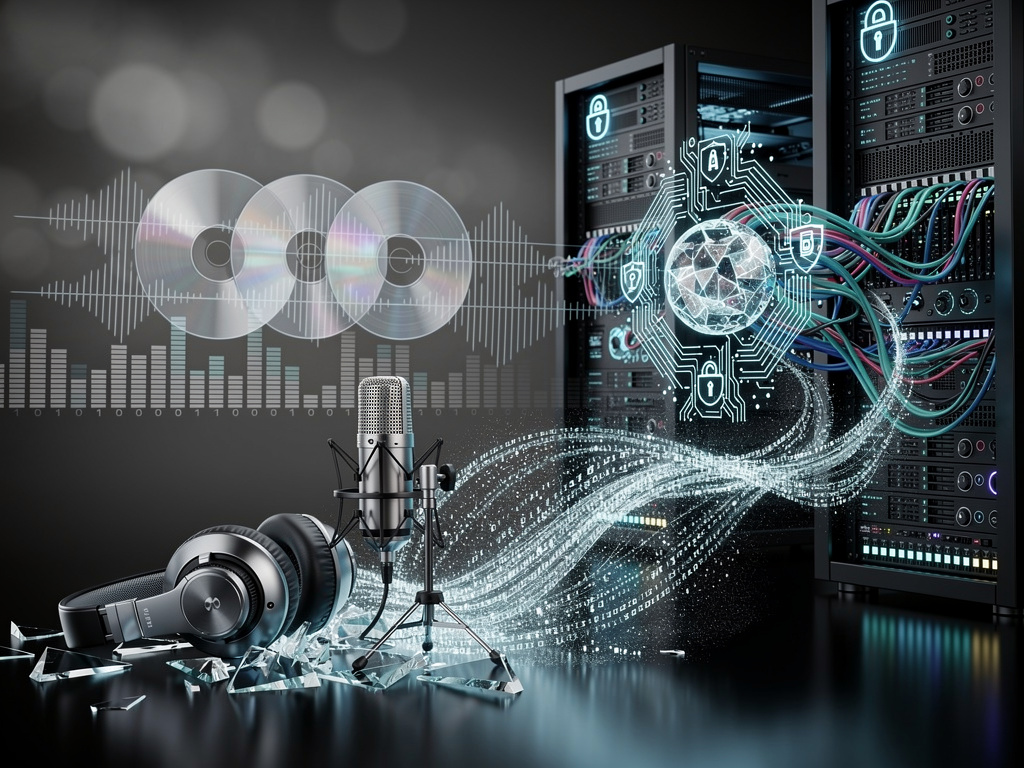
The AI Impersonation Uprising: Musicians Fight Back Against a Tidal Wave of Digital Mimics
In the ever-evolving world of music production, a new crisis has emerged that pits human creativity against machine mimicry. Artists, from chart-topping stars to underground producers, are voicing outrage over the proliferation of AI-generated tracks that impersonate their voices and styles. This surge of synthetic clones isn’t just a technological novelty; it’s disrupting livelihoods, flooding streaming platforms, and raising profound questions about authenticity in an industry already strained by digital shifts. As one musician put it in a recent outcry, the situation feels like “bullshit” that’s getting out of hand, with bad actors exploiting gaps in distribution systems to push fake content en masse.
The problem stems from advanced AI tools that can replicate an artist’s vocal timbre, lyrical flair, and even instrumental signatures with eerie precision. Platforms like Spotify and Deezer are inundated daily with thousands of these impostor tracks, often uploaded through third-party distributors that lack robust vetting. According to reports, Deezer alone processes around 50,000 AI-generated songs per day, comprising over a third of its incoming music. This deluge isn’t merely voluminous; it’s strategically designed to game algorithms, siphon royalties, and confuse listeners who might unwittingly stream fakes instead of originals.
Musicians’ frustrations have boiled over into public statements and legal threats. Producers describe a relentless barrage of clones that dilute their brand and erode earnings. One industry insider likened it to an unchecked spam epidemic, where scammers use services like DistroKid to bypass direct uploads to major streamers, evading initial scrutiny. Spotify has responded by purging 75 million spam tracks and tightening policies against impersonation, but the sheer scale suggests these measures are bandaids on a gaping wound.
The Mechanics of Mimicry and Distribution Loopholes
At the heart of this issue lies the technology itself: generative AI models trained on vast datasets of real music, enabling them to produce near-identical replicas. Tools like those from Udio or Suno allow users to create songs in seconds, tweaking prompts to mimic specific artists. A recent analysis highlighted how minor changes in input can yield tracks so similar to originals that they skirt copyright infringement while still profiting from resemblance. This has sparked fears of massive lawsuits, as eerily similar songs could trigger legal battles over intellectual property.
Distribution networks exacerbate the problem. Unlike direct uploads, third-party services handle the bulk of content flowing to platforms, often with minimal checks for authenticity. This setup, intended to democratize access for independent artists, has become a vulnerability exploited by opportunists. Posts on social media platform X reflect growing sentiment among users, with discussions noting that AI is already influencing songwriting and production, potentially replacing human roles in the near term. One post warned that by 2030, AI could generate most popular music, leading to a sharp decline in professional musicians.
Industry responses vary, but there’s a consensus that current systems are ill-equipped. Streaming giants are scrambling to implement AI detection tools, yet the cat-and-mouse game with creators of fake content persists. For instance, Spotify’s global head of marketing emphasized protecting authentic artists from being overshadowed, as revealed in a briefing tied to their 2025 Wrapped data. Yet, critics argue these efforts fall short, especially as AI music floods playlists, making it harder for genuine talent to break through.
Artist Outcries and the Push for Protections
High-profile musicians have amplified the call for safeguards. In a letter signed by over 200 artists including Billie Eilish, Nicki Minaj, and Stevie Wonder, there’s a demand for tech firms to pledge against developing AI that replaces human creatives. This plea, detailed in coverage from The Guardian, underscores broader anxieties about exploitation. Artists argue that without consent and compensation, AI training on their work amounts to theft, stripping them of control over their artistic identity.
The controversy isn’t new, but its intensity has ramped up in 2025. Reports indicate a “multi-billion dollar heist” through fake streams and deepfake clones, draining royalties from real creators. One article from Midnight Rebels unpacks how sophisticated scams are warping the industry, with AI fueling 150,000 new songs daily—many indistinguishable from human output. This flood risks drowning out emerging bands, as listeners retreat to familiar catalogs amid distrust of new releases.
On X, users echo these concerns, with posts predicting a cultural stagnation where AI dominance halts innovation. One observation noted that when a significant portion of new music is AI-generated, consumers may shun unknowns, favoring proven hits. This sentiment aligns with analyses suggesting that by 2026, playlists could be rife with “robot rock,” as forecasted in a piece from Business Insider.
Legal and Ethical Battlegrounds
Legal frameworks are lagging behind technological advances. Copyright laws, designed for a pre-AI era, struggle to address generative models that remix rather than copy outright. A discussion in Geeky Gadgets explores how fair licensing and artist rights could reshape the debate, potentially leading to landmark cases. If AI songs are deemed too similar, it might open floodgates for litigation, forcing companies to rethink training data ethics.
Ethically, the divide is stark. Proponents see AI as a tool for inspiration, supplementing human creativity. Yet, detractors, including those in a TIME essay urging to “rage against the AI music machine,” warn of a downward spiral where humans mimic machines, resulting in homogenized content. This perspective, from TIME, argues that unchecked AI could erode the soul of music, turning it into algorithmic slop.
Industry bodies are stepping in. Organizations like GEMA and Merlin are negotiating deals to ensure fair compensation for AI uses of music catalogs. A comprehensive review in Music Ally details these developments, highlighting trends from AI technologies to fair use debates that defined 2025.
Platform Strategies and Future Safeguards
Streaming services are adapting, albeit unevenly. Spotify’s latest measures, outlined in another Music Ally report, include enhanced detection for AI content and spam. By formalizing anti-impersonation rules, they’ve removed millions of tracks, but the influx continues. Deezer’s statistics underscore the challenge: with AI accounting for a massive chunk of uploads, platforms must balance openness with protection.
Looking ahead, insiders predict a hybrid future where AI aids rather than supplants artists. Predictions from X suggest that by 2040, musicians could dwindle by 75%, but only if regulations fail to intervene. A post emphasized the need for U.S. leadership to prevent foreign AI models from dominating, potentially replacing originals without recourse.
Collaborative efforts are emerging. Some labels are exploring AI for co-creation, ensuring artists retain control. Yet, as one X user noted, live performances might remain a human stronghold, even as production becomes AI-heavy. This duality—threat and opportunity—defines the current tension.
Economic Ripples and Cultural Shifts
Economically, the impact is profound. Fake tracks siphon streams, reducing payouts for originals. With algorithms favoring viral content, AI clones can artificially inflate popularity, skewing charts and discovery. An Axios piece on 2026 trends notes how platforms aim to prevent AI from crowding out authentic careers, following artist leads.
Culturally, there’s a risk of homogenization. If AI dominates, diverse voices could be marginalized, as algorithms prioritize safe, replicable formulas. Posts on X lament this, with one warning that 21st-century culture might stall, echoing theorist Mark Fisher’s ideas on stalled progress.
Musicians are pushing back through advocacy. Groups demand transparency in AI deals, ensuring creatives aren’t sidelined. As one industry figure stated in a recent briefing, the goal is clarity and fair pay amid technological upheaval.
Innovators and Resistors in Harmony
Not all see AI as an enemy. Some artists experiment with it for new sounds, viewing it as an extension of tools like Auto-Tune. However, the line between enhancement and replacement blurs, prompting calls for ethical guidelines.
Resistance is building through collectives. The Artist Rights Alliance continues lobbying for protections, building on earlier petitions. Coverage in various outlets, including a follow-up in Music Ally’s Part 2 review, discusses entities like GEMA negotiating AI licensing, potentially setting precedents for global standards.
Ultimately, the battle against AI clones is about preserving human essence in music. As platforms refine defenses and laws evolve, the industry must navigate this mimicry minefield to foster genuine innovation.
Voices from the Frontlines
Personal stories illuminate the stakes. Producers report discovering clones of their work on playlists, leading to lost income and fan confusion. One anonymous artist shared how a fake track in their style amassed streams they never earned from.
On X, creators discuss rebuilding ownership infrastructure, with projects like AISUEDE aiming to protect identities in a clone-prone era. These innovations could redefine creative economies, ensuring artists thrive amid AI’s rise.
The discourse extends to broader implications, with warnings that unchecked AI could transform product building, as seen in non-music contexts where copycats signal market fit.
Toward a Balanced Symphony
Balancing progress with protection requires multifaceted approaches. Education on AI ethics, stronger detection tech, and international regulations could stem the tide. Industry predictions for 2026, including nostalgia trends alongside AI integration, suggest a resilient adaptation.
Artists like Olivia Dean represent hope, as insiders forecast human-led revivals amid the noise. Yet, the core challenge remains: distinguishing real from replica in an era of perfect imitation.
As the music world grapples with this, the outcry from musicians serves as a clarion call. Their fatigue with AI “bullshit,” as captured in the seminal report from The Verge, encapsulates a pivotal moment where technology’s promise meets human resolve. The path forward demands vigilance, ensuring that the symphony of progress doesn’t silence its composers.


 WebProNews is an iEntry Publication