
The Dawn of Discreet Smart Home Intelligence
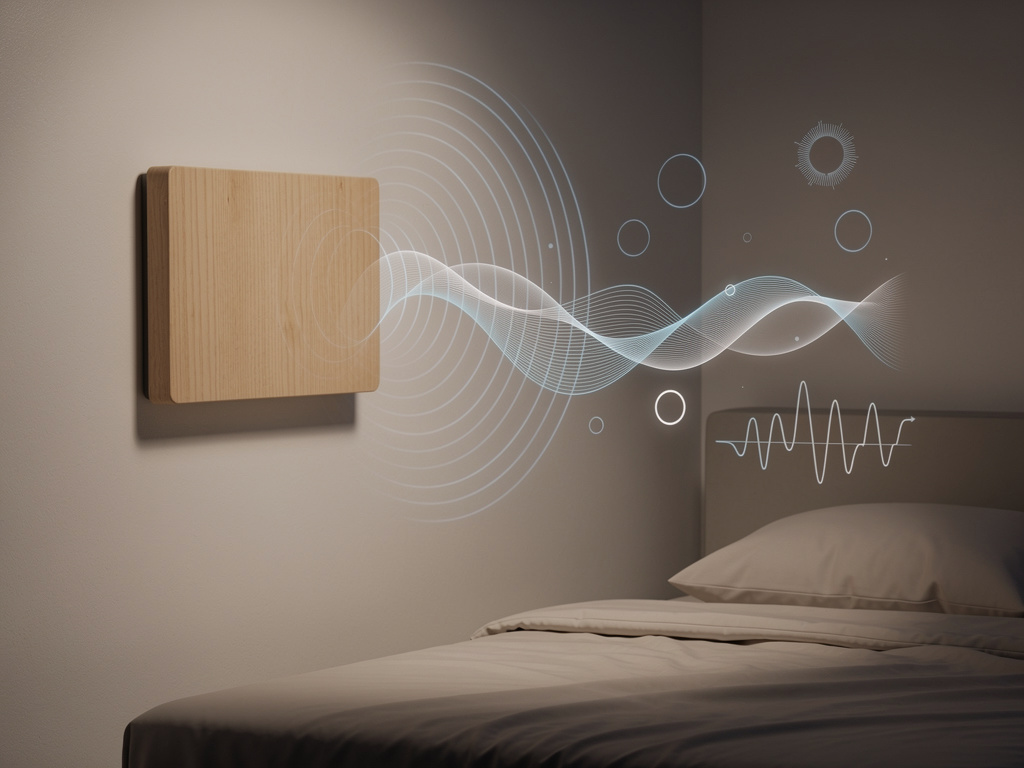
In the ever-evolving world of smart home devices, a new contender is emerging that blends minimalist design with cutting-edge sensor technology. The Mui Board, developed by Kyoto-based startup Mui Lab, has long been celebrated for its wooden aesthetic that disguises a sophisticated touch interface for controlling home automation. Now, as revealed at CES 2026, the device is incorporating millimeter-wave (mmWave) radar to enable advanced sleep tracking and gesture control, marking a significant leap in non-invasive health monitoring. This integration promises to transform bedrooms into intelligent spaces that monitor rest without the need for wearables or intrusive cameras.
Mui Lab’s journey began with a focus on “calm technology,” a philosophy that prioritizes harmony between gadgets, people, and their environments. The original Mui Board, resembling a simple plank of wood, allows users to interact with smart home systems through subtle touch gestures, displaying information like weather or messages only when needed. According to a hands-on review by The Verge, the latest iteration builds on this foundation by embedding mmWave sensors, which use high-frequency radio waves to detect minute movements and vital signs from a distance.
This technology isn’t entirely new—mmWave has been employed in various applications, from automotive radar to security systems—but its application in consumer sleep tracking represents a fresh frontier. Unlike traditional wearables that require direct skin contact, mmWave can penetrate fabrics and operate through walls, offering a privacy-focused alternative. Industry insiders note that this could address growing concerns over data security in health tech, as the system processes information locally without relying on cloud uploads.
mmWave’s Role in Revolutionizing Sleep Insights
At the heart of the Mui Board’s new capabilities is its ability to track sleep postures and transitions using mmWave radar. A study published in ScienceDirect highlights how mmWave technology excels in non-invasive recognition of sleep positions, leveraging its advantages in precision and range. For the Mui Board, this means users can place the device on a nightstand or wall, where it silently monitors breathing patterns, heart rate, and even subtle shifts in body position throughout the night.
Gesture control adds another layer of interactivity. Imagine waving your hand to dim lights or adjust the thermostat without leaving the bed—the mmWave sensor detects these motions with high accuracy, even in low-light conditions. Posts on X from tech enthusiasts, including those discussing similar radar-based systems like Seeed Studio’s modules, underscore the excitement around such innovations for smart homes. These social media insights suggest a growing demand for devices that blend seamlessly into daily life, avoiding the clutter of screens and buttons.
Moreover, the Mui Board’s software ecosystem integrates with broader smart home platforms, supporting standards like Matter for compatibility with devices from major brands. This interoperability is crucial, as it allows the board to serve as a central hub, aggregating data from connected thermostats or air purifiers to optimize sleep environments. Early adopters report that the system’s AI-driven insights provide personalized recommendations, such as adjusting room temperature based on detected restlessness.
From Concept to Consumer Reality
The evolution of the Mui Board has been a decade in the making, as detailed in an exploratory piece by Internewscast Journal. What started as a Kickstarter project has matured into a premium product, with the mmWave-enhanced version priced at around $999. This cost reflects the high-end materials and advanced tech, positioning it as a niche offering for those prioritizing design over affordability. Yet, for industry professionals, the price underscores the investment in research and development needed to refine mmWave for consumer use.
Comparisons to other sleep monitoring solutions reveal the Mui Board’s unique edge. While smartwatches and apps, as reviewed in a comprehensive analysis by MDPI, offer portability, they often fall short in accuracy during extended periods due to movement artifacts. mmWave, conversely, provides consistent data without physical constraints. Research from ACM Transactions, such as the MiSleep system detailed in ACM Transactions on Internet of Things, demonstrates how mmWave can predict 3D body joint locations during sleep, a feature Mui Lab has adapted for real-time posture analysis.
On the gesture front, the technology draws from established radar applications. For instance, sensors like the HMMD mmWave from Waveshare, as described in their wiki documentation, detect human presence and micro-motions for applications in smart lighting and security. Mui Lab elevates this by combining it with their signature wooden interface, creating a device that feels more like furniture than tech.
Challenges in Adoption and Privacy
Despite its promise, integrating mmWave into home devices isn’t without hurdles. Signal interference from household objects can affect accuracy, requiring sophisticated algorithms to filter noise. Mui Lab addresses this through proprietary “Spatial AI,” which processes radar data to distinguish between human movements and environmental factors, as announced in their CES 2026 showcase covered by The Verge in a separate hands-on article.
Privacy remains a paramount concern. Unlike camera-based systems, mmWave doesn’t capture visual data, reducing risks of unauthorized surveillance. However, the collection of biometric information raises questions about data handling. Mui Lab emphasizes end-to-end encryption and user-controlled sharing, aligning with regulations like GDPR. Industry observers on X have praised this approach, with posts highlighting how such tech could set new standards for ethical AI in homes.
Furthermore, the device’s reliance on local processing minimizes latency, ensuring gesture responses are near-instantaneous. This is particularly beneficial for sleep tracking, where timely alerts for issues like irregular breathing could integrate with health apps or even notify caregivers discreetly.
Pushing Boundaries in Vital Sign Monitoring
Delving deeper into mmWave’s capabilities, historical research from ACM Transactions on Sensor Networks shows its efficacy in contactless vital sign monitoring, dating back to 2017. The Mui Board builds on this by enabling continuous tracking of heart and breathing rates, potentially detecting early signs of conditions like sleep apnea. This non-wearable method appeals to those who find bands or rings uncomfortable, expanding the market to include the elderly or children.
Gesture control extends beyond convenience; it fosters accessibility. For users with mobility limitations, air gestures could simplify interactions, a point echoed in discussions on X about inclusive tech design. Mui Lab’s implementation uses machine learning to learn user patterns, improving accuracy over time and reducing false positives.
In competitive terms, rivals like SwitchBot’s PIR/mmWave sensor, launched in late 2025 as reported by HomeKit News, offer similar detection but lack the integrated display and aesthetic appeal of the Mui Board. This differentiation could carve out a premium segment in the smart home market.
Future Trajectories for Calm Tech Integration
Looking ahead, Mui Lab’s CES 2026 demonstration, as captured in an archived hands-on by The Verge, positions the Mui Board as a pioneer in “wellbeing sleep experiences.” The Spatial AI service uses mmWave for remote sensing, measuring vital data and setting alarms based on sleep states—all without disrupting the user’s rest.
This innovation aligns with broader trends in health tech, where non-invasive monitoring is gaining traction. Posts on X, such as those from tech innovators discussing radar precision in devices like Seeed Studio’s projects, indicate a surge in open-source experiments that could accelerate adoption. For industry insiders, this signals opportunities for partnerships, perhaps integrating Mui’s tech into furniture or bedding lines.
Moreover, the environmental angle can’t be ignored. Mui Lab’s use of sustainable wood and low-energy mmWave sensors appeals to eco-conscious consumers, potentially influencing design standards across the sector.
Innovative Applications Beyond the Bedroom
Expanding its utility, the Mui Board’s mmWave features could extend to other rooms. In living spaces, it might detect occupancy for automated lighting or security alerts, drawing from applications like those in the HMMD sensor’s host software for AIoT scenarios.
For sleep-specific advancements, combining mmWave with AI could enable predictive analytics, forecasting poor sleep nights based on daily patterns. This proactive approach, inspired by studies in ScienceDirect, differentiates it from reactive wearables.
Industry feedback from CES, as covered in Internewscast Journal, suggests the device resonates with those seeking tech that enhances life without overwhelming it. As one reviewer noted, it’s a thoughtful alternative to ad-laden screens.
Strategic Implications for Tech Ecosystems
Strategically, Mui Lab’s move into mmWave underscores a shift toward sensor fusion in smart devices. By merging radar with touch interfaces, the board creates a multifaceted tool that could inspire similar integrations in products from giants like Google or Apple.
Challenges like high costs may limit initial uptake, but as production scales, prices could drop, broadening accessibility. X posts from users experimenting with affordable mmWave modules hint at a democratizing trend.
Ultimately, the Mui Board’s fusion of aesthetics and technology exemplifies how discreet innovations can redefine home intelligence, paving the way for more intuitive, health-focused living spaces.


 WebProNews is an iEntry Publication