
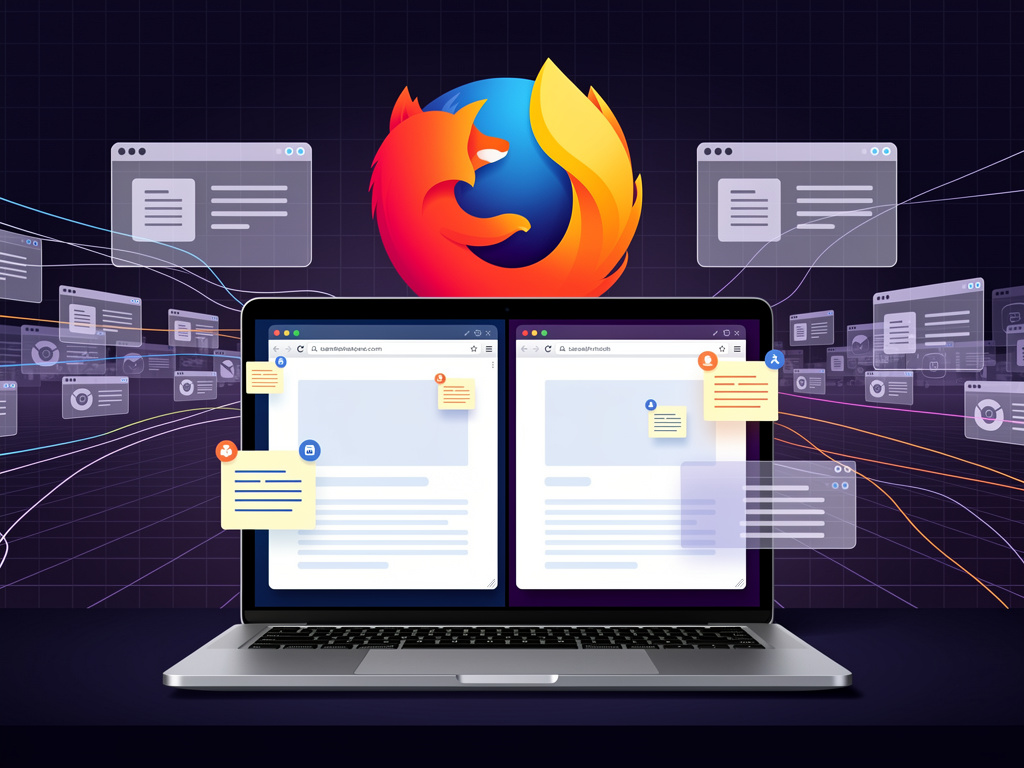
Mozilla is pushing the boundaries of browser functionality with experimental features in Firefox Nightly that could reshape how professionals and power users interact with web content. The organization has introduced split-view browsing and tab-specific note-taking capabilities, signaling a strategic shift toward productivity-focused tools as the browser market becomes increasingly competitive.
According to TechRepublic, Firefox Nightly now includes a split-view feature that allows users to display two tabs side-by-side within a single browser window, eliminating the need for separate windows or external monitor arrangements. This functionality, combined with an integrated tab notes system, represents Mozilla’s most significant productivity enhancement in years. The features are currently available exclusively in the Nightly build, Mozilla’s testing ground for experimental capabilities before potential integration into the stable release.
The split-view implementation enables users to drag tabs to either side of the browser window, automatically resizing both views to occupy equal screen space. This approach differs from traditional tab management, where users must manually arrange multiple windows or rely on operating system-level window snapping. The tab notes feature allows users to attach text notes directly to individual tabs, creating a contextual annotation system that persists across browsing sessions. These notes remain accessible through a dedicated panel, providing quick reference without disrupting the browsing experience.
Technical Architecture and User Experience Considerations
The engineering behind Firefox’s split-view functionality represents a significant departure from conventional browser architecture. Rather than treating each tab as an isolated entity within a single viewport, the new system implements a dynamic layout engine that can simultaneously render and manage two independent browsing contexts. This requires careful resource allocation to prevent performance degradation, particularly on systems with limited memory or processing power.
Mozilla’s implementation appears designed to minimize resource overhead by sharing certain rendering processes between the split views while maintaining separate JavaScript execution contexts. This architectural decision balances performance with functionality, ensuring that resource-intensive web applications in one pane don’t negatively impact the responsiveness of content in the other. The tab notes feature integrates with Firefox’s existing session management system, storing annotations locally and syncing them through Firefox Sync for users who enable that service.
Market Context and Competitive Pressures
Mozilla’s introduction of these productivity features comes as browser vendors increasingly compete on workflow efficiency rather than pure rendering speed or standards compliance. Microsoft Edge has integrated vertical tabs and Collections features, while Google Chrome continues expanding its tab grouping and organization capabilities. Opera has long offered split-screen browsing, and Vivaldi provides extensive customization options including tiled tab layouts and integrated note-taking.
The browser market has consolidated considerably over the past decade, with Chromium-based browsers dominating usage statistics. Mozilla’s Firefox maintains approximately 3-5% global market share according to various analytics services, down from double-digit percentages in the mid-2010s. This market pressure has pushed Mozilla to differentiate Firefox through privacy-focused features and, increasingly, productivity enhancements that appeal to professional users who value efficiency and workflow optimization.
Privacy Implications and Data Management
The tab notes feature raises important questions about data storage and privacy, areas where Mozilla has historically positioned itself as a user advocate. Unlike cloud-first note-taking services that automatically upload content to remote servers, Firefox’s implementation stores notes locally by default. Users who enable Firefox Sync can choose to synchronize their notes across devices using Mozilla’s encrypted sync infrastructure, which employs end-to-end encryption to protect user data from unauthorized access, including by Mozilla itself.
This privacy-conscious approach aligns with Mozilla’s broader positioning as a browser vendor that prioritizes user control over data monetization. The organization has previously introduced features like Enhanced Tracking Protection, which blocks third-party tracking cookies by default, and Firefox Monitor, which alerts users to data breaches affecting their accounts. The local-first approach to tab notes continues this philosophy, though it may limit the feature’s appeal to users who expect seamless cloud integration across multiple devices and platforms.
Enterprise and Professional Use Cases
The combination of split-view browsing and tab notes addresses specific pain points for knowledge workers, researchers, and developers who regularly work with multiple information sources simultaneously. Legal professionals reviewing contracts while referencing case law, financial analysts comparing company reports, and software developers consulting documentation while writing code all represent target audiences for these capabilities.
Enterprise adoption of Firefox has declined as IT departments increasingly standardize on Chromium-based browsers, particularly Microsoft Edge in Windows environments. Mozilla’s productivity features could provide a differentiation point for organizations that value vendor diversity or have specific privacy requirements that align with Firefox’s approach. However, the features must graduate from Nightly to stable releases and prove their reliability in production environments before enterprise IT departments will seriously consider them for deployment.
Development Timeline and Stability Concerns
Features introduced in Firefox Nightly undergo extensive testing before reaching the stable release channel, a process that typically spans several months. Mozilla uses a four-channel release model: Nightly builds receive daily updates with experimental features, Developer Edition provides a more stable testing environment, Beta releases undergo final testing before stable deployment, and the main Firefox release receives only thoroughly vetted features and security updates.
The split-view and tab notes features may undergo significant modifications based on user feedback and technical testing before reaching broader availability. Mozilla has historically been willing to abandon or substantially revise Nightly features that prove problematic or fail to gain user adoption. The organization’s Test Pilot program previously served as a testing ground for experimental features, though it was discontinued in 2019. The current approach integrates experimental features directly into Nightly builds, making them accessible to users willing to accept potential instability in exchange for early access.
User Interface Design Philosophy
Mozilla’s implementation of split-view browsing emphasizes simplicity and discoverability, critical factors for features that must compete with established user habits and workflows. The drag-and-drop interaction model leverages familiar gestures that users already employ for tab management, reducing the learning curve for adoption. The tab notes interface appears as an unobtrusive panel that users can show or hide as needed, avoiding the visual clutter that has plagued previous attempts to integrate note-taking into browsers.
This design philosophy reflects lessons learned from previous Firefox interface experiments, some of which faced user backlash due to perceived complexity or deviation from established patterns. The Australis redesign in 2014 and the Photon refresh in 2017 both generated significant user feedback, teaching Mozilla the importance of balancing innovation with familiarity. The current features appear designed to enhance existing workflows rather than requiring users to adopt entirely new interaction paradigms.
Technical Requirements and Browser Extension Ecosystem
The introduction of native split-view functionality may impact Firefox’s extension ecosystem, where third-party developers have long offered similar capabilities through add-ons. Extensions like Tab Resize and Tile Tabs have provided split-screen browsing for years, demonstrating user demand for the functionality. Native implementation offers performance advantages and tighter integration with browser features, but it may reduce the market for third-party solutions that previously filled this gap.
Mozilla’s extension API, based on the WebExtensions standard shared with Chromium-based browsers, has limitations that affect what third-party developers can accomplish. Native features can access lower-level browser functionality and implement optimizations unavailable to extensions, potentially providing superior performance and reliability. However, the extension ecosystem also serves as a proving ground for innovative features, and Mozilla must balance native feature development with maintaining a healthy third-party developer community.
Future Development and Strategic Direction
The introduction of productivity features in Firefox Nightly suggests Mozilla is pursuing a strategy focused on serving power users and professionals rather than competing directly for mainstream consumer market share. This approach acknowledges the reality of browser market dynamics while attempting to build a sustainable user base among those who value Firefox’s distinctive characteristics, particularly around privacy and customization.
Whether these features will significantly impact Firefox’s market position remains uncertain. Browser selection increasingly depends on ecosystem lock-in, with users choosing browsers that integrate seamlessly with their operating systems, mobile devices, and cloud services. Mozilla lacks the platform advantages enjoyed by Google with Chrome and Android, Microsoft with Edge and Windows, and Apple with Safari and iOS. Success will likely depend on Mozilla’s ability to deliver genuinely superior productivity features that provide compelling reasons to switch browsers despite these ecosystem disadvantages, while maintaining the performance and compatibility that users expect from modern web browsers.


 WebProNews is an iEntry Publication