
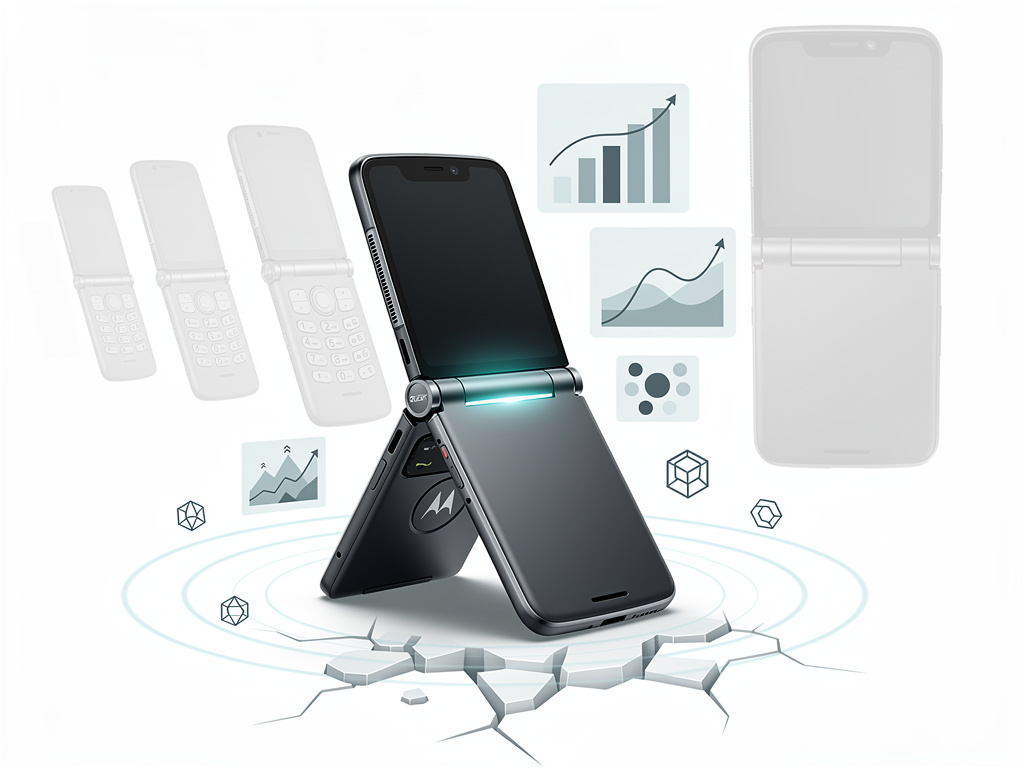
Motorola’s foldable Razr line has been quietly gaining ground, and according to a new analysis from CNET, the company is tantalizingly close to cracking the code that could make its flip phone the default recommendation for most people. Not the best spec sheet. Not the most niche appeal. The phone you’d actually tell your friend to buy.
That’s a significant threshold, and one that Motorola hasn’t crossed yet — but the gap is narrowing fast.
The Razr Plus 2025 is almost there
CNET’s Lisa Eadicicco argues that the latest Razr Plus (2025) addresses nearly every criticism lobbed at previous generations. The cover screen is bigger and more functional. The cameras have improved. Battery life is better. Software support has been extended. These were the pain points that kept reviewers from giving Motorola’s foldable an unconditional recommendation, and one by one, they’re falling away.
The comparison to an “iPhone moment” isn’t about matching Apple feature-for-feature. It’s about reaching a level of polish and reliability where the phone just works for the vast majority of users — where the compromises inherent in a folding form factor stop feeling like compromises. The original iPhone didn’t win on specs either. It won on experience.
And Motorola is getting close to that with the Razr.
The 2025 model runs on a Snapdragon 8 Elite chipset, a major step up from previous generations that positions it alongside flagship slabs from Samsung and OnePlus in raw performance. Motorola has also committed to longer software updates, a sore spot that previously made it hard to justify the Razr’s premium price tag against Samsung’s Galaxy Z Flip, which offered more years of support. That’s no longer the easy differentiator it once was.
Battery life — historically a weakness for compact foldables — has seen real improvement too. The phone packs a larger cell and more efficient silicon, meaning users aren’t constantly nursing their charge through the afternoon. That matters. A lot.
What’s still holding it back
So why isn’t this the full iPhone moment yet? A few things.
Durability perception remains a hurdle. Foldables in general still carry a stigma around long-term reliability, and Motorola hasn’t done enough to overcome that with clear, public data on hinge longevity or screen resilience. Samsung has years of market presence working in its favor here, even if its own foldables aren’t immune to issues. Brand trust takes time to build, and Motorola is still building it.
Then there’s the software. Motorola’s Android skin is clean and mostly stays out of the way, but the cover screen experience — while improved — still doesn’t match what Samsung offers with its more mature app compatibility on the Z Flip’s outer display. Running full apps on a small exterior screen sounds great in theory. In practice, it needs to work flawlessly every time, and reports suggest it’s not quite there yet.
Pricing is another factor. The Razr Plus competes directly with Samsung’s Galaxy Z Flip 6, and while Motorola has been more aggressive on price in recent generations, Samsung’s retail footprint, trade-in deals, and carrier relationships give it distribution advantages that raw specs can’t overcome. You can walk into any carrier store in America and walk out with a Z Flip. The Razr buying experience isn’t always that straightforward.
There’s also the question of cultural cachet. The Razr name carries enormous nostalgia — Motorola knows this and has leaned into it — but nostalgia only gets you so far. The phone needs to stand on its own merits with buyers who never owned the original 2004 Razr V3. For younger consumers, the brand doesn’t carry the same weight as Apple or Samsung. Not yet.
But here’s the thing: none of these are insurmountable problems. They’re execution gaps, not fundamental flaws. And Motorola is closing them faster than most analysts expected.
The broader foldable market is also shifting in Motorola’s favor. Samsung’s Galaxy Z Flip line has faced criticism for incremental updates in recent cycles, with The Verge and other outlets noting that the Z Flip 6 felt like a modest refinement rather than a leap forward. That creates an opening. If Samsung is coasting, a hungry competitor with a genuinely improved product can steal attention — and market share.
Google’s Pixel Fold line has pivoted toward the book-style form factor, largely ceding the compact flip phone space. OnePlus and Oppo have strong entries in Asia but limited North American presence. That leaves Motorola as Samsung’s primary domestic competitor in the flip foldable category. A two-horse race favors the underdog more than a crowded field does.
Motorola’s parent company Lenovo has also signaled continued investment in the Razr brand, treating it as a flagship priority rather than an experiment. That commitment matters for long-term software support, component sourcing, and marketing spend — all areas where Motorola has historically been outgunned by Samsung’s massive resources.
The AI angle is worth mentioning too. Motorola has integrated Google’s Gemini AI features into the Razr Plus, following the industry-wide push to embed generative AI into smartphones. Whether consumers actually care about on-device AI remains an open question — early data suggests most people don’t use these features regularly — but having them checks a box that flagship buyers increasingly expect.
So where does this leave us? Motorola’s Razr is no longer the phone you recommend with caveats. It’s the phone you recommend with one or two small asterisks. That’s a massive shift from even two years ago, when the Razr was a cool concept undermined by real-world shortcomings.
The iPhone moment — that tipping point where a product becomes the obvious, default choice — requires more than good hardware. It requires trust, distribution, and a sense of inevitability. Motorola has the hardware. It’s working on the trust. Distribution and inevitability are the last pieces.
One more strong generation might be all it takes.


 WebProNews is an iEntry Publication