
Behind the AI Facade: Motive’s Dashcam Empire and the Human Hands Steering It
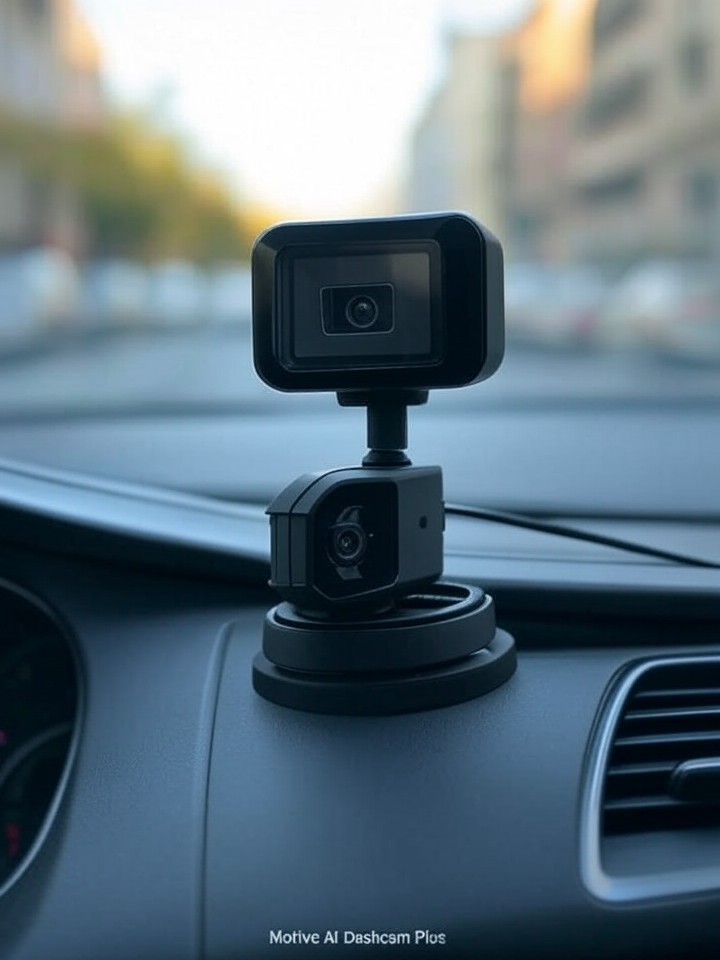
In the bustling world of fleet management technology, Motive has positioned itself as a frontrunner by promising artificial intelligence that revolutionizes road safety. The company’s latest offering, the AI Dashcam Plus, launched just days ago, boasts advanced features like stereo vision and real-time risk detection, powered by what Motive describes as cutting-edge edge AI. According to a press release on their own site, this device runs over 30 AI models simultaneously, aiming to spot unsafe driving behaviors and prevent collisions before they happen.
Yet, beneath this veneer of autonomous innovation lies a stark reality: Motive’s AI systems heavily depend on human intervention. A recent investigation reveals that the company employs around 400 workers in Pakistan, each earning about $125 a month, to manually review thousands of video snippets daily. These workers act as the unsung backbone, ensuring the accuracy of what is marketed as pure AI prowess.
This blend of machine learning and human labor isn’t unique to Motive, but the scale and the company’s aggressive AI branding raise questions about transparency in the tech sector. As Motive gears up for a potential initial public offering, investors and industry watchers are scrutinizing how much of its value proposition rests on low-cost human oversight rather than self-sufficient algorithms.
The Hype Machine: Motive’s Rise in Fleet Tech
Motive, formerly known as KeepTruckin, has rapidly expanded its footprint in the physical operations sector. Its integrated platform combines dashcams, telematics, and safety tools to help businesses manage fleets more efficiently. The AI Dashcam Plus, unveiled at CES earlier this month, represents a pinnacle of this evolution, featuring three times the AI processing power of previous models and hands-free communication capabilities.
Coverage from various outlets highlights the enthusiasm. For instance, SiliconANGLE reported on the device’s potential to help logistics operators avoid collisions through enhanced edge AI. Similarly, TheTrucker.com detailed how the dashcam integrates improved AI with real-time alerts, positioning it as a game-changer for trucking safety.
Industry insiders note that Motive’s marketing emphasizes AI’s role in detecting distractions, fatigue, and other risks without constant human input. Posts on X from fleet management experts echo this sentiment, praising how such technologies could address driver shortages and rising costs in logistics. One post highlighted AI’s ability to monitor every movement, triggering alerts to prevent accidents.
However, the narrative shifts when examining the operational underbelly. The reliance on human reviewers isn’t just a backup; it’s integral to the system’s functionality.
Unveiling the Human Element in AI-Driven Safety
At the heart of Motive’s AI ecosystem are these Pakistani workers, tasked with rapidly annotating video clips to train and validate the algorithms. According to an in-depth report by The Information, each worker processes up to 1,000 snippets per day, clicking through to label behaviors like tailgating or phone use. This human-in-the-loop approach ensures the AI’s decisions are accurate, but it also underscores a dependency that contrasts with the company’s AI-centric promotions.
This practice mirrors broader trends in the AI industry, where companies like Tesla and Waymo have faced scrutiny for similar human oversight in supposedly autonomous systems. A post on X from tech influencer Garry Tan discussed how even self-driving cars require human operators for edge cases, suggesting that management of AI chaos remains a human domain.
Motive’s prospectus, as mentioned in social media buzz, references “AI” over 200 times, yet details on the human workforce are scant. This omission could affect perceptions as the company eyes an IPO, with valuations potentially hinging on the sustainability of its tech stack.
Critics argue that while human review enhances reliability, the low wages—equivalent to about $1.50 per hour—raise ethical concerns about labor practices in global tech supply chains.
Technological Foundations and Market Pressures
Delving deeper into the AI Dashcam Plus, the device leverages the Qualcomm Dragonwing QCS6490 processor for on-device processing, as noted in a BusinessWire release. This hardware allows for stereo vision, which improves depth perception and risk assessment. Motive claims this setup detects more unsafe behaviors than competitors, with real-time coaching for drivers.
Yet, the integration of human reviewers suggests that edge AI alone isn’t sufficient for the nuanced judgments required in dynamic driving environments. Industry reports, including one from ADAS & Autonomous Vehicle International, praise the dashcam’s capabilities but don’t delve into the backend support.
Fleet operators, under pressure to reduce accidents and insurance costs, are drawn to these tools. A post on X from FleetOwner emphasized how such dashcams help cut liability by spotting risks instantly. However, the human reliance could become a vulnerability if scaling issues arise or if regulatory scrutiny increases.
Moreover, as AI regulations evolve, companies like Motive may need to disclose more about their hybrid models to maintain trust.
Implications for the Broader AI Ecosystem
The case of Motive illustrates a pivotal tension in AI development: the gap between marketed autonomy and actual implementation. While the company touts edge AI for instant responses, the human reviewers provide the critical last-mile accuracy, handling ambiguities that algorithms struggle with.
This hybrid model is efficient but not without risks. If human labor costs rise or geopolitical factors disrupt the workforce, Motive’s operations could face challenges. Social media discussions, such as those referencing autonomous trucks needing human oversight for chaotic scenarios, highlight that complete AI independence remains elusive.
For industry insiders, this raises questions about valuation. Motive’s potential IPO, as buzzed on X, could be buoyed by AI hype, but savvy investors will probe the human dependency. Comparisons to other firms, like those in autonomous driving, show that over-reliance on humans can lead to setbacks, as seen in California DMV deliberations mentioned in online posts.
Ethically, the low pay for reviewers sparks debate on fair compensation in AI training pipelines.
Strategic Shifts and Future Directions
Looking ahead, Motive might invest more in refining its AI to reduce human involvement, perhaps through better data labeling automation. The company’s blog post on gomotive.com describes the dashcam as a unified device that sees more and acts faster, hinting at ongoing advancements.
Competitors in fleet tech are watching closely. If Motive can transition to more autonomous systems, it could solidify its market lead. However, transparency about current methods will be key to building long-term credibility.
Industry trends, as discussed in X posts about AI in construction and logistics, suggest a future where humans manage AI rather than replace it. For Motive, embracing this reality openly could differentiate it from peers who overpromise on AI purity.
In fleet management, where safety is paramount, the human touch might ultimately prove indispensable.
Balancing Innovation with Reality
As Motive continues to innovate, the interplay between AI and human labor will define its trajectory. The AI Dashcam Plus, with its 1440p video and over 30 models, as detailed on gomotive.com, represents significant progress. Yet, the backend human workforce ensures that progress is grounded in reliability.
This duality isn’t a flaw but a feature of current AI maturity. Posts on X from figures like Gary Marcus remind us that true autonomy in driving tech is more complex than initially thought, requiring a rethink of expectations.
For insiders, Motive’s story is a cautionary tale: AI’s promise is vast, but its delivery often relies on human ingenuity. As the company navigates its IPO path, disclosing the full picture could foster greater trust and innovation.
Ultimately, in the quest for safer roads, the fusion of AI and human oversight might be the most effective route forward, blending technological speed with human wisdom.


 WebProNews is an iEntry Publication