
Reviving Autonomy: Motional’s Bold AI Bet on Driverless Taxis by 2026
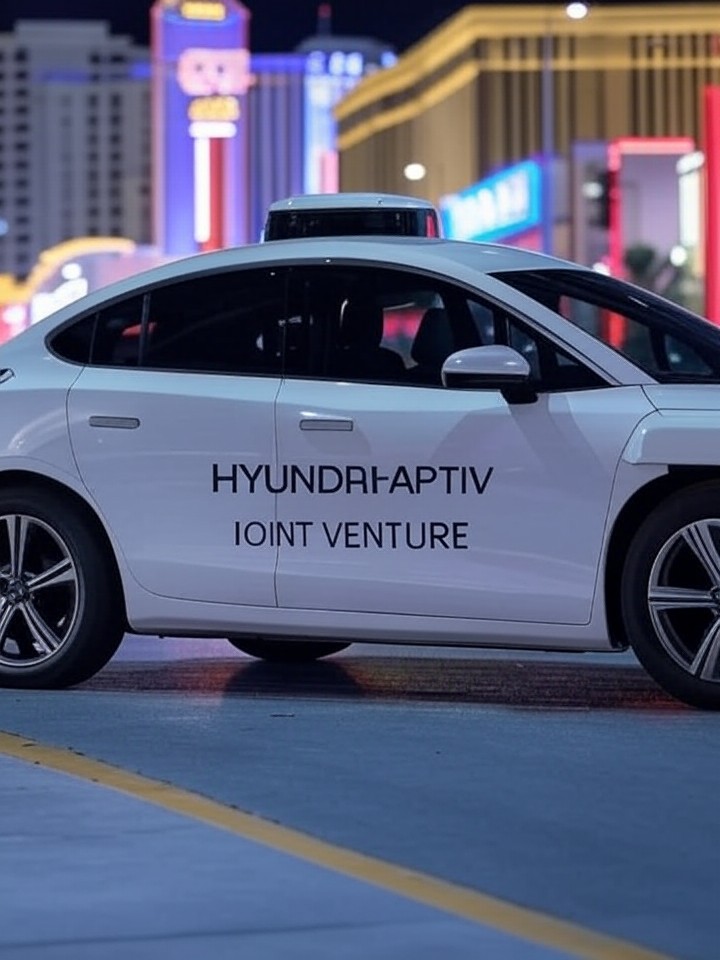
In the fast-evolving world of autonomous vehicles, Motional is making a significant pivot, placing artificial intelligence at the heart of its strategy to launch a fully driverless robotaxi service in Las Vegas by the end of 2026. This move comes after a period of challenges, including missed deadlines and a reevaluation of its technological approach. The company, a joint venture between Hyundai Motor Group and Aptiv, has historically relied on a combination of sensors, mapping, and rule-based systems, but recent setbacks have prompted a reboot centered on AI-driven solutions.
About two years ago, Motional faced a critical juncture in its development of autonomous services. As detailed in a recent article from TechCrunch, the firm had previously fallen short of its goal to introduce a driverless robotaxi service, leading to a strategic overhaul. This shift emphasizes an “AI-first” methodology, leveraging machine learning models to handle complex driving scenarios more effectively than traditional methods.
The decision to prioritize AI reflects broader trends in the industry, where companies are increasingly turning to advanced neural networks to improve perception, prediction, and decision-making in self-driving systems. Motional’s leadership believes this approach will enable safer and more scalable operations, particularly in dynamic urban environments like Las Vegas.
A Strategic Overhaul Amid Industry Shifts
Motional’s reboot is not occurring in isolation. The autonomous vehicle sector has seen intense competition and regulatory scrutiny, with players like Waymo and Cruise making headlines for both breakthroughs and mishaps. According to reports from Reuters, ride-hailing firms and tech companies worldwide are racing to deploy driverless taxis, anticipating that robotaxis will transform urban mobility as regulations evolve.
In this context, Motional’s focus on AI aims to address previous limitations, such as over-reliance on high-definition maps and lidar sensors, which can be costly and less adaptable. By integrating large language models and generative AI, the company hopes to enhance its vehicles’ ability to interpret unstructured data, from pedestrian behaviors to unexpected road conditions.
Industry insiders note that this AI-centric strategy could position Motional as a formidable competitor, especially given its backing by automotive giants. Hyundai’s involvement brings manufacturing expertise, while Aptiv contributes advanced electronics, creating a synergy that could accelerate deployment.
Technological Foundations and Innovations
At the core of Motional’s renewed efforts is a sophisticated AI stack designed to mimic human-like driving intuition. Drawing from insights shared in BitcoinEthereumNews, the company’s approach involves training models on vast datasets of real-world driving scenarios, enabling the system to predict and react to rare events with greater accuracy.
This reboot also includes hardware upgrades, such as enhanced computing power to process AI algorithms in real time. Motional plans to deploy its service using Hyundai’s Ioniq 5 electric vehicles, modified for autonomy, which aligns with growing emphasis on sustainable transport solutions.
Furthermore, the Las Vegas launch site is strategic, benefiting from Nevada’s progressive regulations on autonomous vehicles. The city’s bustling streets provide a rigorous testing ground, where Motional has already conducted extensive trials with safety drivers.
Challenges and Regulatory Hurdles
Despite the optimism, Motional’s path to 2026 is fraught with obstacles. Past incidents in the industry, including accidents involving other autonomous vehicles, have heightened public and regulatory skepticism. As highlighted in coverage from Business Insider during CES 2026, experts are closely watching how companies like Motional navigate safety validations and public trust.
One key challenge is ensuring the AI system’s robustness against edge cases, such as adverse weather or construction zones. Motional is addressing this through simulations and partnerships, but scaling to fully driverless operations requires demonstrating near-perfect reliability.
Regulatory approval remains pivotal. In the U.S., bodies like the National Highway Traffic Safety Administration (NHTSA) demand rigorous testing data, and Motional must comply with evolving standards to operate without human oversight.
Market Implications and Competitive Dynamics
The potential impact of Motional’s driverless service extends beyond Las Vegas, signaling a broader shift toward AI dominance in mobility. Posts on X, formerly Twitter, reflect growing excitement, with users discussing how AI-first strategies could revolutionize urban transport, echoing sentiments from tech enthusiasts and investors.
Competitors like Tesla are also advancing aggressively, with announcements of their own robotaxi initiatives. A post from Whole Mars Catalog on X highlighted Tesla’s plans for vehicles without steering wheels, underscoring the race to achieve true autonomy.
Motional’s timeline aligns with industry projections, where analysts predict widespread robotaxi adoption could disrupt traditional ride-hailing, reducing costs and emissions. According to The Korea Times, Hyundai’s subsidiary is poised to commercialize Level 4 self-driving services, potentially boosting electric vehicle sales through integrated robotics.
Economic and Societal Considerations
Economically, a successful launch could generate substantial revenue for Motional, tapping into the lucrative ride-sharing market. Estimates suggest robotaxis could lower operational costs by eliminating driver wages, making services more affordable and accessible.
On the societal front, proponents argue that driverless vehicles will enhance road safety by reducing human error, which causes most accidents. However, concerns about job displacement in the transportation sector persist, prompting calls for workforce retraining programs.
Motional is engaging with communities in Las Vegas to build acceptance, offering preview rides and transparency on safety measures. This outreach is crucial for mitigating fears and fostering adoption.
AI Integration and Future Prospects
Delving deeper into the technology, Motional’s AI framework incorporates multimodal data fusion, combining inputs from cameras, radar, and lidar to create a comprehensive environmental understanding. Insights from Mezha indicate that this strategy evolved from earlier crossroads, where the company sought innovative paths after missing prior deadlines.
The use of generative AI for scenario generation allows Motional to simulate millions of driving situations, accelerating development without real-world risks. This method contrasts with traditional testing, offering efficiency gains.
Looking ahead, Motional envisions expanding beyond Las Vegas, potentially to other U.S. cities and international markets where regulations permit. Partnerships with ride-hailing platforms could facilitate this growth, integrating robotaxis into existing apps.
Industry Sentiment and Expert Views
Sentiment on platforms like X shows a mix of enthusiasm and caution. Users have shared updates on Motional’s announcements, with posts from TechCrunch amplifying the news of the 2026 target, reflecting broader interest in AI’s role in autonomy.
Experts, as quoted in CleanTechnica, praise Hyundai’s showcase of AI robotics at CES, noting its potential to drive electric vehicle adoption through advanced features.
Critics, however, warn that overhyping AI could lead to setbacks if expectations aren’t met. Balancing innovation with realistic timelines will be key for Motional.
Sustainability and Broader Impacts
Sustainability is another pillar of Motional’s vision, with electric vehicles at the forefront. By promoting driverless EVs, the company contributes to reducing urban pollution and dependence on fossil fuels.
Broader impacts include reshaping city planning, where robotaxis could decrease the need for personal car ownership, freeing up space for green areas. This aligns with global efforts to combat climate change.
As Motional progresses, collaborations with policymakers will be essential to integrate these technologies seamlessly into society.
Path Forward for Motional
In the coming months, Motional plans to ramp up testing, focusing on unsupervised operations to gather data for refinements. The company’s website, Motional, emphasizes its mission to make driverless technology safe and reliable, harnessing industry experience.
Investor confidence appears strong, bolstered by the joint venture’s $4 billion foundation. Success in 2026 could validate the AI-first approach, inspiring similar shifts across the sector.
Ultimately, Motional’s reboot represents a calculated gamble on AI’s transformative power, aiming to deliver on the long-promised era of autonomous mobility. With careful execution, it could redefine how we move through cities, one driverless ride at a time.


 WebProNews is an iEntry Publication