
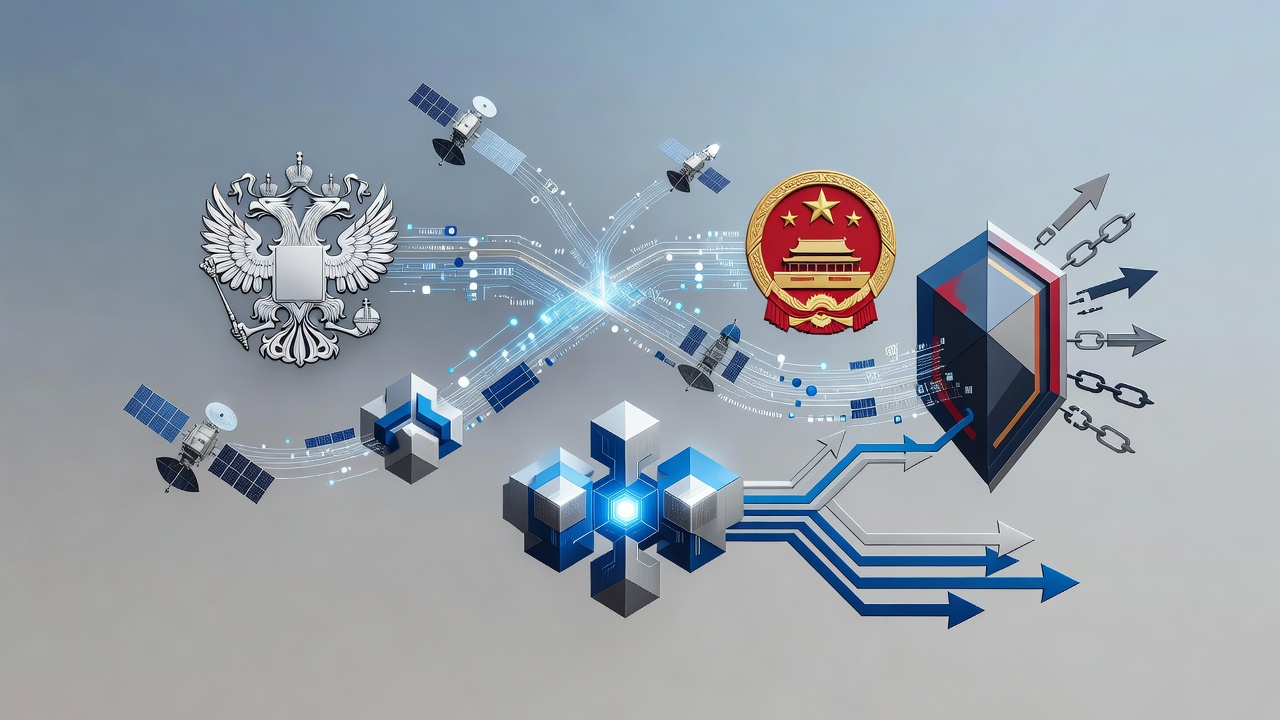
Russia and China keep tightening bonds in artificial intelligence. Their moves come as both nations face sanctions and export controls from the United States and its allies. The partnership shows no signs of slowing. Officials on both sides talk of shared research, open-source systems and opposition to what they call technological dominance by a few powers.
Back in late 2025, Russian President Vladimir Putin issued clear orders. He directed the government and Sberbank to work with Chinese partners on technological research and development in artificial intelligence. The instructions even floated the idea of an international journal to publish their joint findings. Council on Foreign Relations reported the details on Jan. 28, 2025.
China responded quickly. The president of the Shanghai Artificial Intelligence Research Institute said his country planned to ramp up cooperation with Sberbank. Russia lags behind both China and the U.S. on key AI metrics. Western sanctions bear much of the blame, according to Sberbank’s first deputy CEO. Yet the pressure has only pushed Moscow closer to Beijing.
By May 2026 the two leaders met in Beijing. Xi Jinping and Vladimir Putin used the summit to expand collaboration across several fronts. Artificial intelligence stood out. They pledged closer work on satellite internet, cybersecurity and internet governance. Russia welcomed China’s proposal for a global organization dedicated to AI cooperation. Both sides declared their opposition to the use of AI “as a geopolitical tool” by countries seeking to preserve technological dominance. The Record covered the summit on May 20, 2026.
Shared Goals Meet Practical Limits
The two countries have signed multiple agreements over the past year. In November 2025 they agreed to prepare a cooperation roadmap for 2026 to 2030 with a heavy focus on artificial intelligence. Plans include creation of an Expert Council. They also back China’s idea for a World Organization for Cooperation in Artificial Intelligence. Caspian News detailed the 15 agreements signed at that time.
But. The partnership carries risks. AI can power autonomous weapons. It shapes conventional warfare. Russia wants advanced models. China seeks military data, submarine technology and helicopter expertise in return. The exchange remains largely unspoken in public statements. Analysts watch closely.
And the cooperation stretches further. Joint work on digital infrastructure and open-source systems aims to reduce dependence on Western technology. They coordinate on satellite navigation, improving links between Russia’s GLONASS and China’s BeiDou. Radio frequencies, satellite orbits and Internet of Things systems receive attention too. Both promote “internet sovereignty” over open models favored by many Western governments.
Recent months show continued momentum. A 2026 analysis highlighted how the war in Ukraine accelerated technological ties. Sanctions forced Russia to seek alternatives. China provided pathways in AI and related fields. EH4S examined the shift in a 2026 publication.
Officials frame the effort as mutual benefit. They reject what they term a Cold War mentality. Xi has urged broader AI cooperation within groups like the Shanghai Cooperation Organization. Putin has proposed a BRICS AI alliance network. The message stays consistent. Two powers with complementary strengths will not let export controls dictate their progress.
Still, gaps exist. China leads in scale and investment. Russia brings specific expertise in certain algorithms and defense applications. Data sharing remains sensitive. Talent flows and joint labs could accelerate results. Yet trust issues linger from past history, even as current threats align their interests.
The U.S. and its partners have tightened rules. New restrictions target the most powerful closed AI models for both China and Russia. Companies face limits on chips, data and collaboration with Western entities. So Moscow and Beijing double down on homegrown and bilateral solutions. Their combined market size and state resources give them staying power.
Industry insiders in finance, defense and technology watch these developments. Investment patterns shifted years ago. Chinese funding flowed into Russian AI projects. Russian firms gained access to Chinese computing resources. The trend shows no reversal. If anything, summits and roadmaps suggest acceleration into 2030.
One thing stands clear. This is no temporary tactical alignment. The two governments treat AI as strategic priority. They link it to national security, economic growth and global influence. Their joint statements emphasize fairness, openness to all nations and resistance to unilateral controls. Western policymakers debate responses. Some call for stricter enforcement. Others warn against driving the two countries even closer.
Practical results will decide the partnership’s strength. Joint papers, shared datasets in Russian and Chinese languages, new translation tools and adapted search systems offer early signs. Larger ambitions involve industrial applications, surveillance improvements and military systems. Progress may stay opaque. Official announcements provide only part of the picture.
Yet the direction holds. Russia and China build capacity together. They challenge the current order of technological power. Their AI axis, still forming, already influences global conversations on standards, governance and access. Observers expect more agreements, more projects and continued high-level support in the years ahead.


 WebProNews is an iEntry Publication