
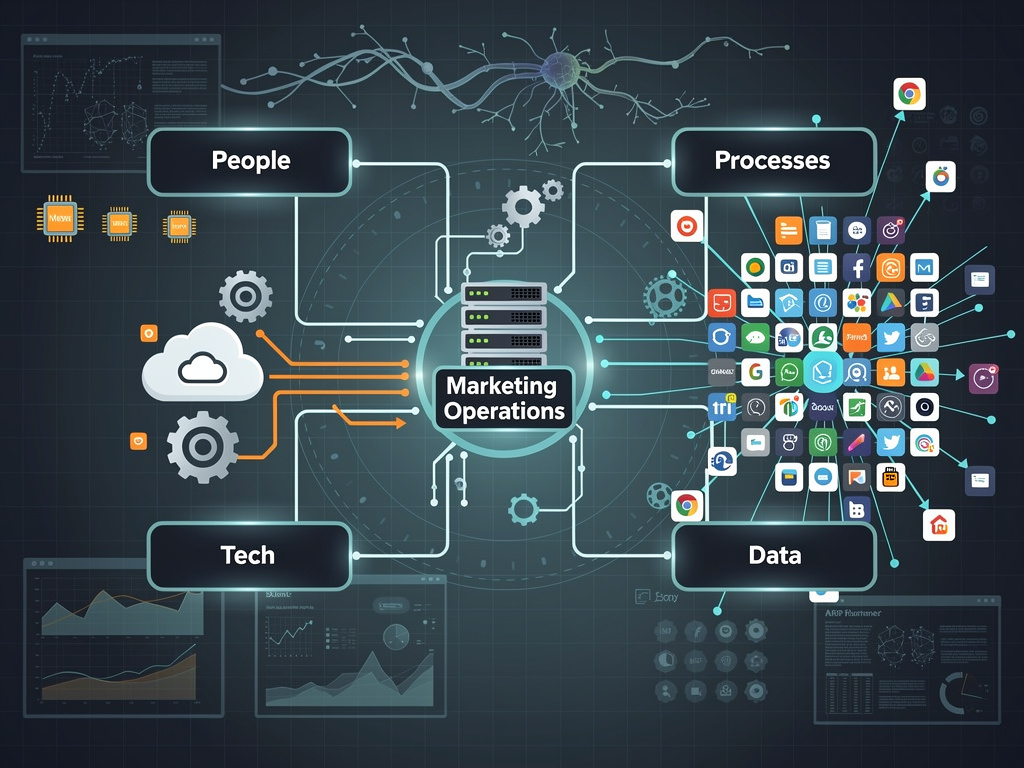
In the high-stakes arena of modern marketing, where campaigns must launch with precision and deliver quantifiable returns, Marketing Operations—or MOps—serves as the unseen force propelling teams forward. This function orchestrates people, processes, technology, and data to streamline execution, optimize the marketing technology stack, and align tactics with revenue goals. As martech applications swell to 14,106 in 2024—a 27.8% year-over-year surge, per MarTech—MOps professionals manage sprawling ecosystems, from CRM systems to automation platforms, ensuring data flows seamlessly to inform decisions.
At its core, MOps handles CRM management, lead scoring, workflow design, and analytics dashboards, acting much like a pit crew for marketing’s race car drivers. “Marketing ops is like the pit crew, and sales and marketing are the race car drivers,” explains Darrell Alfonso of Indeed in MarTech. “An effective pit crew enables a driver to focus on winning the race.” This setup allows creative teams to innovate while operations ensures campaigns deploy without errors, boosting efficiency by 15% to 25% in ROI and engagement, according to McKinsey data cited in the same report.
Key components break down into technology and data management—overseeing stacks with 25-50 tools in mid-sized firms and over 250 in enterprises—process strategy for governance, measurement via reporting, and lead management for funnel optimization. Yet, 65% of MOps pros work in dedicated teams, with 25% as solo operators juggling automation, spreadsheets, and CRM for over 10 hours weekly.
From Backroom Support to Strategic Powerhouse
Historically traced to the 1920s but modernized around 2005, MOps has evolved amid exploding martech proliferation. Today, 59% of director-level pros spend over 10 hours weekly on automation tools, per MarTech’s 2024 Career Survey. In larger firms, fewer than 5% lack this function, reporting typically to the CMO. “The mission… is to improve the efficiency and effectiveness of marketing through people, process, technology and data,” states Debbie Qaqish of Pedowitz Group in MarTech.
The 2024/2025 State of the MO Pro study by Marketing Operations reveals a field maturing rapidly: 88% prioritize data initiatives, with 54% investing in enrichment and intent tools. Yet challenges persist—only 36% report high satisfaction, down from 41%, amid leaner teams and rising RevOps scopes. Six trends emerge: experienced pros (61% with 6+ years) feel uncertain; integration tops priorities (81%) despite tech dissatisfaction; data is default but maturity lags (7% at top level); training gaps widen (56% inadequate); reporting pressures mount on ROI metrics; digital maturity remains elusive.
Strategic influence grows—37% now claim a “seat at the table,” up from prior years, per MarketingProfs. “The more MOps professionals… advise on… strategy, the more smoothly all… departments will function,” the report notes, linking involvement to better outcomes. Gender gaps appear: women feel less understood, even with experience.
Sharpening the Edge Against Traditional Marketing
Unlike traditional marketing’s emphasis on creative messaging and demand generation, MOps provides the infrastructure—project management, analytics, and optimization—to make those efforts scalable. Directive highlights: traditional marketers craft resonant campaigns via insight; MOps drives success through data analytics, research, and systems tweaks, ensuring brand compliance and revenue-tied KPIs.
MOps bridges silos between product, sales, and marketing, overseeing campaigns at a high level while managers handle tactics. This yields faster launches, fewer errors, and scalability via automation. In B2B, where stacks fragment data, MOps injects order, per MarTech analyses.
Recent MarTech reports (topic hub) flag bottlenecks: stakeholder friction kills velocity; bloated stacks drag efficiency; AI investments falter without ops alignment. “A disconnect between leadership and marketing teams means AI investments aren’t going to solve critical operational bottlenecks,” warns Ana Mourão in a July 2025 piece.
AI and Data Propel MOps Forward
2025-2026 trends spotlight AI reshaping workflows: predictive analytics forecasts behaviors; agentic AI automates setups and attribution. Self-service analytics via no-code tools empowers marketers sans engineering, per MOpsApalooza, where 88% chase data-driven edges. “AI doesn’t replace people—it replaces the processes that slow them down,” said AJ Navarro of Sprout Social at MOps-Apalooza 2025, covered in MarTech.
Events like MOps-Apalooza—drawing 400+ for workshops and keynotes—foster communities, with 2025 focusing AI, alignment, and data quality. Compensation rises, but AI/data gaps widen amid lean teams. MarTech predicts federated models with MOps central for omnichannel consistency.
Investments surge: 42% in gen AI, 39% analytics. Yet, governance lags hinder agents. “AI moves marketing operations from reactive reporting to predictive analysis,” notes a October 2025 MarTech article.
Building Resilient Teams for Tomorrow
MOps pros evolve into leaders—VP or CMO paths via RevOps. MarketingProfs sees it as a springboard. Training gaps (56%) spur self-learning, but firms outsourcing “MOps as a Service” bridge expertise voids.
CreativeOps integration looms: silos duplicate efforts; unified engines scale content amid AI volume, per January 2026 MarTech. Multishore teams need trust frameworks for ROI.
For insiders, MOps maturity demands data democratization, AI orchestration, and cross-functional seats—unlocking growth in a tech-saturated era.


 WebProNews is an iEntry Publication