
Cara Katz runs a household of three while holding down a full-time job. She once felt buried under color-coded calendars, last-minute grocery runs and the endless mental checklist that comes with school schedules and pediatrician visits. Then she started feeding prompts into Claude. The difference proved immediate.
Now Katz spends five minutes here and there on scheduling instead of hours. She generates weekly meal plans that account for celiac restrictions, family preferences and what already sits in the pantry. The AI even spits out a color-coded HTML calendar that pulls from Google Calendar, syncs with babysitters and spits out DoorDash links. “We are buying back time with our kids using AI,” she told Business Insider.
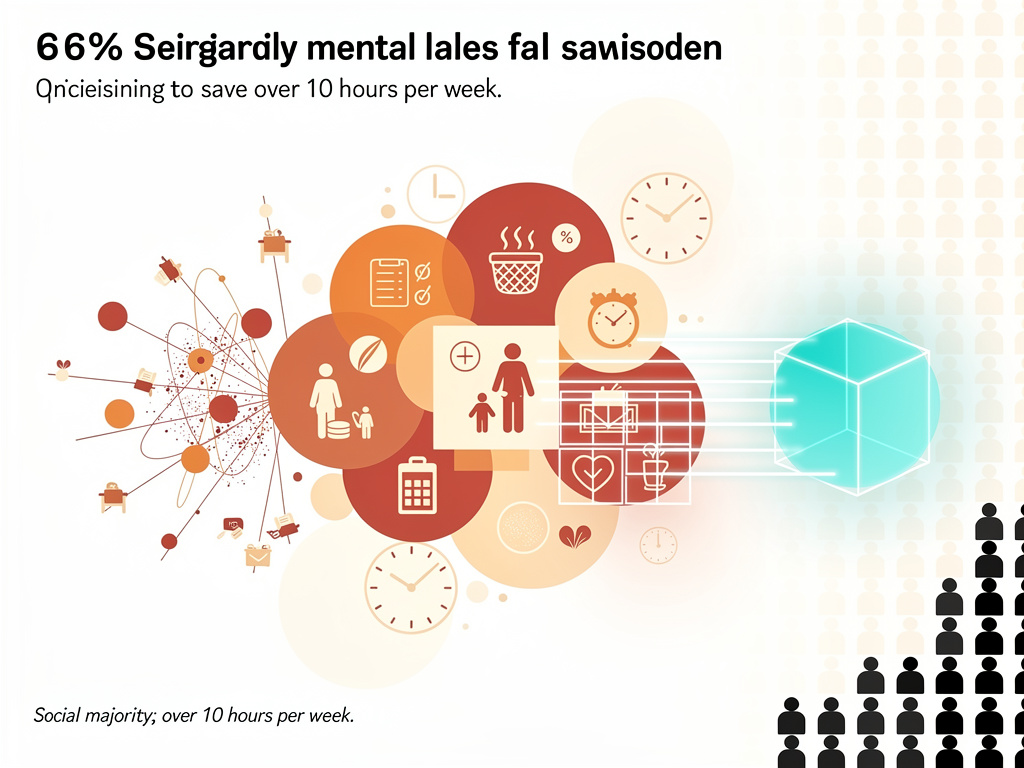
Her story lands at a moment when American mothers have begun to treat generative tools as an extra brain cell rather than a novelty. A nationwide survey of 500 U.S. mothers released in March found that 66 percent have used AI to discover products or gather parenting tips. ChatGPT led adoption at 62 percent among users. Organization and time management each claimed 18 percent of daily applications, followed by shopping assistance at 14 percent and homework help at 7 percent. Maria Bailey, CEO of BSM Media, noted that “Moms are using AI to save time and find answers, but they still want to feel like a real person is behind the brands they buy from.” The findings appeared via Wisconsin State Farmer.
Across the Atlantic, Lilian Schmidt reached even more striking numbers. The Zurich-based corporate strategist and mother to a 3-year-old, while also serving as stepmom to a 14-year-old, trained a custom chatbot in ChatGPT to mirror her family’s rhythms. She feeds it prompts for seven-day meal plans that stay nutritious, kid-friendly, budget-conscious and easy to prepare. Another prompt generates categorized grocery lists. Others craft meltdown-resistant morning routines, suggest 30 minutes of low-mess independent play and offer gentle sleep fixes. Schmidt reports her mental load feels 202 percent lighter. The time she once spent spinning plates now goes to simply sitting with her children. She shared her five non-negotiable prompts on social media, inviting others to request the full set. Details surfaced in Mother.ly.
But Katz also hears the whispers. Other mothers judge her approach. They see delegation to silicon as abdication rather than optimization. The backlash stings because it misses the point. Katz does not hand her children over to an algorithm. She removes friction so she can show up more present. The same tension runs through conversations in parent groups nationwide. Some view these tools as a quiet admission of failure. Others recognize them as practical relief in an era when dual-income households shoulder loads once spread across extended families.
Parents elsewhere describe similar gains. Alicia Robinson, a Chicago mother of two, relies on AI to draft emails to teachers, outline birthday parties and invent bedtime stories on demand. “I’ve used AI to write emails to teachers, plan birthday parties, even come up with bedtime stories,” she said. She calls it “a parenting assistant who never sleeps.” Karima Williams vents to Claude during rough patches, unloading feelings of overwhelm or shame that she hesitates to share elsewhere. The exchange leaves her calmer. Olivia French, mother of three in Texas, plans camp lunches, organizes meal prep and generates conversation starters for her older children. “My favorite way to use AI is to vent with Claude,” Williams told ABC News. The segment appeared on ABC News last July.
Experts strike a note of tempered enthusiasm. Leah Anise, consumer communications lead at OpenAI, calls ChatGPT “an indispensable tool for parents” that streamlines responsibilities and sparks creativity. It can produce grocery lists, cleaning schedules, scavenger hunts or co-written stories. Yet she and others draw firm lines. AI should not replace conversations with pediatricians or mental-health professionals. Hannah Ryu, an AI strategist and mother of two, uses the technology to plan trips with a baby and toddler, locate healthy recipes and explore child psychology. She warns that models sometimes hallucinate. Parents must balance output against their own intuition. Both women emphasize the goal remains greater presence with children, not outsourcing the relationship itself.
Market signals point to sustained growth. Analysts project the AI childcare and parenting sector to expand dramatically in coming years. Apps already analyze sleep patterns, track behavior and offer personalized recommendations. Some tools integrate directly with family calendars and shopping platforms. The practical effect for many households looks less like science fiction and more like a competent assistant who works odd hours and never forgets the allergy list.
Katz keeps her system simple. She feeds Claude details from recent pediatrician visits to build weekly activity lists that hit developmental targets. The AI cross-references dietary needs and suggests meals that minimize waste. Delivery services handle the rest. What once consumed evenings now fits into spare moments. The reclaimed hours add up. Ten or more per week, by her count. Enough to linger at the dinner table or read one more book before bed.
Critics raise valid concerns. Privacy matters when family routines and children’s milestones enter the chat window. OpenAI notes that conversations stay out of training data when history is turned off and can be deleted. Still, parents must decide what details feel too personal to share. Medical information demands special caution. The technology also reflects biases present in its training data. Outputs require review.
Even so, adoption continues. Recent coverage shows working parents testing tools for everything from co-parenting schedules to emotional check-ins. One recent roundup examined 12 AI assistants that actually delivered time savings during real family chaos, from sick days to soccer carpools. The piece ran in May on UseCarly. Another analysis highlighted how AI now influences product discovery and brand loyalty among mothers. Quality still drives 90 percent of purchase decisions, yet the speed of research has changed.
Katz understands the skepticism. She grew up in an era when technology meant dial-up internet and handwritten chore charts. Handing parts of family logistics to a language model feels foreign at first. But the results converted her. The judgment from other moms, however, lingers. Some see it as cheating. She sees it as adaptation. Her children gain a mother who feels less frayed. The household runs smoother. Dinner conversations stretch longer.
The pattern repeats in homes from Zurich to Chicago to Fort Worth. Parents experiment with prompts, refine custom bots and measure the difference in hours regained and stress reduced. Not every family will adopt the practice. Many will watch from the sidelines, weighing convenience against authenticity. Yet the mothers who have integrated these systems report a consistent outcome. They spend less time managing the machine of family life and more time inside the moments that matter.
That trade-off defines the current shift. AI will not raise the children. It cannot replace the intuition that comes from knowing a child’s sigh or the particular pitch of an approaching tantrum. What it can do is shoulder the repetitive cognitive work that leaves parents depleted before the real work begins. For Katz and others, that distinction makes all the difference.


 WebProNews is an iEntry Publication