
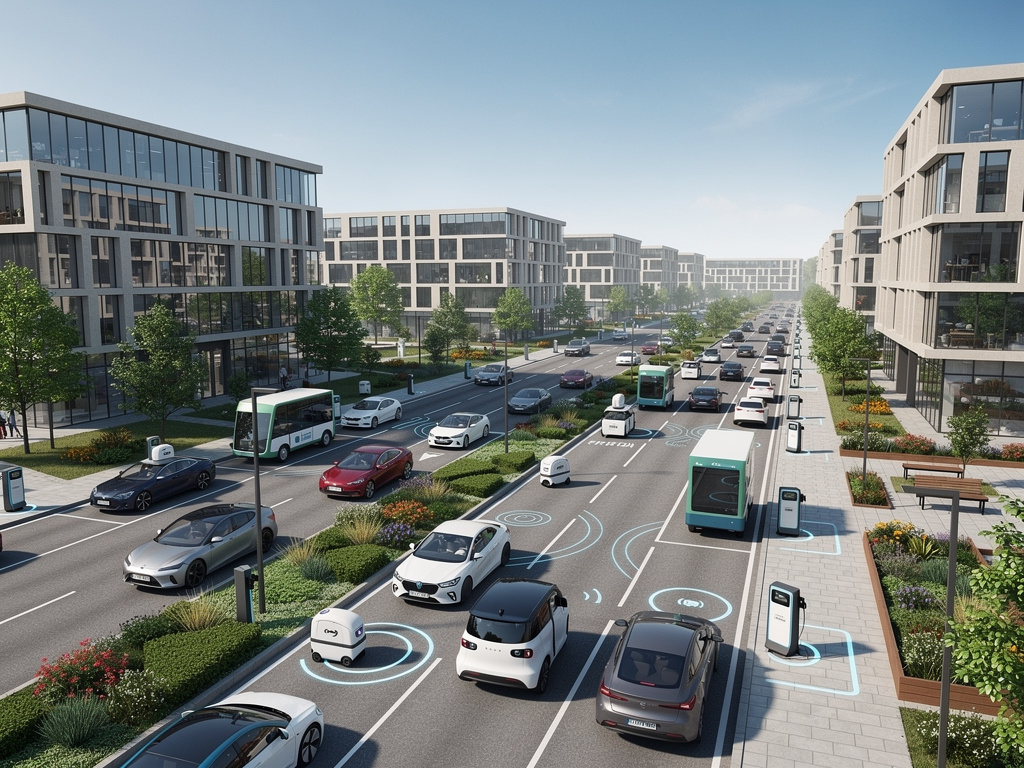
In the coming two decades, the transportation sector stands on the brink of a revolution that could upend urban living as profoundly as the automobile did a century ago. Predictions from McKinsey point to a sharp decline in private-car use, with shared mobility services like Mobility as a Service (MaaS) poised to dominate, potentially capturing over 60% of trips in dense cities by 2035. This shift, fueled by autonomous vehicles (AVs), electrification, and on-demand platforms, promises to reclaim urban space, slash emissions, and unlock productivity hidden in daily commutes.
Bloomberg reports that ride-hailing and AVs will transform car ownership, transitioning consumers to sustainable MaaS portfolios. Element Fleet Management’s analysis echoes this, forecasting that by 2035, AI-driven fleets will handle 15% of decisions autonomously, evolving MaaS into seamless “Mobility-as-a-Feature” integrated into real estate, healthcare, and logistics. Ian Khan’s 20-50 year outlook predicts EVs reaching price parity by the mid-2030s, with robust charging alleviating range anxiety and paving the way for full autonomy.
Urban Cores Evolve Without Car Clutter
Cities worldwide are already adapting. McKinsey notes over 150 municipalities curbing private vehicles through incentives and restrictions, freeing land from parking—up to eight spots per U.S. car—for parks and housing. Futurice’s 2040 scenarios envision western European urban areas where private cars yield to micro-mobility and decentralized planning. Roland Berger counters some hype, projecting steady global vehicle demand growth at 2-3% annually, but with urban declines offset by emerging markets.
Phil Beisel on X foresees robotaxis dominating cores, banning user-driven cars downtown and repurposing garages. Antonio García Martínez predicts parking vanishing, roads splitting into pedestrian, bike, and orderly AV lanes, eliminating jams and rage. Infrastructure follows: gas stations become charging depots, highways gain “autonomy lanes” for high-speed platoons cutting energy use by 25%.
Commutes Turn Productive, Lives Expand
AVs will redefine time in transit. Advanced driver-assistance systems evolve to full autonomy, turning drives into work or leisure sessions. ScienceDirect studies show older adults eager for AVs to conquer barriers, boosting access to healthcare and jobs. Ruderman Family Foundation estimates AVs could open 2 million U.S. employment slots for disabled individuals, saving $19 billion yearly in missed appointments.
Accessibility surges for elderly, disabled, and youth. Ford research stresses barrier-free designs like low thresholds for wheelchairs. AARP highlights harder-to-serve seniors gaining from new mobility, combating isolation. Jetski Grizzly on X envisions suburbs booming as commutes shrink, garages becoming bedrooms.
Delivery Drones and Bots Ease Congestion
E-commerce’s boom demands last-mile innovation. Frontiers research models robot deliveries navigating pedestrian zones, slashing labor costs despite crowds. MDPI reviews hybrid drone-truck systems reducing emissions via e-cargo bikes from urban hubs. Logistics Viewpoints covers DoorDash’s Dot robot, carrying 30 pounds at 20 mph across roads and sidewalks, cutting van traffic.
Global Trade Magazine details droids on sidewalks bypassing jams, drones overhead for speed. FarEye notes drones evading urban snarls, delivering faster. Supply Chain 24/7 spotlights CityShuttle cargo bikes shrinking footprints versus vans.
Electrification Powers Climate Resilience
Widespread EV adoption anchors sustainability. FutureBridge sees EVs, AVs, and MaaS reshaping 2024-plus transport. Karsan forecasts 250 million global EVs by 2030, with MaaS hitting $300 billion. Avenga lists 2026 trends: AVs, EVs, MaaS, resilient infrastructure against extremes.
RMI urges coordinated charging for rapid EV scaling. IEA’s NZE Scenario demands 80% EV sales share by 2035 across modes. Nature Communications models 100% U.S. LDV EV sales by 2040 slashing tailpipe GHGs 90% by 2050, though 45 million gas cars linger.
Fleets and Policies Accelerate the Pivot
FedEx targets zero-tailpipe pickup fleets by 2040, partnering RMI on grid tools. GM joins for multifamily charging. PwC surveys show consumers eyeing livable, pedestrian-friendly downtowns factoring vehicle externalities.
X discussions amplify: Amitabh Kant cites Nielsen’s China forecast—personal ownership to 5% by 2050, MaaS to 65%. Misha predicts MaaS subscriptions replacing buys by 2030. Tommy T envisions software-defined roads sans lanes.
Challenges Demand Bold Coordination
Hurdles persist: regulations, equity, grid strain. Urban Institute calls for accessible shared AV rules. ScienceDirect stresses inclusive designs for disabled. McKinsey’s M3 model predicts Shanghai’s plate limits spiking sustainable modes.
Stakeholders must align: utilities modernize grids, cities zone dynamically, firms invest $275 billion in EVs/batteries per IEA. As Elon Musk notes on X, Tesla owners adding cars to robotaxi networks signals ownership’s revenue twist.
Societal Fabric Rewoven
By 2045, mobility fosters connected communities. Elderly shop independently, disabled work freely, cities breathe via green spaces. Costs plummet—sub-$0.25/mile per Beisel—democratizing access. Highways hum at 200 mph in caravans, suburbs thrive, air travel yields to luxury road trips.
This ecosystem—diverse, intelligent, electrified—delivers livable havens, per the prompt’s vision, but amplified by data: McKinsey’s revenue surge to 31% new-age by 2030, Oliver Wyman’s $270 billion smart mobility by 2040.


 WebProNews is an iEntry Publication