
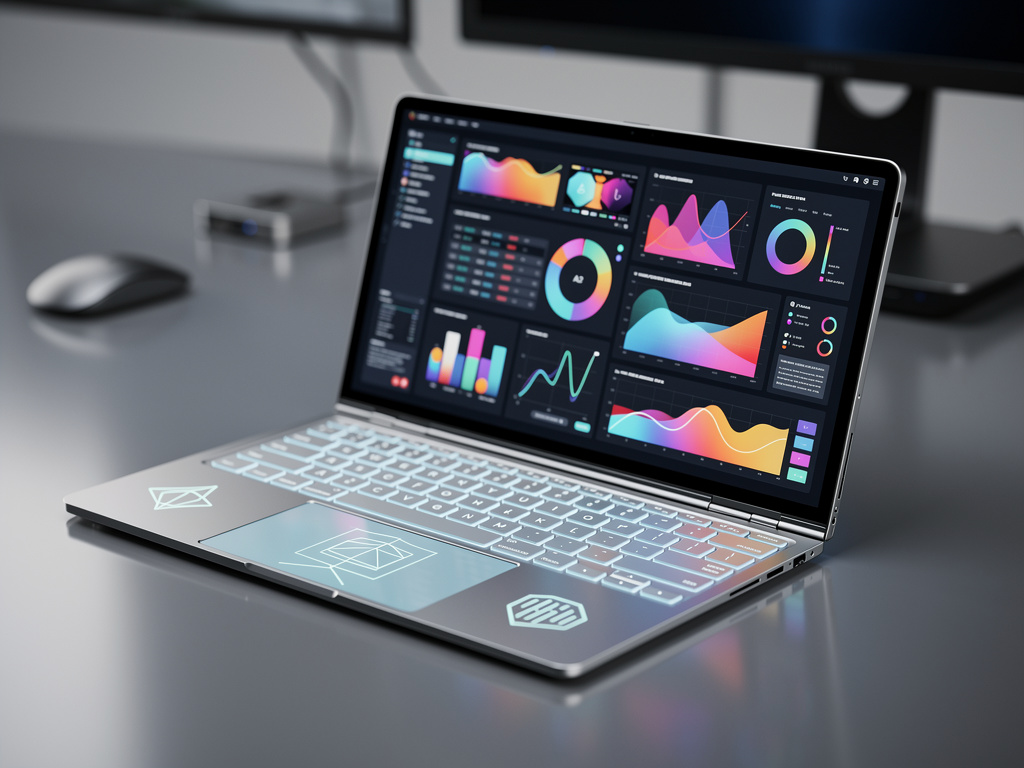
When Marques Brownlee speaks about consumer technology, the industry listens. According to a recent report from 9to5Mac, the popular tech reviewer has labeled the highly anticipated MacBook Neo as Apple’s most disruptive product in a decade. This bold claim centers on a device that analysts have long tracked through supply chain whispers: a massive, all-screen foldable Mac slated for a 2026 release. Brownlee’s assessment highlights a fundamental shift in how Apple envisions personal computing hardware, moving away from the traditional clamshell design that has defined laptops for decades.
The 10-year timeframe Brownlee references is significant. A decade ago, Apple introduced the first Apple Watch, a product that established a completely new hardware category for the company. While the transition to Apple Silicon in 2020 altered the internal capabilities of Mac computers, the exterior designs remained largely traditional. The MacBook Neo represents a structural overhaul. It replaces the physical keyboard and trackpad with a continuous, flexible OLED display, forcing users to interact with macOS in ways previously reserved for the iPad.
A Radical Departure in Hardware Design
For years, prominent display analysts like Ross Young and supply chain experts including Ming-Chi Kuo have documented Apple’s interest in foldable technology. Their reports consistently pointed to a 20.2-inch or 20.3-inch foldable device targeting a 2026 launch window. The MacBook Neo appears to be the culmination of this research and development. When unfolded, the device functions as an expansive standalone monitor. When folded, it mimics the footprint of a traditional 13-inch or 14-inch laptop, with the bottom half serving as a virtual interface.
This dual-purpose nature addresses a long-standing tension in Apple’s product lineup. The company has historically kept the iPad and the Mac distinctly separate, resisting the urge to merge touch interfaces with desktop operating systems. By introducing an all-screen foldable, Apple crosses that boundary. The flexible OLED panel requires complex hinge mechanisms to prevent visible creasing, an engineering challenge that competitors have struggled to master. Apple’s approach reportedly involves a custom-designed hinge that allows the display to form a teardrop shape when closed, minimizing stress on the fragile OLED materials.
The End of the Physical Keyboard
Perhaps the most controversial aspect of the MacBook Neo is the complete removal of physical keys. Typing on a flat glass surface traditionally offers poor tactile feedback, leading to increased errors and user frustration. However, Apple holds numerous patents detailing advanced haptic feedback systems designed specifically for virtual keyboards. These patents describe using localized linear actuators beneath the display to simulate the physical click and travel of a mechanical key switch.
Brownlee’s commentary suggests that Apple has finally achieved a typing experience that rivals traditional scissor switches. By employing targeted vibrations, the glass surface can trick the user’s fingers into feeling physical resistance and release. Furthermore, a virtual keyboard offers unparalleled flexibility. Users can switch between different languages instantly, add custom macro keys for video editing, or completely hide the keyboard to use the bottom screen for drawing with an Apple Pencil. This adaptability fundamentally changes the physical constraints of laptop computing.
Apple Silicon and Thermal Dynamics
None of this hardware flexibility would be possible without the efficiency of Apple Silicon. The MacBook Neo is expected to run on a future iteration of Apple’s custom processors, likely the M5 or M6 chip, depending on the exact 2026 release schedule. Traditional x86 processors generate too much heat for an ultra-thin, all-glass foldable enclosure. Apple’s ARM-based architecture allows for a completely fanless design while maintaining high-end performance for demanding tasks like 4K video rendering and 3D modeling.
Cooling an all-screen device presents unique thermal challenges. The heat generated by the logic board must be dissipated through the back casing without making the touch-sensitive areas uncomfortable for the user’s hands. Supply chain leaks indicate that Apple is experimenting with advanced vapor chamber cooling and graphite heat spreaders specifically tailored for the foldable form factor. Distributing the thermal load evenly across the rear aluminum chassis ensures the processor can sustain peak performance without throttling, a critical requirement for professional users.
Software Adaptation and Interface Convergence
Hardware represents only half of the equation for the MacBook Neo. The operating system must adapt to a screen that bends and changes orientation. macOS has entirely relied on precise cursor input since its inception. While Apple introduced some touch-friendly elements in recent macOS updates, such as larger control center sliders and spaced-out menus, the core interface remains optimized for a mouse and keyboard. The MacBook Neo necessitates a hybrid operating system that dynamically scales based on how the hardware is positioned.
If the user unfolds the device completely and pairs it with an external Bluetooth keyboard, the software operates as standard macOS. If the user folds it into a laptop shape, the bottom half instantly shifts into an input surface, displaying the virtual keyboard and trackpad. Software developers will need to update their applications to take advantage of this new dual-screen setup. Video editors could place their timeline on the bottom flat surface while keeping the video playback on the upright screen, offering a highly specialized workspace that standard laptops cannot replicate.
MKBHD’s Perspective on Industry Impact
Marques Brownlee’s assertion that the MacBook Neo is Apple’s most disruptive product in ten years stems from its potential to alter consumer expectations. The tech industry has seen a plateau in laptop design. Manufacturers routinely upgrade processors, increase battery life, and shrink bezels, but the fundamental user experience remains static. Brownlee argues that Apple’s execution of the foldable concept will force other manufacturers to accelerate their own experimental designs, much like the original MacBook Air pushed the industry toward ultrabooks.
Furthermore, Brownlee emphasizes that Apple rarely enters a new hardware category first. Companies like Lenovo and Asus have already released foldable laptops, such as the ThinkPad X1 Fold and the Zenbook 17 Fold OLED. However, these early attempts were often plagued by bulky designs, heavy chassis, and software that failed to transition smoothly between folded and unfolded states. Apple’s strategy typically involves waiting for the underlying technology to mature before releasing a highly polished version. Brownlee believes the MacBook Neo achieves this level of polish, setting a new standard for what a premium portable computer should be.
Supply Chain Realities and Premium Pricing
Manufacturing a 20-inch foldable OLED display is an expensive endeavor. LG Display and Samsung Display are the primary candidates for supplying these massive flexible panels to Apple. The yield rates for producing defect-free foldable screens at this scale are notoriously low, which directly impacts the final retail price. Industry analysts project that the MacBook Neo will sit at the very top of Apple’s pricing tier, potentially starting well above the cost of a fully equipped 16-inch MacBook Pro.
This high barrier to entry suggests that Apple will not immediately replace its traditional clamshell laptops. The standard MacBook Air and MacBook Pro lines will continue to exist alongside the Neo. The new foldable device will likely serve as a halo product, targeting early adopters, technology enthusiasts, and professionals who specifically benefit from the adaptable screen real estate. Over time, as manufacturing processes improve and component costs decrease, the technology pioneered in the MacBook Neo may trickle down to more affordable consumer models.
The Competitive Foldable Market
Apple’s entry into the foldable laptop space will undoubtedly send ripples through the broader technology sector. Windows PC manufacturers have been experimenting with dual-screen and foldable designs for several years, heavily supported by Microsoft’s efforts to optimize Windows 11 for flexible displays. Despite these efforts, widespread consumer adoption has remained elusive. High prices, fragile screens, and awkward software interactions have kept foldable PCs in a niche category.
The introduction of the MacBook Neo could validate the entire form factor. When Apple adopts a new technology, it often acts as a catalyst for mainstream acceptance. Competitors will likely respond by refining their own foldable offerings, investing more heavily in hinge durability and software integration. This increased competition benefits consumers, driving innovation faster than a stagnant market. The success of the MacBook Neo will depend heavily on whether Apple can convince the general public that a foldable screen offers tangible benefits over a traditional, reliable laptop hinge.
Looking Ahead to the 2026 Release
As the 2026 launch window approaches, more details regarding the MacBook Neo will inevitably leak from the Asian supply chain. Apple is currently in the late stages of prototyping, testing various hinge materials and virtual keyboard layouts. The transition from a rumor to a highly anticipated product is well under way, fueled by commentary from influential voices like Marques Brownlee. His belief in the device’s disruptive nature highlights the high expectations surrounding Apple’s next major hardware announcement.
The technology world will be watching closely to see if Apple can successfully merge the portability of an iPad with the power of a Mac. The MacBook Neo represents a massive financial and engineering risk, but one that could redefine personal computing for the next decade. If the virtual typing experience holds up to scrutiny and the foldable OLED panel proves durable in daily use, Apple may indeed have created the most significant hardware shift since the introduction of the modern smartphone.


 WebProNews is an iEntry Publication