
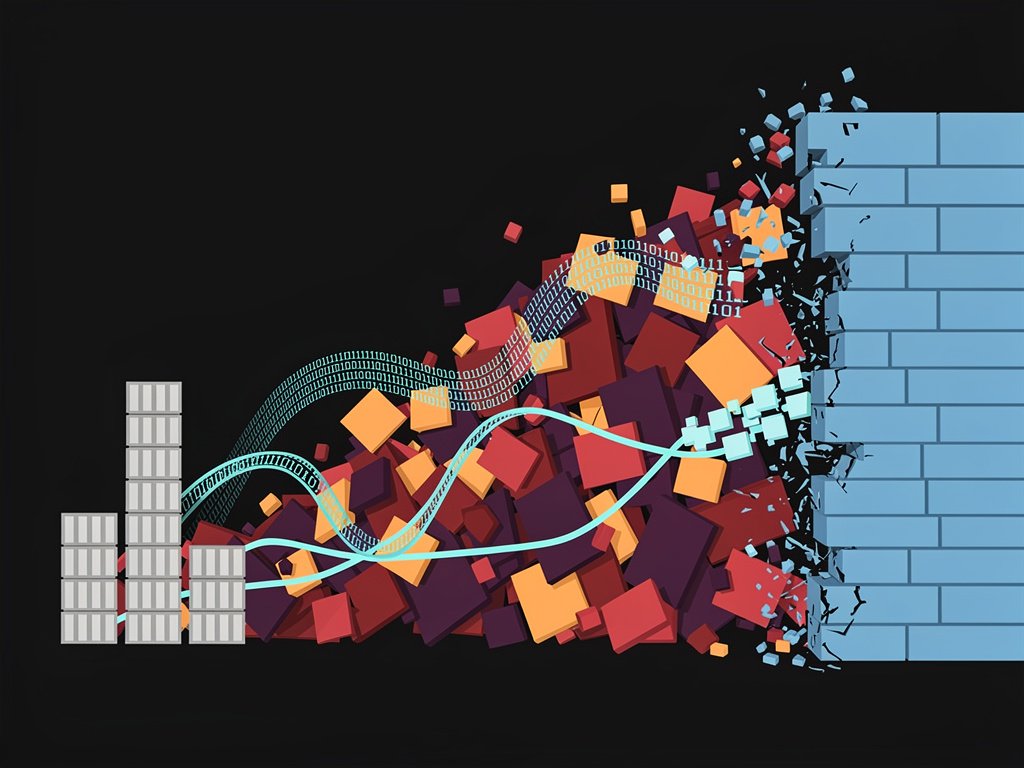
Anand Shah saw the numbers and delivered a blunt assessment. Federal courts face a flood of self-represented cases powered by generative AI. The long-term average of pro se filings sat steady at 11 percent for two decades. By the end of fiscal 2025 that share had climbed to 16.8 percent. The jump coincided with ChatGPT’s debut in late 2022. And it shows no signs of slowing.
Shah, an MIT researcher, co-authored the study with colleagues from USC. They examined more than 4.5 million non-prisoner federal civil cases spanning fiscal years 2005 through 2026. The data, drawn from administrative records and matched to 46 million PACER docket entries, painted a clear picture. Plaintiff-side pro se filings nearly doubled. New self-represented cases drove 59 percent of overall civil filing growth in fiscal 2025. Futurism reported the findings on May 23, 2026, quoting Shah’s warning that courts “will basically have to grind to a halt” if the trend continues unchecked.
But the raw volume tells only part of the story. These new filings demand attention. Pro se cases are not terminating faster than before. Their first 180 days now generate far more docket activity. The study found a 158 percent increase in total pro se docket entries per court during that window compared with pre-AI averages. Per-case entries rose 38 percent. In simple case types such as civil rights or consumer credit claims, the effect proved even sharper. Courts process more motions, more replies, more everything. Judges and clerks absorb the load while represented parties respond in kind. The system strains.
AI detection on a random sample of 1,600 complaints confirmed the driver. From 2019 through 2022, essentially zero complaints flagged as AI-generated. The share rose monotonically: 1 percent in 2023, 3.5 percent in 2024, 10.5 percent in 2025, and 18 percent in early 2026. The detector recorded only one false positive in the pre-AI period. Real usage appears higher still among pro se litigants. The paper itself notes the increase tracks LLM adoption and capability improvements. Lower barriers invite more claims. Some hold merit. Many do not.
Shah told interviewers there is a tradeoff. Access to justice improves when filing costs drop. Yet every system that lowers the cost of entry through AI should expect higher demand. The result lands on dockets already burdened by backlogs and judicial shortages. Simple template-driven complaints multiply. Complex litigation receives less attention. Clerks screen frivolous filings, but the volume still clogs the pipeline before it reaches a judge. One paralegal described the practical effect to Futurism: courts take all filings seriously, so the volume of AI-generated material creates real friction upstream.
The problem compounds when AI enters represented cases too. Hallucinations have moved from curiosity to routine irritant. In one 2025 California matter, lawyers from the firm Ellis George submitted briefs riddled with fabricated citations after consulting Google Gemini and specialized legal AI tools. U.S. District Judge Michael Wilner ordered sworn explanations, uncovered the AI use, and fined the firm $31,000. MIT Technology Review detailed the episode on May 20, 2025, along with similar errors in an Anthropic copyright defense where Claude produced an incorrect legal citation that survived initial review.
Maura Grossman, a prominent AI and law expert, captured the broader concern. “Hallucinations don’t seem to have slowed down. If anything, they’ve sped up.” She noted that even high-powered attorneys fall into two camps: those scared of the technology and eager early adopters. Many assume fluency equals accuracy. They check junior associates rigorously but treat model output with undue trust. The pattern repeats. Israeli prosecutors once cited nonexistent laws generated by AI and admitted it only after judicial rebuke. A Stanford professor included AI mistakes in testimony. Judges grow frustrated. Some have withdrawn their own rulings after staff used public chatbots.
By early 2026 the accumulated record stood at hundreds of documented hallucination incidents in U.S. courts. Researcher Damien Charlotin’s database tracked 518 cases with hallucinated content since the start of 2025 alone. Bloomberg Law reported in December 2025 that AI-faked citations had become a core issue irritating overworked judges. The distraction pulls focus from case merits. It adds expense for all parties. And it risks eroding confidence when fabricated precedent influences outcomes undetected.
Parallel litigation waves add pressure. Copyright suits against AI developers exceeded 50 pending federal cases by late 2025, according to Debevoise & Plimpton’s year-end review. Training-data disputes, fair-use defenses, and class actions over scraped content fill dockets. State attorneys general pursued novel consumer-protection theories against AI deployment. Reddit sued Anthropic and Perplexity over scraping practices. These high-profile fights command judicial time even as the low-level pro se surge grows.
Courts have begun to respond. Some districts require disclosure of AI use in filings. Proposals to regulate AI-generated evidence advanced through judicial committees in 2025. Yet enforcement remains patchy. Many judges lack technical staff to verify citations at scale. Detection tools help but produce false negatives. The volume keeps rising. Pro se ADA Title III and Fair Housing Act complaints jumped 40 percent and 69 percent respectively in 2025 compared with 2024, often linked to AI-assisted template generation.
Shah’s analysis remains descriptive rather than causal. The pre-2022 stability across 20 years makes the post-ChatGPT break striking. Simple cases with formulaic language benefit most from automation. Complex patent or product-liability matters show no comparable surge. Geographic spread covers nearly every state. Vermont’s outlier immigration mandamus wave, partly fueled by online AI guides shared on Reddit, did not drive the national trend. Remove it and the pattern holds.
What comes next looks messy. State courts, with thinner resources, may feel the strain sooner. Federal judges already manage heavier dockets. Expanded use of magistrates, AI-assisted triage, or stricter sanctions could blunt the edge. None solves the underlying supply-demand mismatch. Congress has not increased judgeships to match caseload growth. Training pipelines for new attorneys remain slow. Meanwhile, anyone with an internet connection and a grievance can generate a polished complaint in minutes.
The data leaves little room for doubt. Generative AI has altered entry into the civil justice system. It expands access for some while taxing the institutions that must process every filing. Shah’s forecast carries weight because it rests on millions of records rather than anecdote. Courts will adapt. The question is how much friction, cost, and delay the adaptation will impose before balance returns. The filings keep coming. The dockets keep lengthening. And the warnings grow louder.


 WebProNews is an iEntry Publication